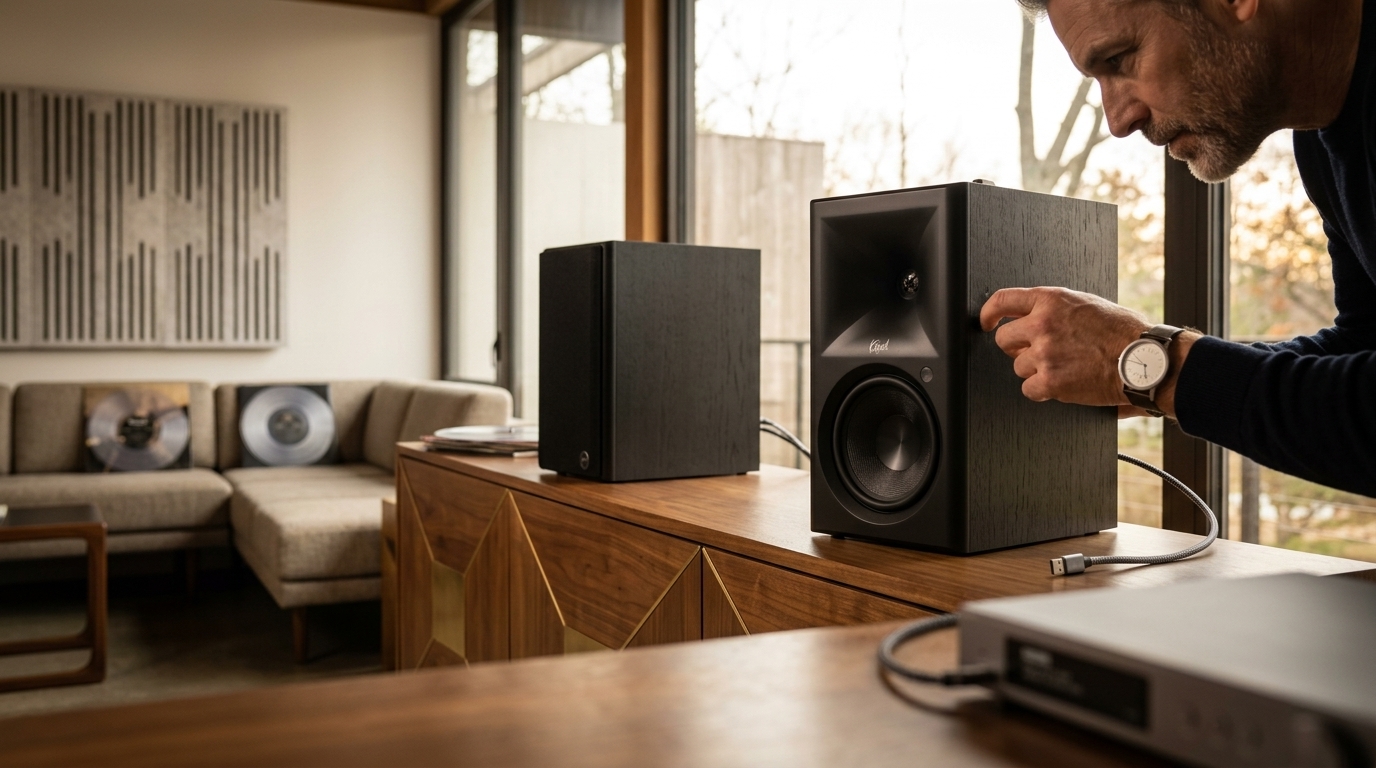
In the fluid landscape of home entertainment in 2026, Klipsch continues to bet on a philosophy that blends classic aesthetics with cutting-edge technology. The The Fives II are not just an evolution of a successful model; they are a statement of intent in a market saturated with plastic soundbars and faceless smart speakers. This second generation of the popular active bookshelf speakers confirms that high-quality stereo sound remains the backbone of the acoustic experience, even as competition from multi-channel systems grows fiercer than ever.
Design and Materiality: An Ode to the Past
The first encounter with The Fives II evokes a sense of familiarity. Klipsch has retained its Heritage aesthetic, utilizing real wood veneers and tactile metal switches that offer a sensory satisfaction rare in the era of touchscreens. Inside, however, everything has been upgraded. The new high-frequency drivers featuring Tractrix horn-loaded technology offer room-filling sound dispersion without the distortion found in smaller units. Their construction is robust, heavy, and exudes a quality suggesting these speakers aren't meant for the recycling bin after two years of use.
Connectivity: The Swiss Army Knife of Audio
The greatest advantage of The Fives II remains their versatility. With the integration of HDMI-eARC, these speakers become a natural extension of the television, allowing volume control via the TV's remote. But Klipsch doesn't stop there. The inclusion of a built-in phono preamp for turntables, a USB-B digital input for computers, and Bluetooth 5.3 with lossless encoding support makes these speakers a complete audio system. In an era where minimalism is a trend, the ability to eliminate a bulky AV receiver without sacrificing source quality is a win for the modern consumer.
Audio Performance: Music vs. Cinema
In practice, The Fives II shine where soundbars typically fail: music playback. The stereo image is wide and precise, allowing the listener to pinpoint the location of every instrument. The bass is impressive for their size, thanks to a new digital signal processor (DSP) that adjusts response based on volume levels. However, when moving into the world of cinema, the situation becomes more complex. While dialogue clarity is exemplary, the lack of surround speakers means the "ambient sound" experience is limited. For those seeking the sensation of bullets whizzing past their ears, The Fives II might feel insufficient unless paired with an external subwoofer to provide that necessary cinematic weight.
The 2026 Dilemma
The speaker market in 2026 is characterized by a shift toward convenience, but The Fives II demand that the user take a stand. Are you willing to sacrifice the virtual Dolby Atmos sound of a high-end soundbar for the authentic hi-fi experience of a pair of speakers? The answer depends on priorities. For the vinyl lover who also watches movies, the choice is obvious. For the Netflix enthusiast who wants to feel the room shake, Klipsch provides a subwoofer output, but the lack of a dedicated center channel remains a limitation that cannot be ignored.
"True high-fidelity is not about the number of speakers, but the quality of the air they move."
Conclusion: A Minimalist's Dream
Ultimately, the Klipsch The Fives II represent a bridge between two worlds. They cater to the user who values the ritual of listening—whether it's dropping a needle on a record or streaming high-resolution files—while still wanting a seamless integration with their main visual display. While they won't replace a dedicated 7.1.4 Atmos rig for the hardcore cinephile, they offer a level of musicality and sophistication that most soundbars simply cannot match. In the context of 2026, where digital fatigue is real, the tactile and organic nature of The Fives II is a refreshing breath of analog-inspired air.