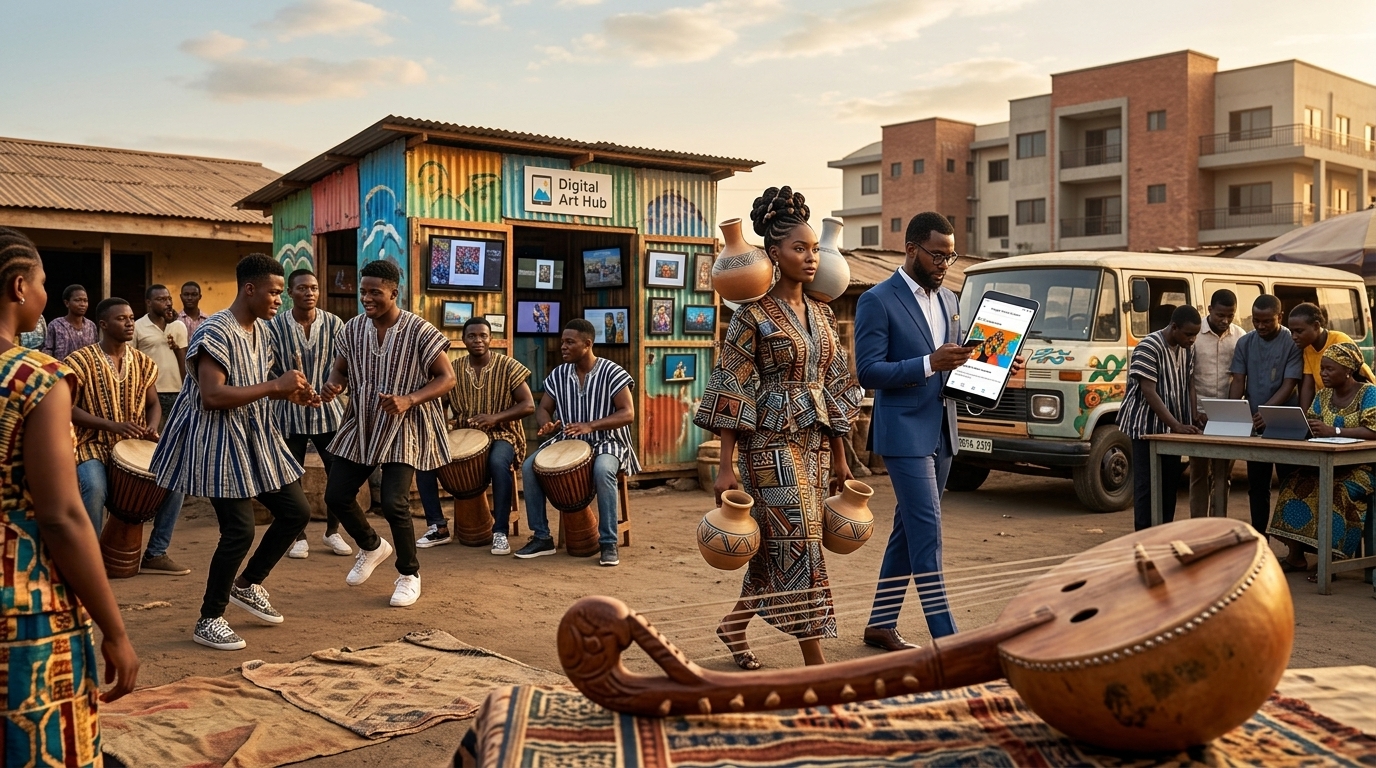
In an era where digital mediation is redefining how we perceive history and art, Google Arts & Culture has made a landmark move to showcase African continental heritage. By adding 50 new digital exhibitions from eight African countries, the platform offers more than just a tour; it provides an immersive experience that bridges the gap between physical distance and cultural understanding. This initiative is part of a broader vision to democratize access to art, using technology as a tool for preservation and education.
Technology in the Service of Memory
The implementation of these exhibitions was not based on simple photographs, but on an arsenal of technological means that Google has developed over the last decade. Central to this is the 'Art Camera,' a specially designed robotic precision camera that takes thousands of high-resolution close-ups, creating gigapixel images. This allows the user to see details—such as the fibers of a Kenyan textile or the brushstrokes on a Nigerian painting—that would be impossible to discern even with the naked eye in a physical museum.
Furthermore, the use of 'Pocket Galleries' via Augmented Reality (AR) allows users to 'place' an entire gallery inside their living room. This approach breaks down the walls of traditional institutions, making African creativity accessible to students in London, researchers in Tokyo, or artists in Lagos, regardless of their financial ability to travel.
One Continent, Multiple Narratives
One of the most significant achievements of this new collection is the deconstruction of the stereotype of Africa as a single, monolithic entity. The 50 exhibitions cover a wide range of themes: from contemporary Nigerian fashion and Kenyan musical history to ancient Egyptian architecture and South Africa's natural treasures. Collaboration with local institutions and museums ensures that the narrative remains authentic and is not filtered through a Western lens.
- Nigeria: Focusing on the explosion of the creative industry and its global influence.
- Kenya: Digitizing rare archives concerning independence struggles and tribal cultural identity.
- South Africa: Highlighting art as a medium for social change and resistance during Apartheid.
The choice of themes shows a clear intention to highlight not only the past but also the continent's dynamic present. 3D modeling technology was used to record monuments threatened by climate change or conflict, offering a digital 'ark' for future generations.
The Question of Digital Sovereignty
Despite the excitement, Google's move also sparks deeper discussions regarding digital sovereignty. As a Silicon Valley tech giant becomes the primary custodian of Africa's digital memory, questions arise about data ownership and the control of cultural heritage. Is digital access enough when many physical artifacts remain in European museums?
"Digitization is not a substitute for the repatriation of antiquities, but it is a powerful tool for Africa to claim its place in the global digital firmament," industry analysts note.
Google Arts & Culture seems to recognize this responsibility, investing in partnerships that empower local curators. The result is a wealth of information that serves not only as an archive but as a source of inspiration for a new generation of African creators who see their heritage recognized globally with the respect and technological excellence it deserves.