In the height of June 2026, technology and nature are intersecting in a way that promises to reshape the modern kitchen landscape. The recent news that the AeroGarden Harvest—the gold standard of indoor hydroponic systems—is now retailing for just $83, a staggering 63% drop from its original price, is more than just a bargain. It is a signal of a maturing market that seeks to bring food production back into the home, even on the scale of micro-herbs.
The Technology Behind the Green Glow
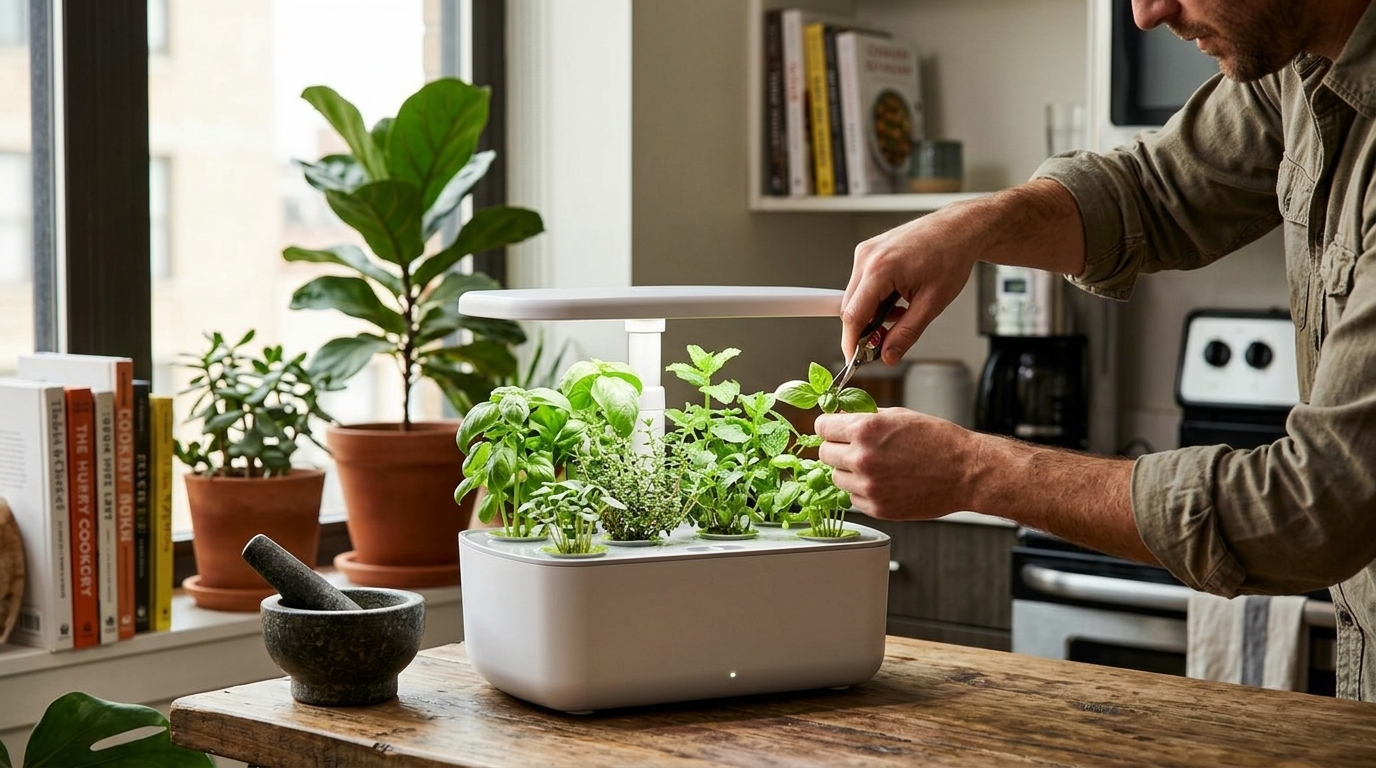
The AeroGarden is far more than a pot with a lamp. It represents decades of research into hydroponics, a method of growing plants using nutrient-enriched water instead of soil. This specific model features a specialized 20-watt LED panel that emits a full spectrum of light, optimized for photosynthesis. Unlike natural sunlight, which can be inconsistent depending on the season or the orientation of a home, the AeroGarden provides 16 hours of perfect "sunshine" daily, accelerating plant growth up to five times faster than traditional soil gardening.
The system's brilliance lies in its simplicity. A built-in sensor monitors water levels, while a digital control panel reminds the user when to add liquid nutrients. For the urban dweller in cities like London or New York, where balcony space is a luxury and time is scarce, this automation removes the maintenance anxiety, turning even the most notorious "black thumb" into a successful grower.
The Psychology of Urban Gardening
Why should a consumer in 2026 invest in a device to grow basil and parsley when they can easily find them at a supermarket? The answer lies in the "Biophilia" hypothesis. The presence of living, growing organisms within a home has been proven to lower cortisol levels and improve mood. In an era where digital fatigue is pervasive, engaging with an AeroGarden offers a tangible, analog satisfaction. There is something deeply primal about watching a seed sprout—a process that technology now makes accessible without the mess of soil.
Furthermore, the quality of the produce is incomparable. Store-bought herbs often travel hundreds of miles, losing their essential oils and nutritional value during transport. With an AeroGarden, the harvest happens at the moment of consumption. This "zero-distance" from source to plate is not just a culinary preference; it is a small political act against the hyper-industrialized food chain.
A Critical View: The Cost of Convenience
Despite the enthusiasm, these devices are not without their critics. The AeroGarden operates on a "closed ecosystem" model, similar to that of printers and ink cartridges. Users are encouraged to purchase the company's pre-packaged seed pods, which are more expensive than standard seeds. Additionally, the continuous operation of the LED lights, while energy-efficient, adds a small but real footprint to household electricity consumption.
However, at the $83 price point, the barrier to entry collapses. The device ceases to be a "toy for the affluent" and becomes a tool for education and sustainability. For families with children, the AeroGarden serves as a living biology lab, teaching the importance of photosynthesis and the plant life cycle, away from tablet screens.
Conclusion
The deal highlighted by Wired is not just about saving money. It is evidence that technology can democratize access to nature. As our cities become denser and climate change makes traditional gardening more challenging, solutions like the AeroGarden will become increasingly essential. At $83, investing in a "green kitchen" has never been more compelling.