In the heart of Beijing’s Haidian district, the atmosphere increasingly mirrors the early days of the Space Race, albeit with a silicon twist. The release of GLM-5.2 by Zhipu AI is not merely another software iteration; it is a declaration of strategic autonomy. As the United States tightens export controls on high-end semiconductors, China is responding with its most potent weapon: mathematical ingenuity and algorithmic optimization that bypasses hardware limitations.
The Rise of Zhipu AI and the GLM-5.2 Phenomenon
Zhipu AI, a unicorn born from the prestigious labs of Tsinghua University, has achieved what many skeptics deemed impossible just two years ago. GLM-5.2 (General Language Model) represents the pinnacle of an intensive effort to reach parity with Western titans like OpenAI’s GPT-4o and Anthropic’s Claude 3.5. Unlike its Silicon Valley counterparts, Zhipu had to forge this model in a resource-constrained environment where access to Nvidia’s H100 or B200 clusters is strictly curtailed.
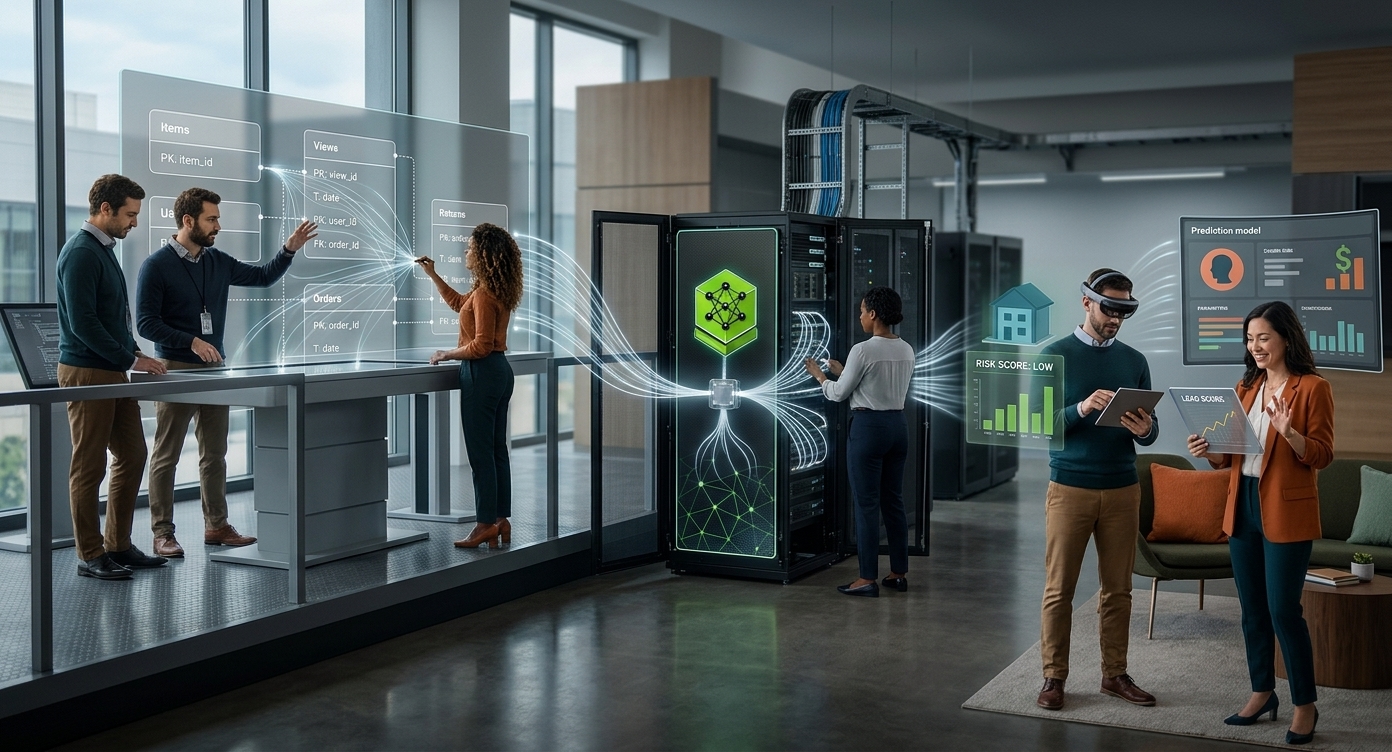
GLM-5.2 distinguishes itself through its native multimodality and the ability to process massive context windows, reaching up to 2 million tokens. This allows the model to ingest entire legal libraries or hours of high-definition video in a single pass. Its architecture, utilizing a sophisticated Mixture of Experts (MoE) framework, enables high performance with a significantly lower power draw—a critical advantage in a Chinese market obsessed with operational efficiency and cost-scaling.
Breaking the Silicon Ceiling
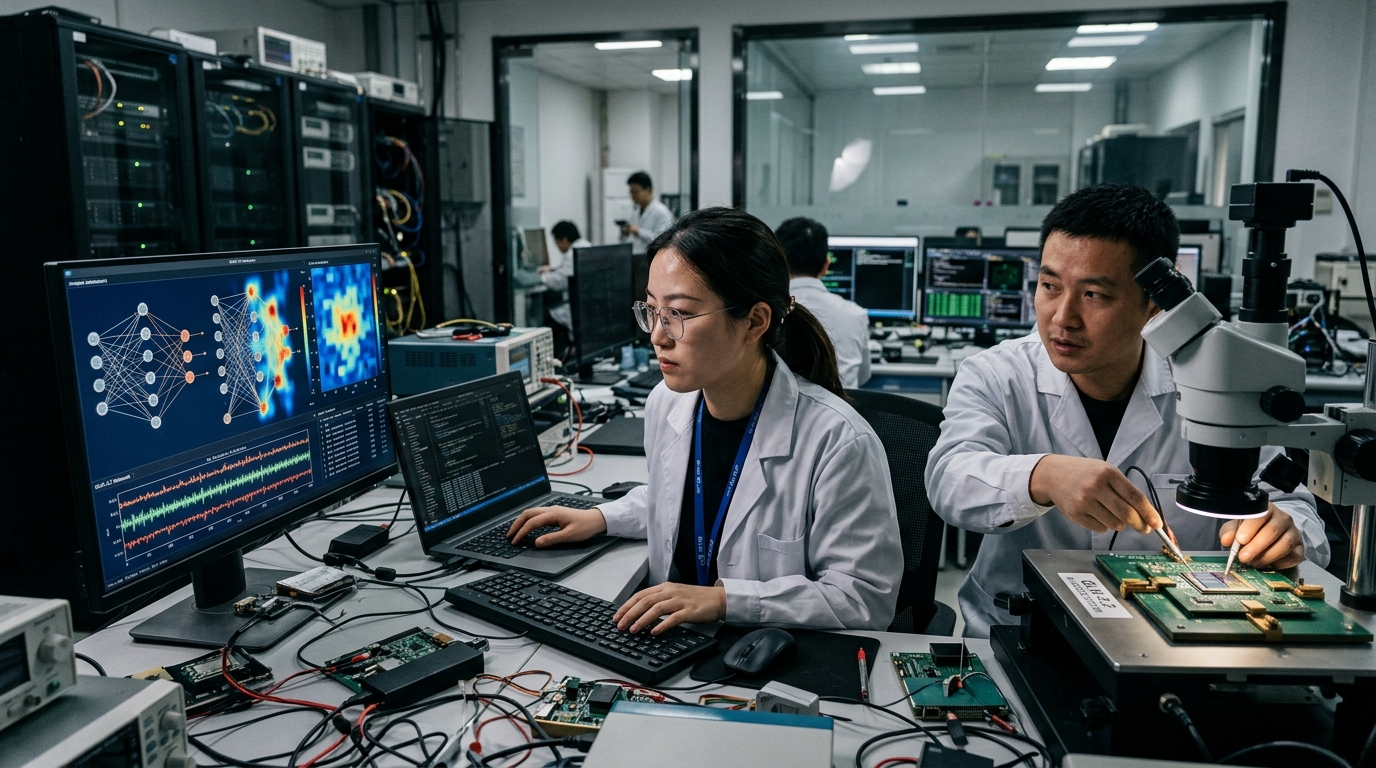
China’s "Catch Up" strategy has evolved from imitation to "forced innovation." Due to sanctions, Chinese engineers have pivoted toward deep software-hardware co-design. GLM-5.2 is meticulously optimized to run on domestic AI accelerators, such as Huawei’s Ascend series and Moore Threads’ GPUs. This creates a self-sustaining ecosystem that is increasingly resilient to external geopolitical shocks.
- Algorithmic Efficiency: Implementing advanced quantization techniques that slash memory requirements without sacrificing reasoning accuracy.
- Domestic Infrastructure: Deep integration with Chinese hyperscalers to squeeze every flop out of available domestic silicon.
- Global Openness: Zhipu’s strategy of releasing open-weights versions of its smaller models fosters a global developer ecosystem that feeds back into its core research.
"Innovation is like water; it will always find a path to flow, no matter how high the walls built by competitors," remarked a senior analyst based in Beijing.
The Geopolitics of Intelligence
GLM-5.2 is more than a technical milestone; it is an instrument of soft power. In the Global South—spanning Southeast Asia, the Middle East, and Africa—Chinese models are becoming the preferred choice. This is driven by lower token costs and the absence of the specific political and cultural constraints often baked into American AI offerings. Kai-Fu Lee’s 01.AI, with its Yi series, follows a similar trajectory, targeting global markets with models that are international by design.
However, the challenge of alignment remains. While GLM-5.2 excels in STEM subjects and coding, its handling of "sensitive" socio-political topics remains strictly governed by the Cyberspace Administration of China (CAC). This is leading to a bifurcated global AI landscape: one side emphasizing liberal safety and alignment, and the other prioritizing industrial productivity and social stability.
The Road Ahead: Parity and Beyond
As we navigate the latter half of 2026, the gap between Beijing and San Francisco is measured in months, not years. The launch of GLM-5.2 demonstrates that China has moved from adaptation to leadership in specific niches, such as model efficiency and large-scale industrial deployment. The race for Artificial General Intelligence (AGI) will not be decided solely by who possesses the most chips, but by who can utilize them most intelligently.
In this environment, global enterprises must decide whether to align with a single stack or navigate a multipolar digital world. GLM-5.2 serves as a stark reminder that in the realm of technology, complacency is the only true existential threat. The race to catch up is over; the race to lead has begun.