

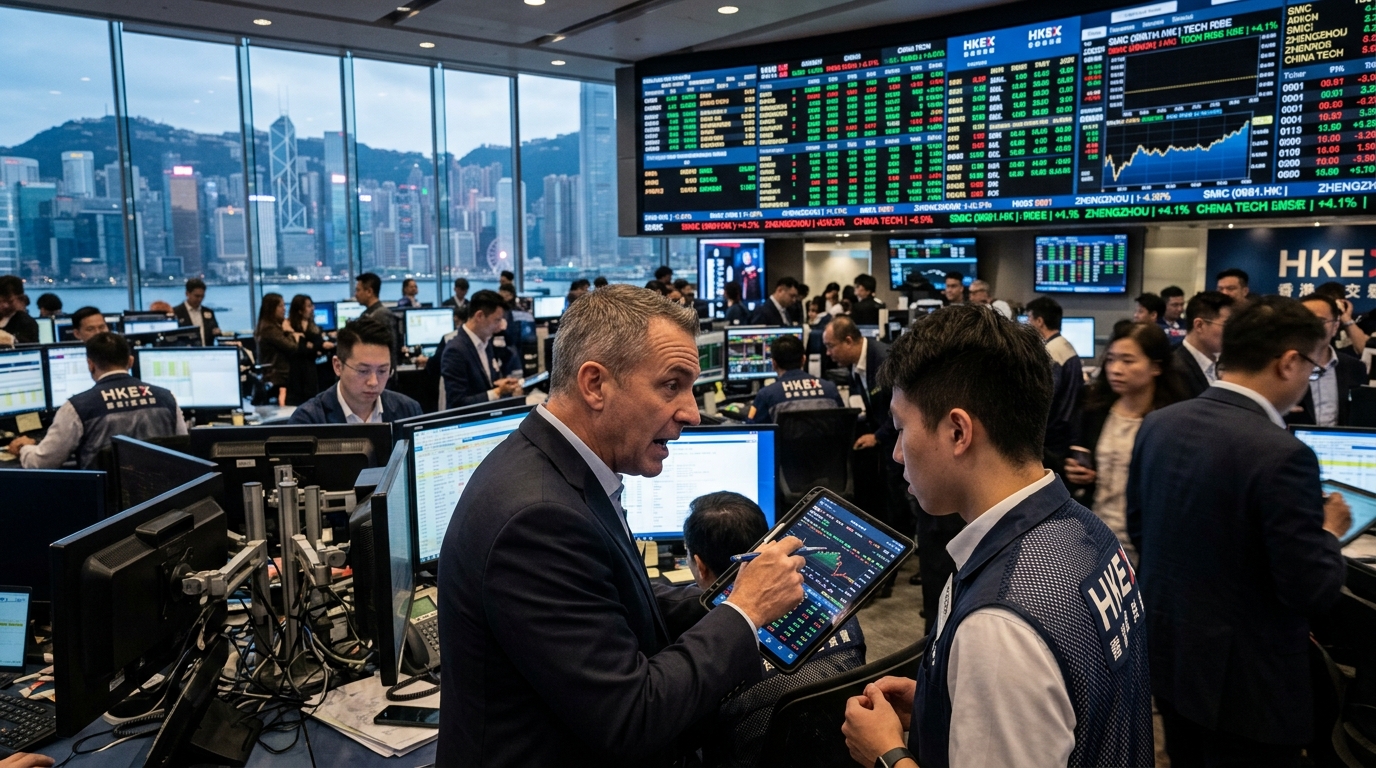
The investment landscape in East Asia is undergoing a seismic shift as the summer of 2026 sees mainland Chinese investors flooding the Hong Kong market with unprecedented intensity. This movement is not merely a hunt for undervalued assets but a strategic positioning at the heart of China’s technological counter-offensive. At the center of this buying frenzy are two names that symbolize Beijing’s hope for autonomy: SMIC (Semiconductor Manufacturing International Corporation) and Zhipu AI.
SMIC: The Bastion of Semiconductor Sovereignty
SMIC, China’s largest chipmaker, has evolved into a symbol of national resilience. As geopolitical tensions with the West continue to reshape global supply chains, China’s ability to produce its own high-end semiconductors has become a matter of national security. Investors from Shanghai and Shenzhen, utilizing the Stock Connect channels, are funneling billions of yuan into SMIC’s Hong Kong-listed shares. They argue that the current valuation fails to reflect the company’s role as the sole provider of critical infrastructure for China’s burgeoning AI industry.
Despite sanctions and restrictions on lithography equipment exports, SMIC has managed to make significant strides in 7nm processes and is reportedly experimenting with even more advanced nodes. State support via the "Big Fund III" has provided the company with the necessary capital injection to sustain aggressive R&D, making it a primary target for those betting on China’s long-term semiconductor dominance.
Zhipu AI: The Unicorn Challenging OpenAI
If SMIC is the "body" of Chinese technology, Zhipu AI aspires to be its "brain." Zhipu, which emerged from the prestigious labs of Tsinghua University, has captured investor imagination as China’s most credible answer to Western Large Language Models (LLMs). Its recent moves toward public exposure or links with listed investment vehicles in Hong Kong have triggered a buying spree.
Zhipu AI is not just building chatbots; it is creating a Generative AI ecosystem tailored to the nuances of the Chinese language and the specific needs of local enterprises. By navigating the political and cultural complexities that often stymie Western models in the region, Zhipu has secured a unique market position. Investor confidence stems from its academic pedigree and its ability to attract the nation’s top tier of AI talent, creating a brain trust that few private entities can rival.
The Strategic Role of Hong Kong
Why are mainland investors choosing Hong Kong over their domestic exchanges? The answer lies in liquidity and international exposure. Hong Kong remains the indispensable bridge between China and global capital. "Southbound" investors—those moving capital from the mainland to the city—are exploiting the significant valuation gap where Hong Kong-listed H-shares often trade at a discount compared to mainland A-shares.
- The Stock Connect program allows for seamless and rapid capital movement.
- The presence of Western institutional investors in Hong Kong provides a form of valuation validation.
- New Beijing regulations encourage innovative firms to list in Hong Kong to preserve its status as a global financial hub.
In conclusion, the current buying mood is not a fleeting trend. It reflects a deep-seated conviction that China is building a parallel technological universe, with SMIC providing the hardware foundations and Zhipu AI delivering the intelligence. For investors, Hong Kong is the premier venue to stake a claim in this new world order.





