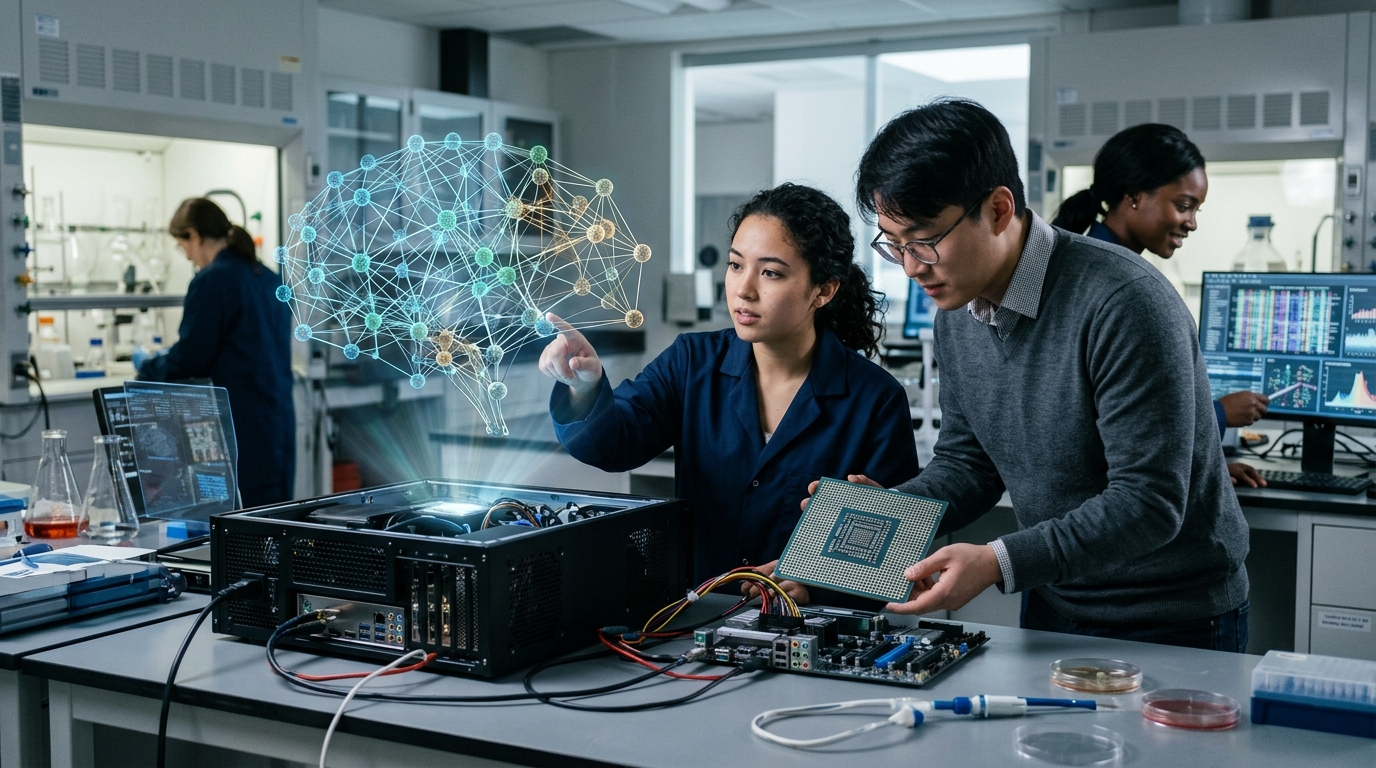
As we navigate the mid-point of 2026, the intersection of medical science and technology has transitioned from a futuristic concept to an urgent reality reshaping the global innovation landscape. The recent initiative in Vietnam, focusing on encouraging and supporting young scientists in the research and application of Artificial Intelligence (AI) in healthcare, serves as a poignant microcosm of a broader international trend. With healthcare systems worldwide grappling with aging populations and chronic staff shortages, the next generation of researchers is being called upon to bridge the chasm between traditional clinical practice and advanced algorithmic solutions.
The Strategic Imperative of Youth-Led Innovation
Investing in human capital, particularly young scientists, is not merely an educational necessity; it is a strategic survival choice for national health systems. Today’s young researchers possess a unique advantage: they are "digital natives" who intuitively understand the architecture of data. In Vietnam, government and academic bodies recognize that AI can offer solutions to problems once deemed insurmountable—such as early diagnosis in remote provinces or personalized treatment protocols for rare diseases.
These initiatives include the establishment of specialized laboratories, the provision of targeted grants, and the hosting of international symposia where young minds can interface with world-leading experts. The focus is strictly on "translational research"—ensuring that innovations move swiftly from the lab bench to the patient’s bedside. This necessitates a transdisciplinary approach, where software engineers work in tandem with clinicians, forging a new lexicon that blends Python scripts with clinical pathology.
From Diagnostics to Therapeutic Precision
The contribution of AI to healthcare, steered by the new generation, revolves around three core pillars: medical imaging, genomics, and predictive analytics. Deep learning models developed by young researchers are now capable of identifying malignant tumors in radiological scans with a degree of precision that frequently rivals or exceeds that of seasoned radiologists. However, the objective is not to replace the physician but to augment their cognitive capabilities.
- Automated Triage: Systems that prioritize emergency cases based on real-time risk assessment.
- Pharmacogenomics: DNA analysis to determine the most effective drug dosages for individual patients.
- Remote Monitoring: Wearable technologies that predict cardiac events before clinical symptoms manifest.
Particularly in emerging economies, AI serves as a "force multiplier." With fewer doctors per capita, AI-driven tools enable mass screening programs that reduce costs and improve public health outcomes. Young Vietnamese scientists are leading the charge in localizing these technologies, ensuring that algorithms are trained on datasets that reflect the specific genetic and environmental nuances of the local population.
Challenges and the Ethical Frontier
Despite the palpable enthusiasm, the integration of AI into medicine faces significant hurdles. The new generation of researchers is confronting critical questions regarding data privacy and the ethical deployment of algorithms. The "black box" nature of certain AI models—where the decision-making process is opaque—remains a significant point of contention within the medical community. How can a clinician trust a diagnosis if the underlying logic remains hidden?
"Technology without ethics is blind, and medicine without data is limited. Young scientists must be the guardians of transparency," noted a key organizer of the Vietnamese initiative.
Furthermore, the specter of "brain drain" looms large. Talented researchers from nations like Vietnam are often recruited by Western tech giants. Establishing a domestic ecosystem that offers competitive incentives, robust funding, and clear career trajectories is essential to retaining innovation locally and ensuring that the benefits of AI are equitably distributed.
The Future: A Collaborative Alliance
Looking ahead, the success of AI in healthcare will hinge on the synergy between human intuition and machine intelligence. Young scientists are being trained not just in coding, but in empathy. The ability to interpret an algorithm’s output and communicate it with sensitivity to a patient remains an inherently human skill.
In conclusion, the push to encourage AI research in healthcare is an investment in humanity itself. As young scientists take the helm, the promise of a more equitable, efficient, and accessible healthcare system moves within reach. Vietnam’s example demonstrates that technological sovereignty is no longer the exclusive domain of a few nations, but the result of systematically nurturing young, brilliant minds.