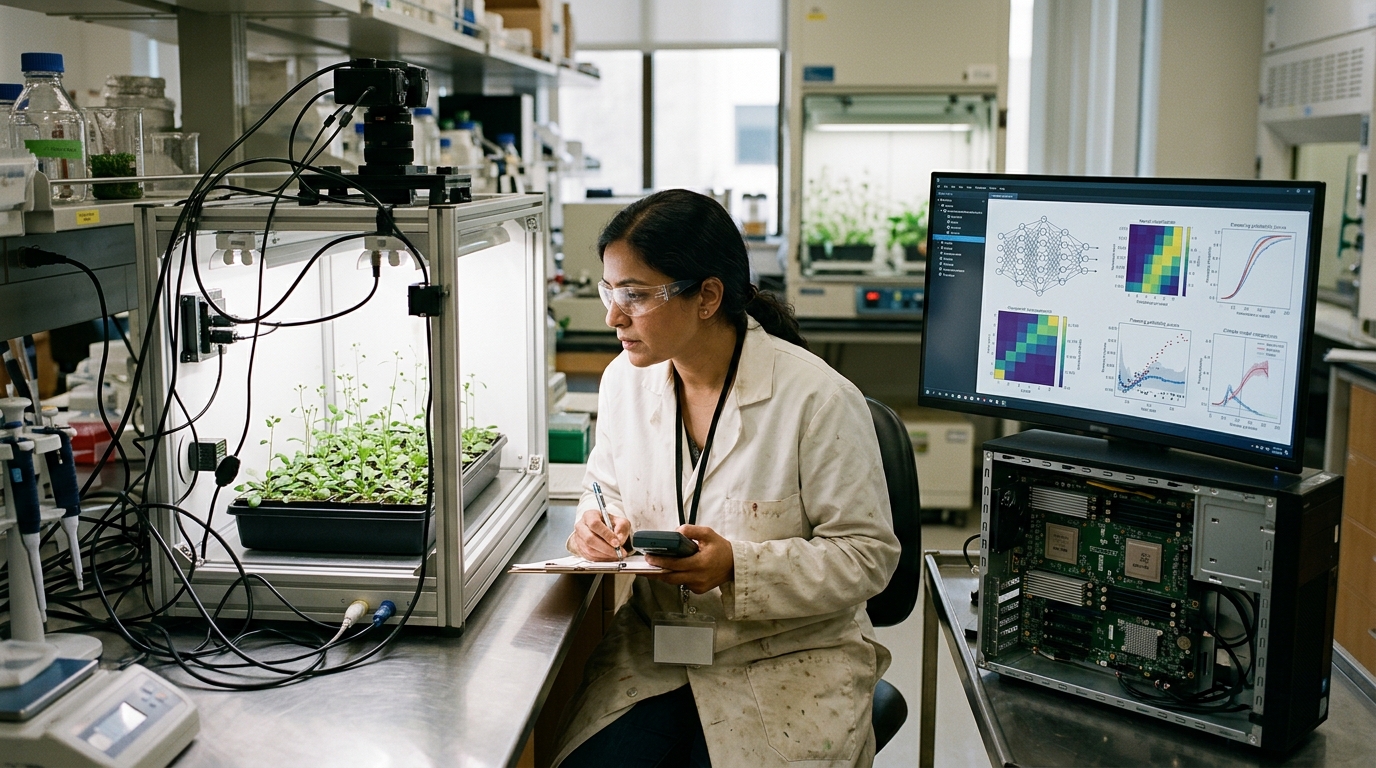
Nature operates on an ancient, precise schedule. For millions of years, the appearance of the first buds in spring was perfectly synchronized with the awakening of pollinating insects. However, anthropogenic climate change has broken this sacred pact. Today, Artificial Intelligence (AI) is emerging as the most valuable ally for scientists in understanding this "seasonal shift," offering a detailed picture of how rising temperatures are reprogramming the planet's flora.
The Phenological Gap and the Contribution of Machine Learning
The study of periodic biological phenomena, known as phenology, traditionally relied on painstaking field observations. Botanists manually recorded flowering dates, a process that required decades to yield statistically significant conclusions. The advent of Artificial Intelligence has changed the game. Using computer vision algorithms, researchers can now analyze millions of digitized specimens from historical herbariums dating back to the 19th century.
These AI models are trained to recognize plant growth stages—from closed buds to full bloom—across thousands of different species. By comparing centuries of data with modern satellite imagery and observations from citizen science apps, AI has revealed a disturbing trend: plants are flowering, on average, several days earlier each decade. This premature flowering is not just an aesthetic change in the landscape but a distress signal for ecological balance.
The Risk of "Mismatch" and its Consequences
The biggest problem highlighted by AI analysis is ecological mismatch. While plants respond primarily to rising soil and air temperatures, many pollinators, such as specific species of bees and butterflies, base their life cycles on day length (photoperiod). When flowers bloom before their pollinators are ready to fly, a gap is created. Plants are left without fertilization, and insects without food.
- Biodiversity Loss: Species that cannot adapt quickly face extinction.
- Threat to Food Security: Many of the crops that feed humanity depend on precise synchronization with insects.
- Ecosystem Disruption: Changes in flowering affect birds and mammals that feed on fruits and seeds.
AI allows scientists to create predictive models identifying which species are most at risk, enabling targeted conservation interventions. For instance, in the Mediterranean, studying the flowering of aromatic plants and fruit trees through AI helps farmers adapt their practices to new climatic conditions.
From Observation to Prediction: The Future of Ag-Tech
The integration of AI into climate research doesn't stop at recording the past. Today, "digital twins" of entire ecosystems are being developed. These complex computational models simulate how vegetation will react to different global warming scenarios. In this way, Artificial Intelligence is transformed from an analytical tool into a protective shield.
"We are not just measuring the destruction. We are using AI to understand the language of nature before it falls silent," notes a researcher involved in international flowering monitoring programs.
In conclusion, the "seasonal shift" in plant flowering is one of the most visible and concerning proofs of the climate crisis. Artificial Intelligence provides us with the eyes to see the invisible and the speed to process the vast volume of data required to save our natural world. The challenge now shifts from science to political will: will we use this knowledge to halt climate collapse?