

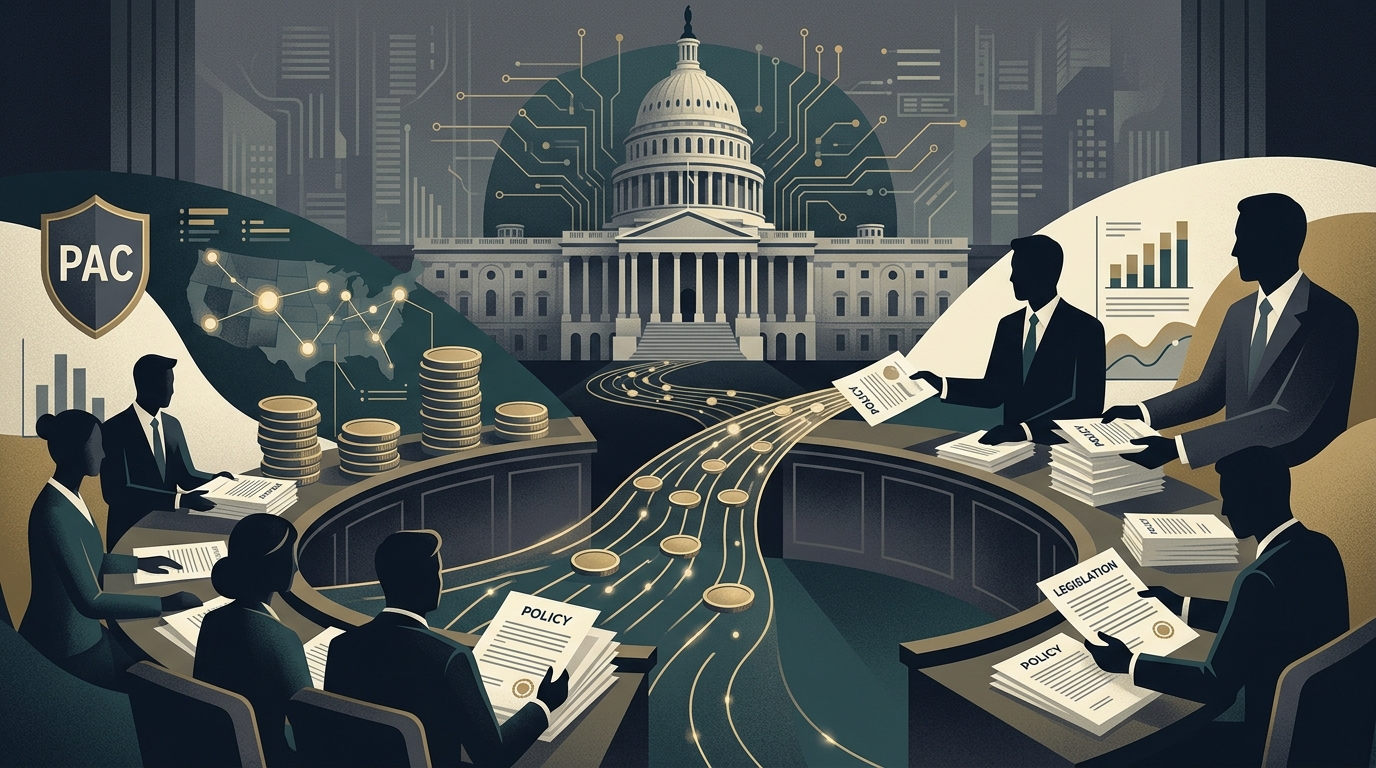
In the high-stakes arena of American politics, eight-figure spending is usually reserved for presidential bids or razor-thin Senate races. However, the recent revelation that AI and crypto-linked Super PACs poured a staggering $27 million into a local election for the New York State Assembly has sent shockwaves through the political establishment. The case of Alex Bores, a Democratic lawmaker representing Manhattan’s 12th District, is not merely a story of local triumph; it is the opening salvo of a new era where Silicon Valley buys regulatory certainty directly from the legislative source.
The Strategy of Pre-emptive Capture
Why spend $27 million on a seat that traditionally costs a few hundred thousand to defend? The answer lies in the shifting geography of tech regulation. As the U.S. Congress remains paralyzed by hyper-partisanship, states—led by California and followed closely by New York—have stepped into the vacuum to regulate artificial intelligence. Tech corporations have realized that it is far more cost-effective to influence a local lawmaker drafting a bill than to lobby against a finished federal law or fight a Supreme Court battle years later.
Alex Bores is a unique target. He is one of the few legislators nationwide with a background in computer science. For the AI industry, this is a double-edged sword: he understands the tech well enough to write functional laws, but his expertise gives him outsized influence over his colleagues. The investment by Super PACs like Fairshake and other VC-backed entities aims to ensure that the "experts" within the legislative body remain ideologically aligned with industry growth, steering clear of what the sector calls "regulatory overreach."
The Fear of the "Regulatory Patchwork"
A primary driver for this massive spending is the industry's dread of a fragmented regulatory landscape. If New York mandates strict algorithmic transparency while Florida takes a hands-off approach, the compliance costs for tech giants would be astronomical. By funding candidates in strategic hubs like New York City, Big Tech hopes to establish a "gold standard" of business-friendly regulation that other states will eventually mirror.
- New York serves as a global financial hub; its laws often become the blueprint for other jurisdictions.
- Local legislators are more accessible, making the ROI on lobbying significantly higher than at the federal level.
- AI policy requires specialized knowledge, which lawmakers often outsource to industry-funded think tanks.
"We aren't buying votes; we are buying understanding," is the common refrain from PAC representatives. Yet, the reality of political economy suggests that access is the precursor to agenda-setting.
Democracy in the Age of Algorithms
The scale of this spending raises profound questions about the integrity of local representation. When a single industry can saturate a local market with advertisements, the voices of constituents and grassroots organizations are effectively drowned out. In the 12th District, residents saw their mailboxes overflow with flyers and their social media feeds dominated by targeted ads funded by entities based thousands of miles away in Palo Alto and San Francisco.
The stakes extend far beyond the 2026 election cycle. This is about who defines the ethical boundaries of AI for the next generation. Will it be elected representatives accountable to their neighbors, or those who owe their political survival to an opaque stream of millions from the tech sector? The battle for New York is a microcosm of a global trend where technological power is being converted into political hegemony with surgical precision.
Conclusion: The New Political Reality
As we move further into 2026, the integration of AI into every facet of life makes its regulation the most consequential political issue of our time. The $27 million strategy proves that Silicon Valley is no longer waiting for permission; it is aggressively shaping the environment in which it operates. The need for campaign finance reform and independent technical resources for lawmakers has never been more urgent, ensuring that the laws of the future serve the public good rather than corporate bottom lines.





