

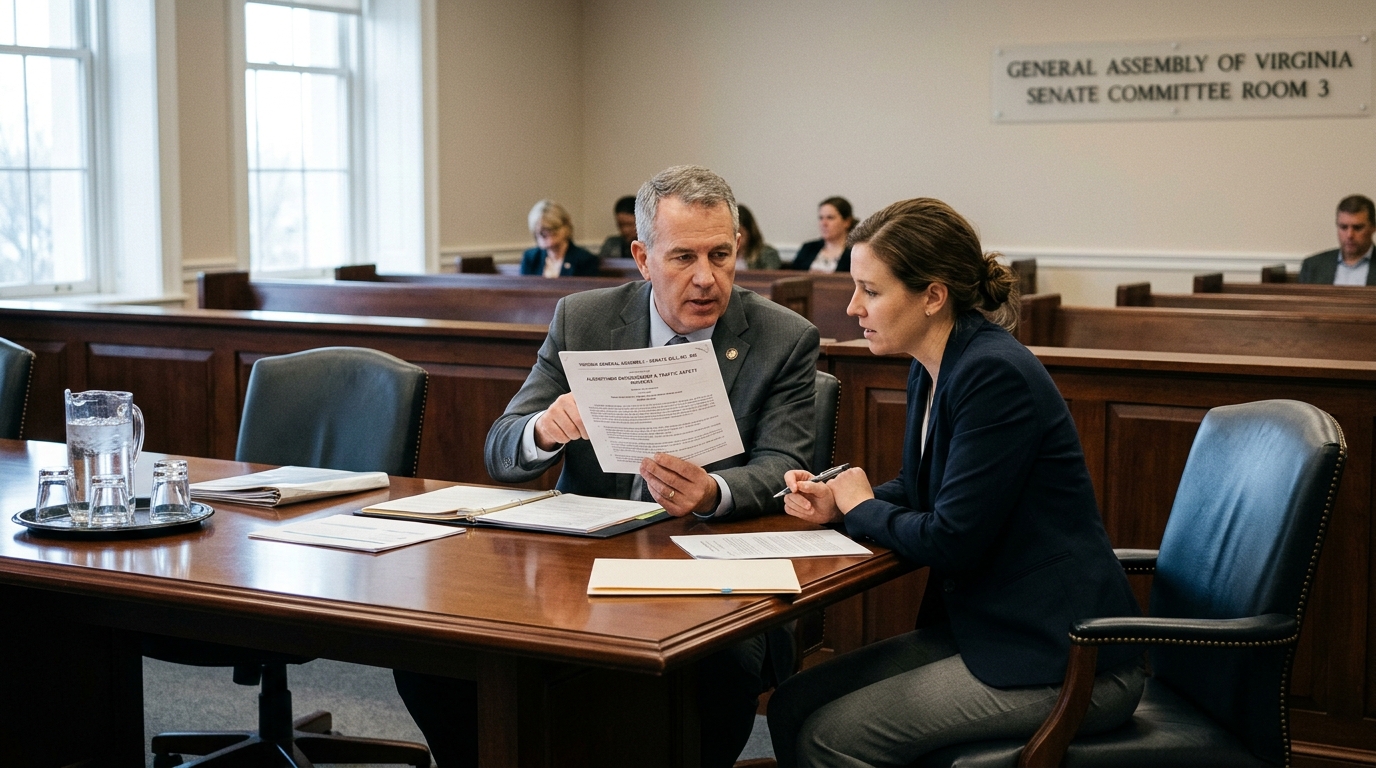
In a move that signals a fundamental shift in how urban communities manage road safety, the Commonwealth of Virginia has enacted legislation allowing local jurisdictions to deploy AI-powered cameras to enforce stop sign and crosswalk compliance. This decision, signed into law by Governor Glenn Youngkin, represents more than a mere technical upgrade to surveillance hardware; it is a profound pivot in the relationship between the state, technology, and the citizenry.
The Technological Infrastructure of Enforcement
These new cameras are far from simple video recording devices. They are sophisticated computer vision systems programmed to recognize the "dynamics of a stop." While traditional speed or red-light cameras rely on binary triggers, enforcing a stop sign requires the AI to distinguish between a full cessation of movement and a "rolling stop." These systems utilize neural networks trained on thousands of hours of traffic footage, enabling them to analyze wheel rotation and vehicle pitch in real-time to determine compliance.
Furthermore, the technology extends to pedestrian crosswalks, where the AI must evaluate the proximity of a pedestrian and the driver’s intent to yield. This level of automated judgment introduces a new layer of complexity: machines are now tasked with interpreting the spirit of traffic laws in situations that often involve subtle human cues and non-verbal communication between drivers and walkers.
The Imperative for Public Safety
Support for the bill is rooted in sobering statistics. Pedestrian fatalities in the United States have reached a forty-year high, with driver distraction and increased vehicle size cited as primary contributors. Proponents of the legislation argue that human-led policing is inconsistent, prone to bias, and inherently dangerous for both officers and motorists due to the potential for escalation during traffic stops.
By automating the process, authorities hope to create a sense of "omnipresent enforcement" that compels drivers to adhere to rules not out of fear of a chance encounter with a patrol car, but out of the certainty that every violation is recorded. Virginia is following the lead of several global metropolises adopting "Vision Zero" strategies, which aim to eliminate traffic deaths through a combination of infrastructure design and technological oversight.
Critique and Privacy: The Cost of Safety
However, this transition is met with significant pushback. Civil liberties organizations warn against the expansion of the "surveillance state." The deployment of AI cameras creates a pervasive monitoring network that tracks the movements of citizens with unprecedented granularity. There are also persistent concerns regarding algorithmic reliability. What happens when an AI misinterprets a shadow as a pedestrian or fails to account for a vehicle malfunction? The process for contesting an automated ticket can be bureaucratic and costly, effectively shifting the burden of proof from the state to the individual.
Moreover, the issue of equity remains central to the debate. Historically, automated enforcement tools are disproportionately placed in lower-income neighborhoods, leading to a regressive financial burden on vulnerable populations. While the Virginia law mandates that revenue from these fines be reinvested into road safety projects, skeptics fear that municipalities will eventually view these systems as "revenue engines" to plug budgetary gaps rather than purely safety-oriented tools.
Conclusion: The Future of Algorithmic Governance
Virginia’s legislative shift is a harbinger of a broader global trend. As cities become "smarter," the enforcement of social norms and legal codes is migrating from human discretion to algorithmic precision. The question remaining is not whether technology can make roads safer—the data suggests it likely can—but whether we are prepared to accept constant digital oversight as the necessary price for that security. The balance between public protection and individual liberty is being recalibrated, and the intersections of Virginia are the latest testing ground for this new social contract.




