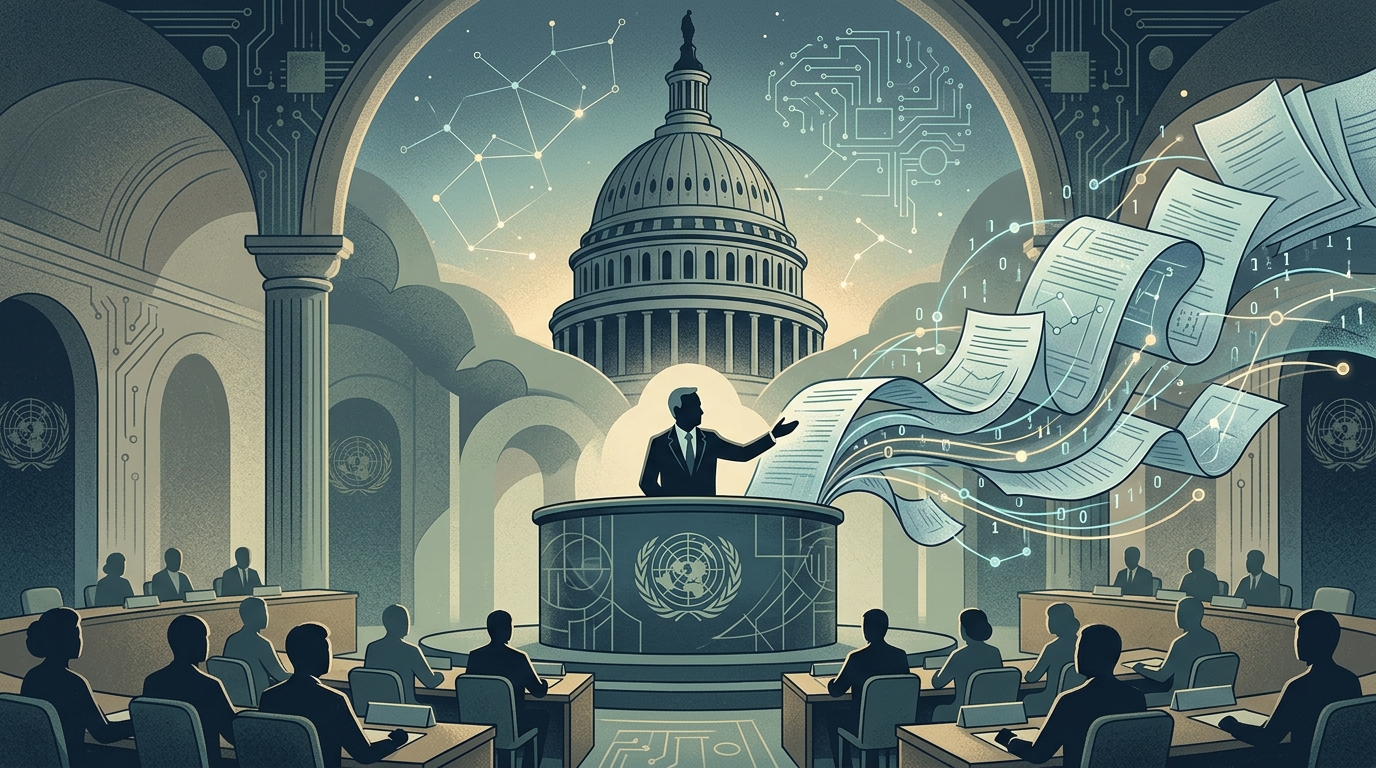
In a defining moment for global technological history, UN Secretary-General António Guterres has issued a powerful call for the immediate establishment of global rules to govern the development and use of Artificial Intelligence (AI). As we navigate mid-2026, the pace at which AI is being integrated into every facet of human activity—from healthcare to autonomous weapons systems—has surpassed all forecasts, leaving national regulatory frameworks struggling to catch up.
Guterres, speaking before the General Assembly, emphasized that AI is not merely a technological tool but a force capable of reshaping economies and societies, for better or worse. His concerns center on two main pillars: the existential threat posed by unregulated AI and the risk of a new 'digital apartheid,' where wealthy nations reap the technology's benefits while developing ones sink into a new form of technological dependency.
The Need for a 'Global Digital Compact'
Guterres's proposal is not new, but in 2026, it carries a renewed sense of urgency. The 'Global Digital Compact' promoted by the UN aims to create a shared foundation of principles to ensure that AI remains human-centric. According to the Secretary-General, voluntary compliance by Big Tech giants is no longer sufficient. 'We cannot leave the future of humanity in the hands of algorithms and the profit-driven interests of a few corporations,' he stated pointedly.
The proposed framework includes the creation of an international scientific body for AI, similar to the Intergovernmental Panel on Climate Change (IPCC). This body would be tasked with assessing risks and providing evidence-based advice to member states. Furthermore, Guterres is calling for a ban on 'lethal autonomous weapons systems,' arguing that the decision over life and death should never be delegated to a machine.
The Geopolitical Chessboard and Techno-Nationalism
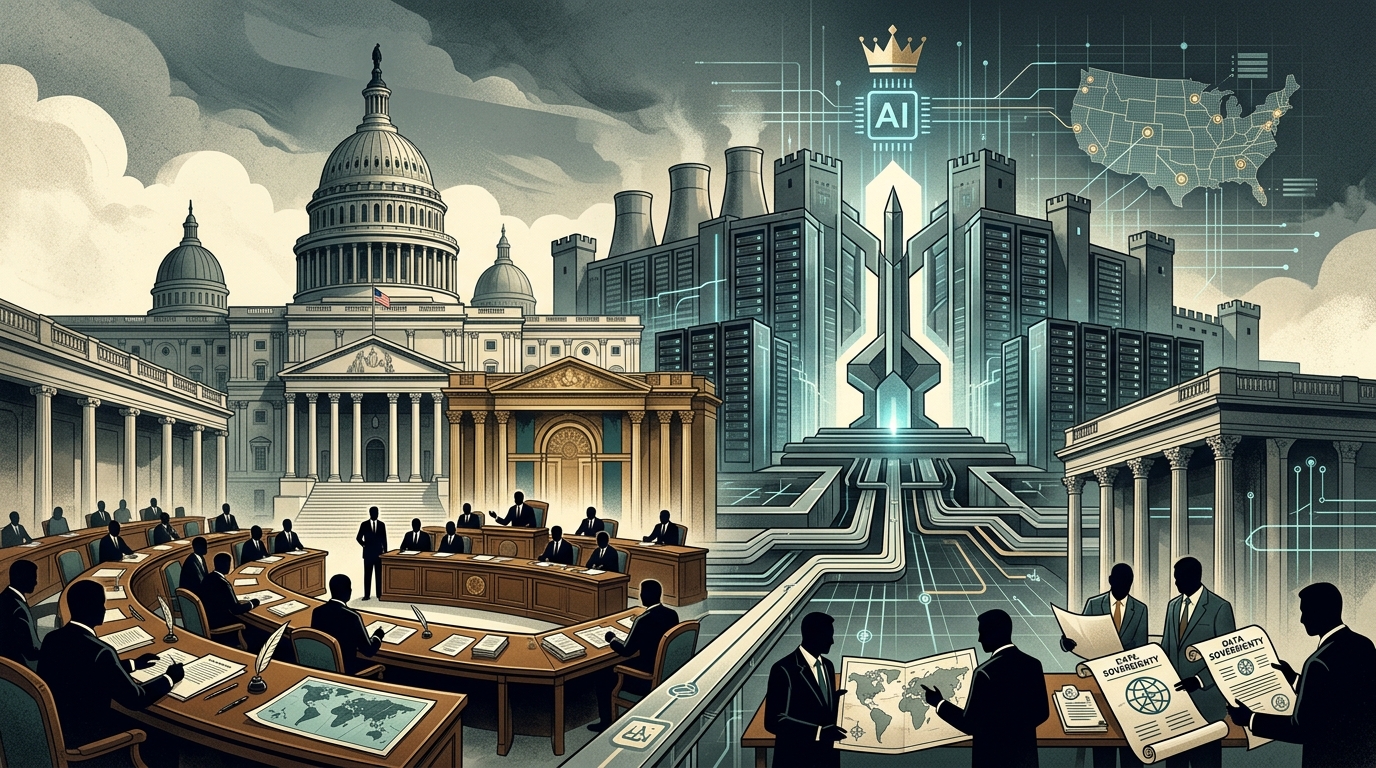
One of the greatest obstacles to achieving global consensus is the rise of 'techno-nationalism.' The US, China, and the European Union have already developed their own strategies, which often clash. While the EU leads with the AI Act, focusing on human rights, Washington and Beijing are competing for supremacy in computing power and semiconductor dominance.
Guterres warned that this competition could lead to a fragmented digital world, where differing standards and protocols make international cooperation impossible. For smaller nations, the need for a unified voice within the UN framework is considered vital to protect their economies from the whims of global monopolies. The fragmentation of AI standards could effectively create digital 'borders' that hinder scientific progress and global trade.
The Voice of the Global South
A central theme of Guterres's speech was the commitment to including the Global South. Today, 80% of AI research and development is concentrated in just six countries. This inequality creates a new form of colonialism, where data from developing nations is mined to train models that are then sold back to them at high prices.
The UN proposes the creation of a 'Global AI Fund' to finance infrastructure and education in Africa, Latin America, and Southeast Asia. The goal is to ensure that AI is used to achieve the Sustainable Development Goals, such as fighting hunger and improving education, rather than widening the gap between the rich and the poor. AI's potential to solve local problems—like crop optimization or disease tracking—can only be realized if the technology is decentralized.
'Artificial intelligence must be a force for good, accessible to all, and not a tool for surveillance or repression,' Guterres concluded.
In conclusion, the UN's call is a wake-up call for the international community. Technology moves at the speed of light, while diplomacy moves at a snail's pace. If the world fails to bridge this gap soon, we risk losing control over the very tools we created to serve us. The challenge is not just technical; it is profoundly political and moral.