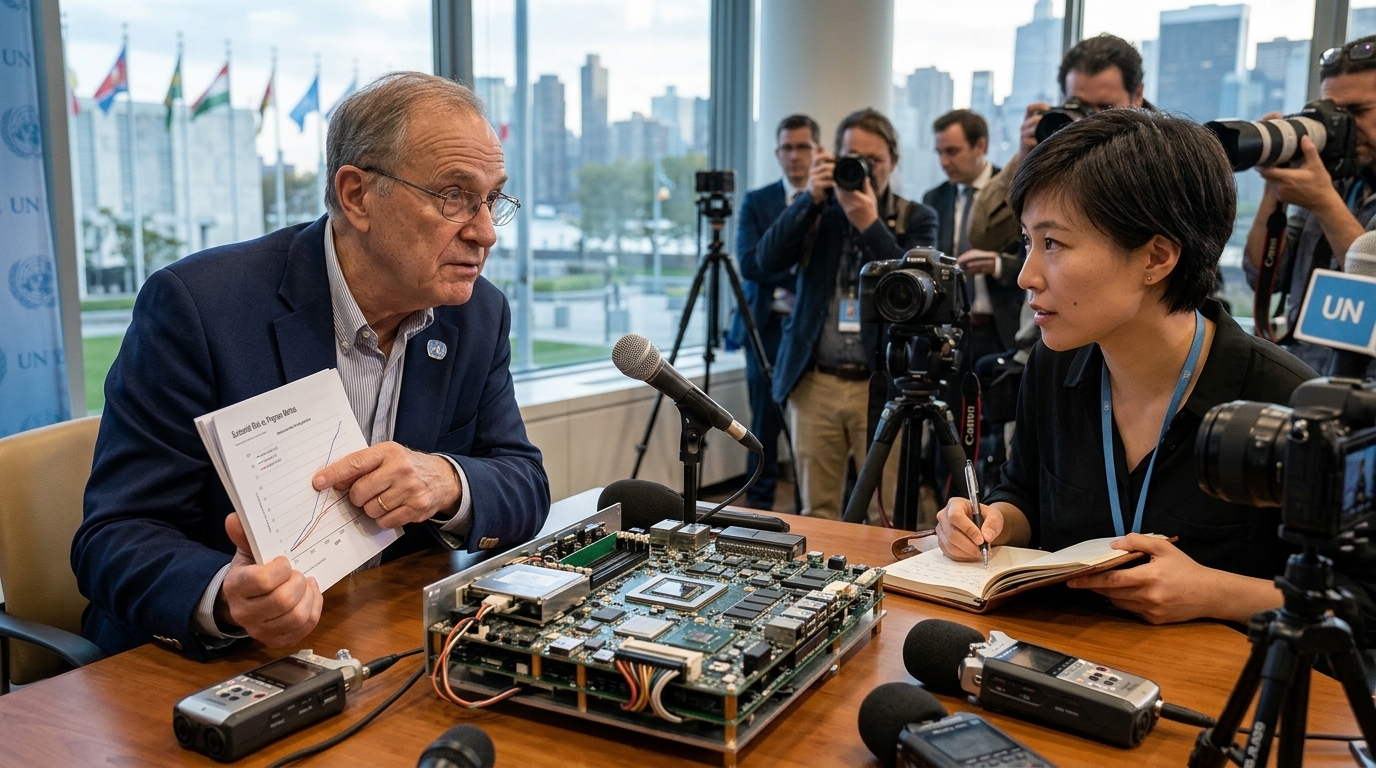
At a pivotal moment for humanity, the United Nations has released a comprehensive and long-awaited report mapping the future of Artificial Intelligence (AI). The report, the product of a High-Level Advisory Body, is not merely a technical analysis but a clarion call for action to the global community. As AI integrates at breakneck speed into every facet of economic and social life, the UN warns that we face a dual challenge: harnessing a technology that can solve global problems while preventing risks that could undermine democracy and social cohesion.
The Digital Divide and the Inequality of Nations
One of the central themes of the report is the highlighting of the widening "digital divide." While developed economies in the North invest trillions in AI infrastructure, the Global South risks being left behind, turning technological progress into a tool for further marginalization. The report emphasizes that seven countries and a handful of corporations currently control most of the world's computing power and data. Without inclusive governance, AI could exacerbate existing inequalities rather than mitigate them.
- The concentration of power in a few tech giants threatens the national sovereignty of smaller states.
- Lack of access to local data hinders the development of AI solutions tailored to the needs of developing nations.
- Education and training must become a global priority to avoid mass unemployment due to automation.
Risks to Democracy and Security
The UN report sounds the alarm on the use of AI in spreading disinformation and manipulating public opinion. Deepfakes and sophisticated targeting algorithms have already begun to erode trust in institutions. Furthermore, the prospect of Lethal Autonomous Weapons Systems (LAWS) remains one of the greatest nightmares of international diplomacy. The report proposes the creation of an international scientific panel on AI, modeled after the IPCC for climate change, which would provide objective data and assess risks in real-time.
"Artificial Intelligence must not be a force that operates unchecked. We must guide it based on the United Nations Charter and human rights," the text explicitly states.
Towards Global Governance
The UN's proposal for a "Global Digital Compact" aims to harmonize national laws. Although the European Union has already taken the first step with the AI Act, the UN argues that we need a mechanism that transcends regional borders. The creation of a Global AI Fund could finance projects aimed at achieving the Sustainable Development Goals, such as fighting hunger and improving healthcare through algorithmic diagnostics.
The Need for Transparency and Accountability
Finally, the report underscores that technology companies cannot remain immune to scrutiny. The "black box" nature of many algorithms makes accountability impossible when errors or biases occur. The UN calls for full transparency in training data and mandatory impact assessments for every new large-scale AI model before it is released to the public. The balance between innovation and safety is delicate, but the report makes it clear that the safety of humanity cannot be sacrificed on the altar of profit or geopolitical dominance.