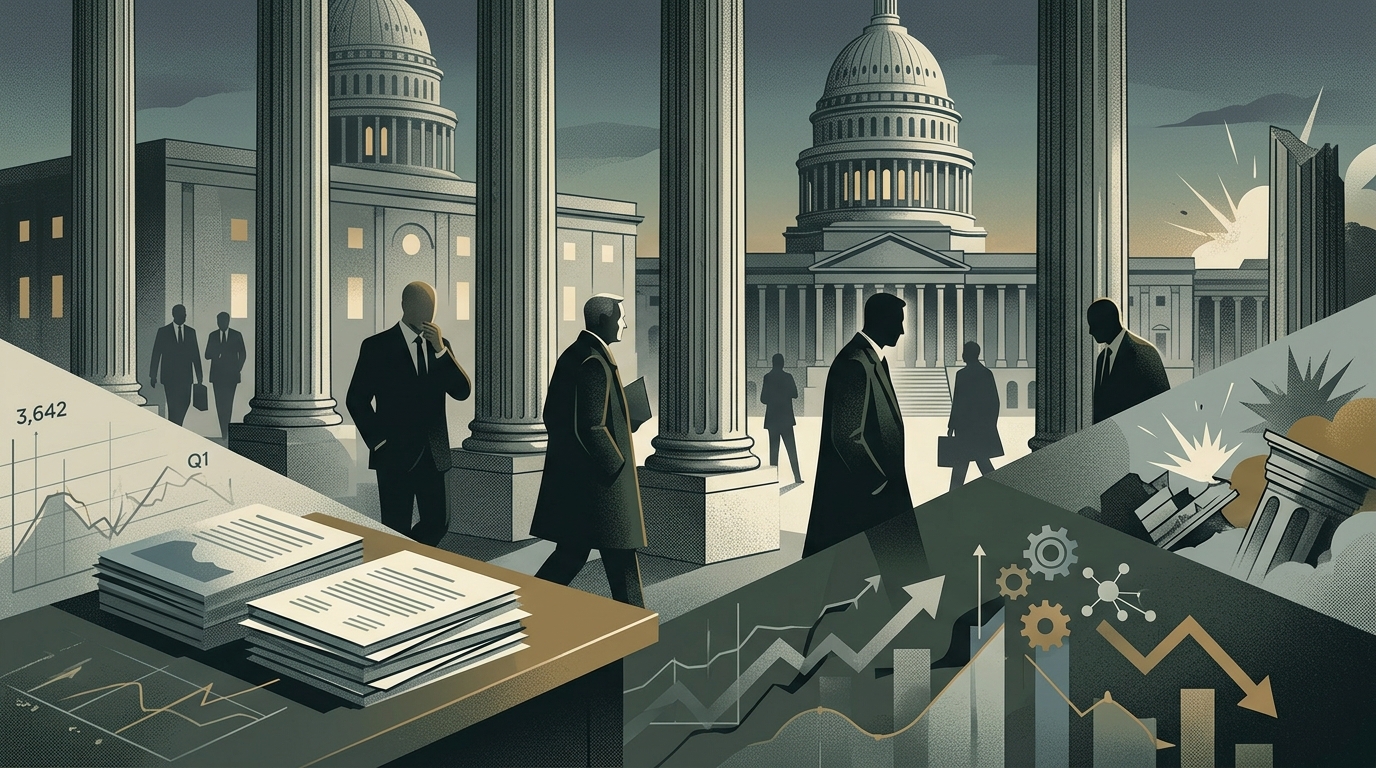
The recent financial disclosure from President Donald Trump for the first quarter of 2026 has sent shockwaves through both the corridors of Washington and the trading floors of Wall Street. According to the filings, a brokerage account held in his name executed an astonishing 3,642 trades in just three months. However, the most alarming aspect isn't the sheer volume of activity, but the timing: the account appeared to 'predict' with mathematical precision the major geopolitical shifts triggered by the administration's own policy decisions.
The Great Exit from Hyperscalers
Throughout January and February, while White House rhetoric remained officially supportive of technological innovation and the AI boom, Trump’s personal account began aggressively liquidating positions in Big Tech giants—the so-called 'hyperscalers' like Microsoft, Alphabet, and Amazon. This move coincided perfectly with classified briefings regarding escalating tensions with Iran, which later culminated in military engagement and a broad 'risk-off' sentiment across tech markets.
Analysts point out that selling tech stocks just before the government announced sweeping new export restrictions on AI chips, citing national security concerns, raises profound questions. Although the Trump Organization and the White House maintain that the President has no role in directing the account—which is purportedly managed by 'independent advisors'—the surgical precision of the moves suggests insider insight rather than a lucky streak. In the world of high-finance, there are no coincidences of this magnitude.
Pivoting to Energy: The 'War Portfolio'
As the account was being scrubbed of tech holdings, it was simultaneously being filled with positions in traditional energy titans and defense contractors. Purchases of ExxonMobil, Chevron, and Lockheed Martin shares accelerated just days before the formal announcement of sanctions on Iranian oil, which subsequently sent crude prices soaring above $110 a barrel. This strategic 'rotation' generated estimated profits in the tens of millions of dollars, occurring exactly when the average American investor was seeing their 401(k)s take a hit due to market volatility.
The defense of the 'blind trust' is now being pushed to its breaking point. In the digital era of 2026, where information moves at the speed of light, the notion that an active President can maintain an account performing 40 trades a day without any directional input strikes critics as a political farce. The SEC is already under immense pressure to launch an investigation, though the White House’s political leverage over regulatory bodies remains a significant hurdle for any meaningful oversight.
Ethics of Power and Market Integrity
This issue transcends mere legality; it strikes at the core of public trust in democratic institutions. When the individual who controls the levers of sanctions and military intervention stands to profit financially from the fallout of those decisions, the democratic process itself is eroded. Trump’s supporters argue this is simply 'smart management' by professionals who read the room correctly. Yet, the statistical probability of executing 3,642 trades with such a high success rate without access to non-public information is virtually zero.
This case reignites the debate over a total ban on stock trading for sitting political officials. At a time when AI is being used to detect market anomalies, Trump’s brokerage account represents the ultimate anomaly. The future of transparency in American politics hangs in the balance, as Wall Street and Washington increasingly appear to operate as communicating vessels for personal enrichment at the highest levels of government.