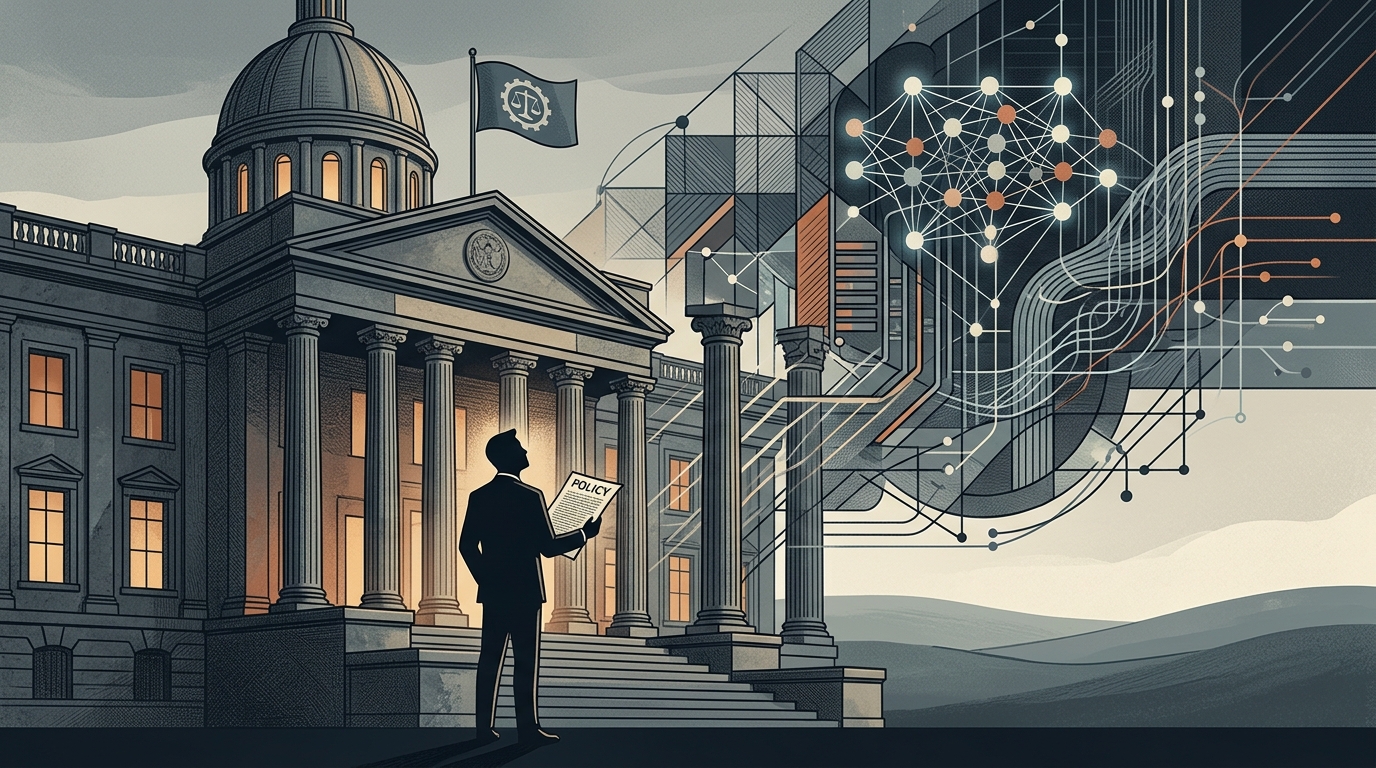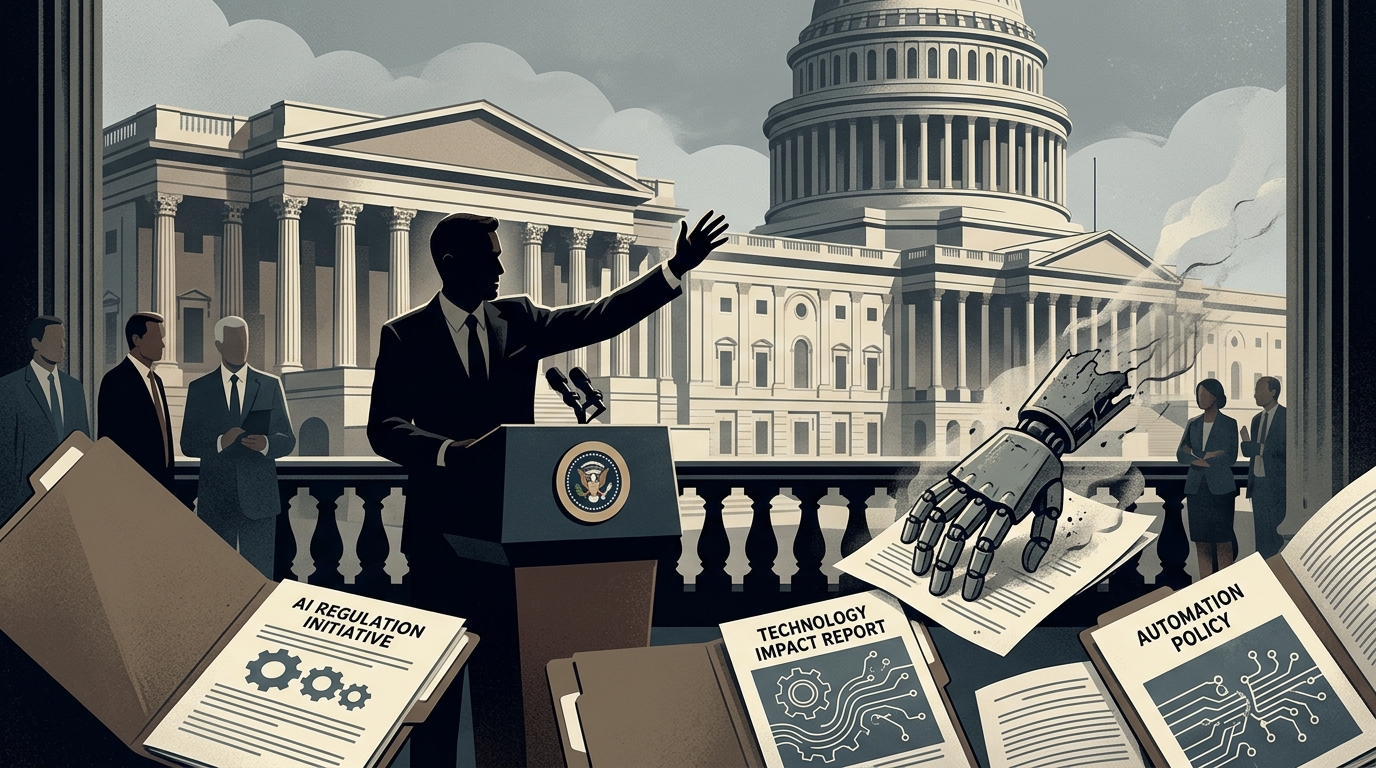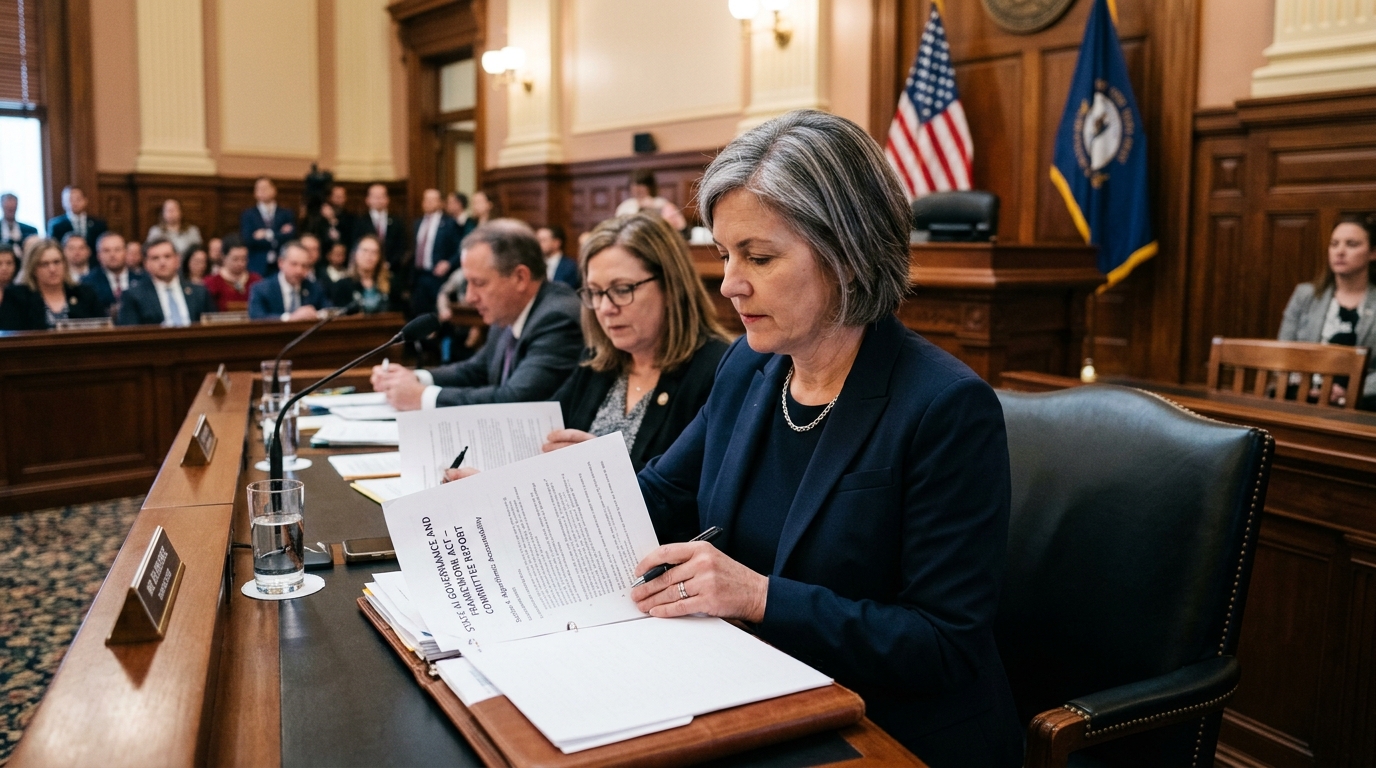
As we move through the first half of 2026, the battle for control over Artificial Intelligence in the United States has shifted from the halls of Congress to state legislatures. The Trump administration, staying true to its campaign promises, has launched a systematic effort to dismantle the regulatory frameworks established in previous years, arguing that excessive oversight is a "shackle on American innovation" and a gift to geopolitical rivals like China. However, this strategy is colliding with a growing wave of state-level initiatives seeking to protect citizens from algorithmic bias and the risks of unchecked automation.
The White House Strategy of 'Absolute Innovation'
Since returning to office, Donald Trump has made it clear that AI is the new frontier of "American Dominance." Through executive orders that rescinded previous AI safety benchmarks, the federal government has adopted a staunchly laissez-faire stance. The argument is simple yet potent: to win the "digital cold war," Silicon Valley firms must be free to experiment without the fear of fines or bureaucratic red tape.
However, this approach has created a vacuum in consumer protection. Without federal standards for algorithmic transparency or data privacy, risks involving bias in hiring, lending, and policing have surged. This is the gap that states are now rushing to fill, creating unprecedented legal friction between local and federal authorities.
The 'Patchwork' of State Laws
Colorado became the first state to pass a comprehensive law protecting consumers from AI, requiring companies to prove that their algorithms do not introduce racial or gender bias. Despite pressure from Washington to "align with national strategy," lawmakers in Denver, and similarly in Sacramento, California, insist that citizen safety cannot be sacrificed on the altar of competition with China.
- Colorado: Mandating audits for high-risk AI systems.
- California: Strict rules targeting deepfakes and political misinformation.
- Utah: Mandatory disclosure of AI usage in consumer-facing interactions.
This trend is creating what legal analysts call a "regulatory patchwork." For Big Tech, this is a logistical nightmare. The need to comply with 50 different sets of rules drastically increases operational costs and creates investment uncertainty.
Silicon Valley’s Reaction and the Preemption Debate
Tech giants find themselves in a paradoxical position. While traditionally opposed to regulation, many companies are now begging the federal government to intervene and pass a single national law that would preempt state rules. They prefer a strict but uniform standard over the current chaotic landscape.
"The lack of a national policy doesn't protect innovation; instead, it smothers it within a web of local restrictions that make it impossible to deploy products at a national scale," says a senior executive at a major software firm who requested anonymity.
The Trump administration has threatened legal action against states that "exceed their authority," arguing that AI regulation touches upon national security and interstate commerce—domains that belong exclusively to federal jurisdiction. This conflict is expected to reach the Supreme Court, which will have to decide where state rights end and federal sovereignty begins in the digital age.
Conclusion: A Divided Digital America
This situation highlights a deeper philosophical divide. On one side, the White House views AI as a geopolitical weapon that must be unleashed. On the other, states view AI as a technology that affects daily life, privacy, and the civil rights of individuals. As long as Washington refuses to establish protective boundaries, states will continue to erect their own digital borders, creating a fragmented market that may ultimately harm the very American hegemony Trump seeks to protect.