

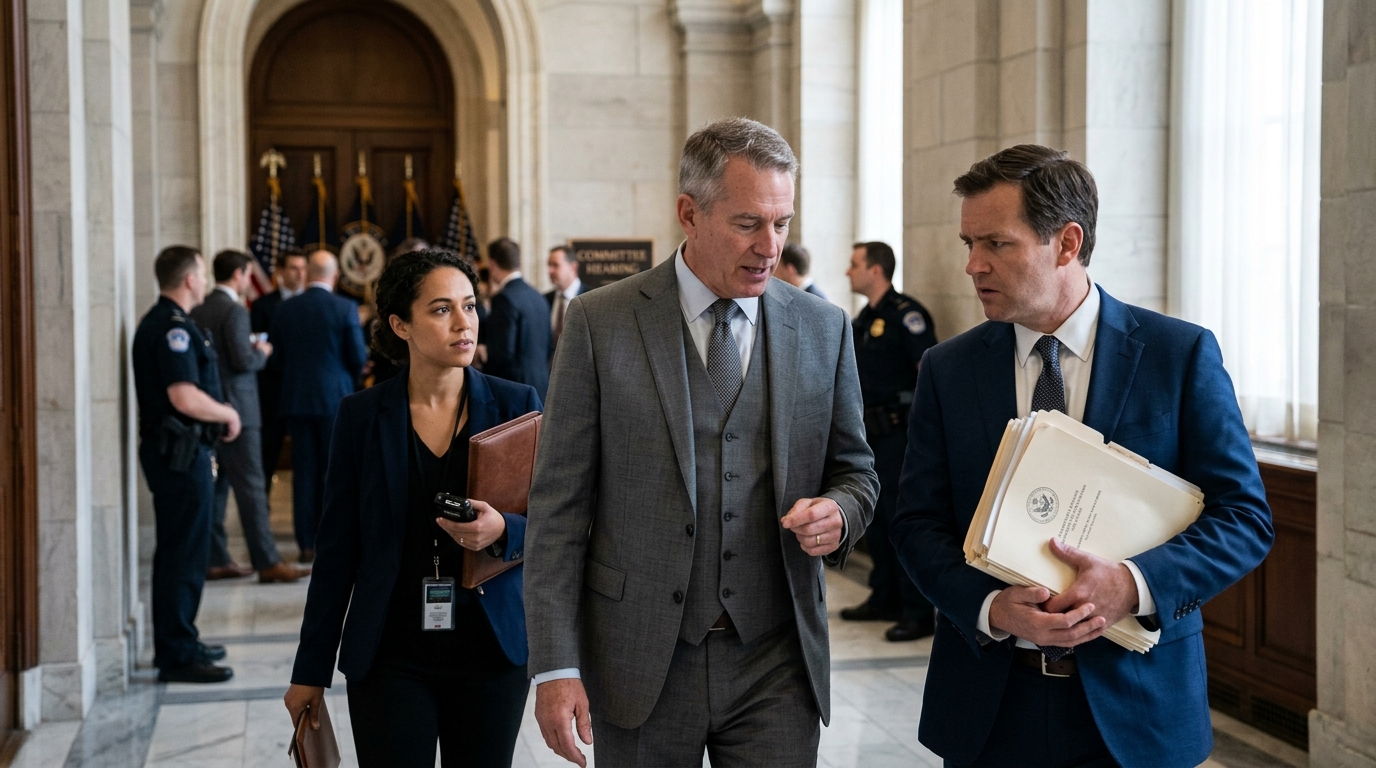
The news that the Trump administration has decided to de-escalate pressure and lift the stringent restrictions previously imposed on Anthropic, the creator of the Claude models, is not merely a bureaucratic shift. It is the formal confirmation of a new doctrine in Washington: Artificial Intelligence is no longer viewed as a risk to be contained, but as a strategic weapon to be unleashed. This decision, emerging through reports from Kathimerini and international outlets, marks a radical break from the policies of previous years, where safety and alignment took precedence over development speed.
From Precaution to Acceleration
For nearly two years, Anthropic sat under the regulatory microscope due to its commitment to 'Constitutional AI.' While the company branded itself as the industry's 'safe' player, restrictions on compute exports and rigorous oversight of Claude 3.5 and the forthcoming Claude 4 were viewed by the new administration as anchors holding back progress. The Trump administration, faithful to its deregulatory capitalist ethos, believes that excessive safety protocols act as a 'drag' on American innovation, gifting precious time to competitors—most notably, China.
The lifting of restrictions covers both access to advanced semiconductors and the company's freedom to enter into agreements with the U.S. defense complex. Anthropic, which traditionally kept a distance from military applications, now finds itself in a position where its survival and growth are inextricably linked to U.S. national strategy. This means Claude will no longer be just an office assistant or a coder, but an intelligence analysis and cyber-defense tool at the service of the state.
The 'China Factor' and the AI Arms Race
At the heart of this decision lies Washington's existential fear of Beijing's progress. According to analysts, the Trump administration calculates that if Anthropic and OpenAI are forced into endless safety testing cycles before every release, China will fill the void. The de-escalation with Anthropic sends a clear signal: America prefers a 'less controlled' AI that is homegrown over a 'perfectly safe' AI that arrives in second place.
This move is expected to trigger a chain reaction in the European Union. While Europe doubles down on the AI Act and strict regulation, America is choosing a 'Wild West' path, albeit with state backing. Brussels will soon face a dilemma: follow the U.S. lead to remain competitive or raise protective barriers, risking technological isolation.
Anthropic’s Internal Transformation
For Anthropic itself, this development is a double-edged sword. On one hand, being unshackled from bureaucratic red tape allows for faster model training cycles and deeper market penetration. On the other, the company risks losing its identity as the 'ethical lighthouse' of AI. Its founders, former OpenAI executives who left due to disagreements over commercialization, are now tasked with balancing the pressures of a White House demanding results 'here and now' against their own principles regarding existential risk mitigation.
In conclusion, the lifting of restrictions on Anthropic marks the dawn of a new era. Artificial Intelligence is ceasing to be a Silicon Valley lab experiment and is becoming the foundation of American power in the 21st century. The consequences for privacy, ethics, and global security remain to be seen, but the direction is now clear: full speed ahead, at any cost.





