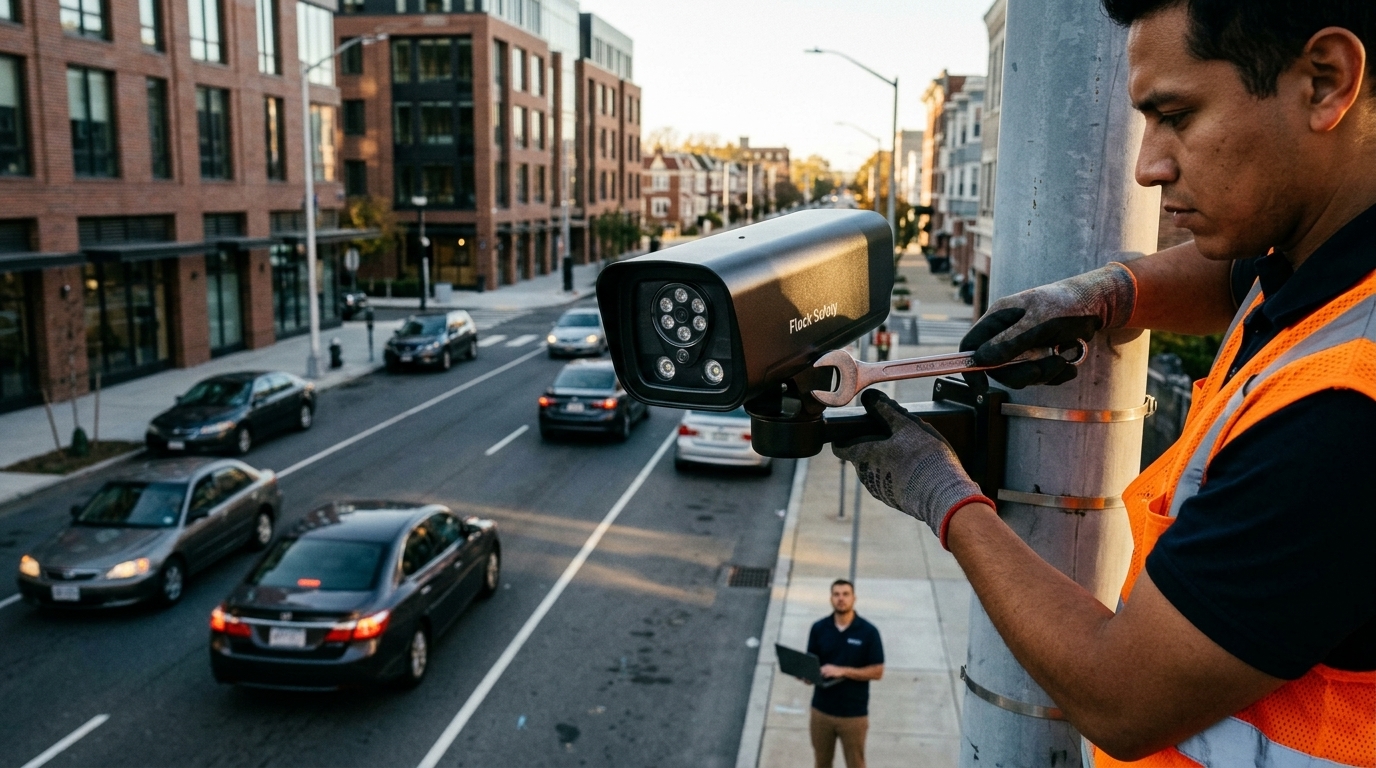
In Covington, Georgia, the police department began its partnership with surveillance firm Flock Safety in 2020 with a $40,000 bill for 20 cameras. By 2026, that figure had ballooned to $201,000. This rapid escalation is not an anomaly but a core feature of a business model analyzed by WIRED through public records from dozens of U.S. cities.
The "Foot in the Door" Strategy
Founded in 2017, Flock Safety initially targeted homeowner associations (HOAs). When it pivoted to law enforcement in 2019, it offered a unique proposition: police could integrate directly with pre-existing private camera networks. In Alpharetta, Georgia, the police justified expanding their Flock contract by noting that other vendors could not integrate with the Flock systems already purchased by local HOAs.
Pricing Tiers and Hardware Costs
The company’s pricing is structured into 14 "buckets" based on agency size. While software costs vary wildly, hardware is typically billed at flat annual rates:
- License plate readers: $3,000 to $5,200 per year per unit.
- Gunshot detectors: $8,500 to $35,000 annually.
- Drones: $50,000 to $150,000 per year.
Notably, Flock retains ownership of all hardware. If a camera is vandalized or stolen, the municipality is responsible for replacement costs—roughly $800—even though they do not own the device.
The "Price-Lock" Mechanism
To secure long-term revenue, Flock frequently markets five-year contracts as a "price-lock promotion." While these deals offer immediate discounts, they often serve to entrench the technology within the department. As Matthew Guariglia of the Electronic Frontier Foundation notes, once officers become accustomed to a tool, removing it becomes politically difficult.
“Once you let police officers try a tool, it becomes really hard to get the political will and motivation to take that tool away from them.”
Despite the trend of expansion, some municipalities are pushing back. Lorain County, Ohio, recently canceled its contract following a 17% rate hike, while Killingworth, Connecticut, cited privacy concerns and a lack of proven utility for its resident state trooper.