

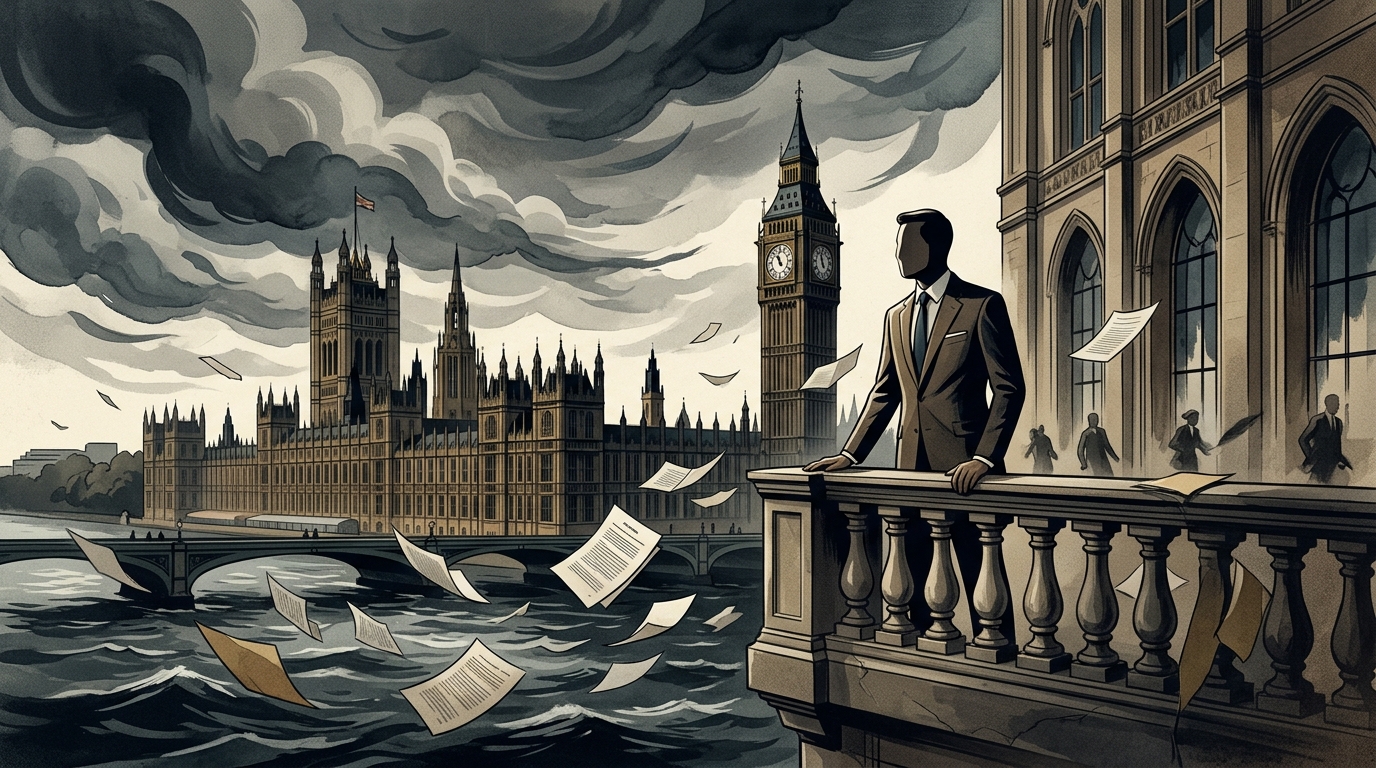
The British political landscape, which after the dramatic fall of the Conservatives and the Labour landslide in 2024 promised a period of stability and "adults in the room" governance, finds itself today, in June 2026, in a state of total destabilization. The reports published by The Observer, suggesting that Keir Starmer is seriously considering resignation, are not merely a journalistic scoop, but the culmination of a prolonged crisis of identity and efficacy that has plagued the government in recent months.
Internal Mutiny and the Labour Rift
The reporting suggests that pressure is no longer coming solely from the opposition—which is still struggling to find its footing—but from the very heart of the Labour Party. The so-called "left wing" of the party, marginalized during Starmer's ascent, appears to be regrouping, accusing the Prime Minister of betraying manifesto promises and pursuing a policy of "Tory-lite" governance.
Starmer’s critics within the party focus on the government's failure to drastically tackle the cost-of-living crisis and the continued stagnation of the National Health Service (NHS). Despite proclamations of "major reforms," bureaucratic inertia and a lack of bold fiscal maneuvers have led to a sense of disillusionment among voters who believed in the slogan of "Change."
- Trade union dissatisfaction over public sector pay settlements.
- The dispute over environmental policy and the costs of the green transition.
- Intra-party pressure for a closer alignment with the EU Single Market.
The Weight of Power and the Personal Dilemma
Keir Starmer, a man who built his career on the image of a serious technocrat and an incorruptible prosecutor, seems to be struggling with the toxicity of daily political friction. According to sources close to 10 Downing Street, the Prime Minister feels "trapped" between market demands for fiscal discipline and public demands for social spending.
The rumored resignation is not just about political survival, but also about personal integrity. "Starmer is not the kind of politician who will cling to power if he feels he cannot deliver," an analyst told The Observer. However, such a move at this juncture would open Pandora's box for Britain, which is still fighting to regain its credibility on the international stage.
"Power in Britain is no longer a privilege; it is an electric chair that consumes its leaders at record speed."
The Successors and the Day After
If Starmer does indeed proceed with a resignation, the leadership race will be brutal. Angela Rayner, the dynamic Deputy Prime Minister, is considered the frontrunner to galvanize the party's base, while Rachel Reeves represents the continuity of economic orthodoxy. However, there is a risk of a full-scale schism, as the various ideological factions within Labour now appear incompatible.
The international community is watching with bated breath. A new political crisis in London could affect the Pound, negotiations on European security, and the country's stance on AI technological challenges, where Britain aspired to play a leading role. The question is no longer whether Starmer can govern, but whether the British political system can withstand another cycle of instability.




