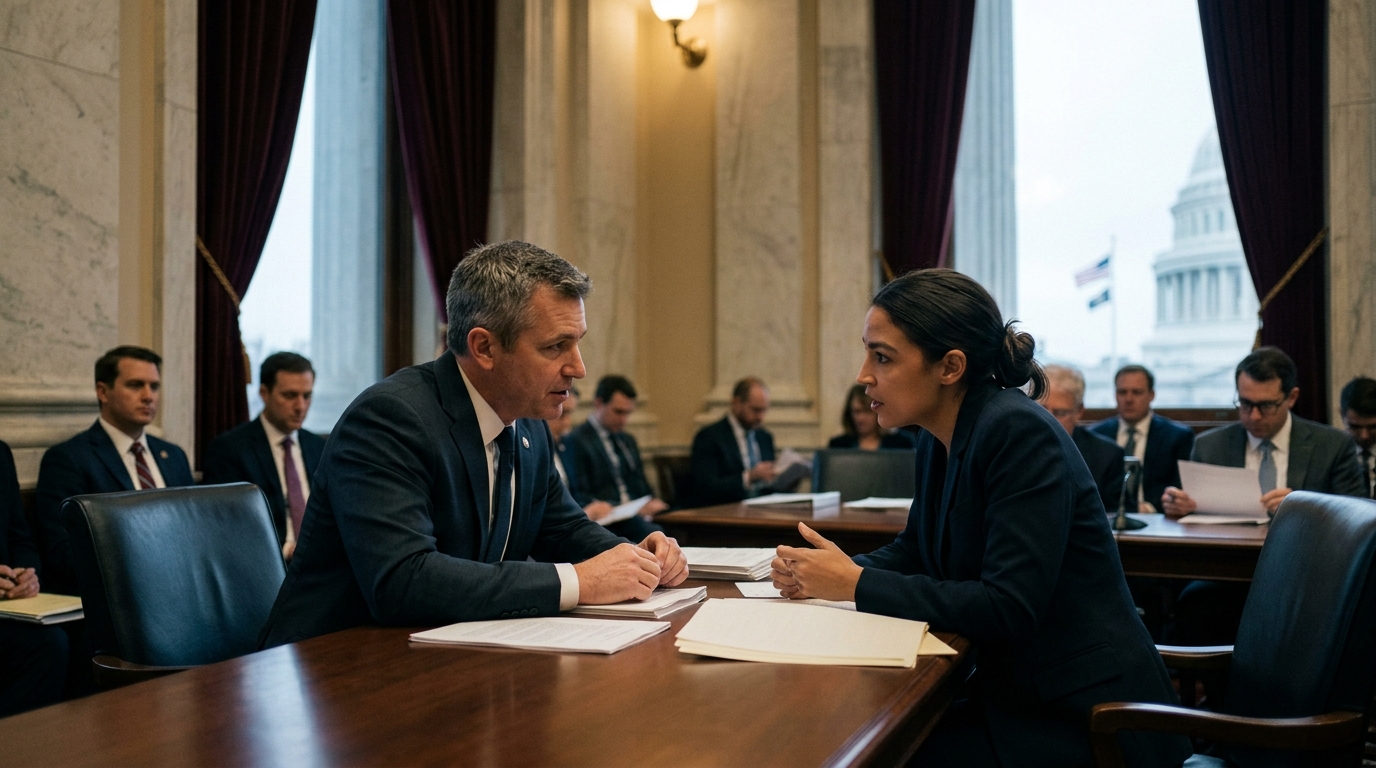
According to a report by the Financial Times, OpenAI, the company that ignited the generative AI revolution, is in preliminary discussions to grant a 5% equity stake to the United States government. This proposal, coming at a pivotal moment in the company’s structural evolution, is not merely a business maneuver; it is a geopolitical statement of intent that could reshape the relationship between the state and Silicon Valley for decades to come.
The For-Profit Transition and the Price of Sovereignty
OpenAI began as a non-profit organization with the mission of ensuring that Artificial General Intelligence (AGI) benefits all of humanity. However, market realities and the astronomical capital requirements for training next-generation models have led to a radical restructuring. The company is now transitioning into a for-profit public benefit corporation, unlocking profit ceilings for its investors, most notably Microsoft.
The 5% proposal to Washington functions as a form of "strategic alignment." In an era where AI is regarded as the modern-day "Manhattan Project," OpenAI is attempting to insulate itself against future antitrust investigations and secure unwavering US government support in the global race against China. Sources familiar with the talks suggest this stake could take the form of warrants or direct equity, giving the state a seat—or at least an observer's perspective—at the table of the 21st century's most powerful technology.
Infrastructure, Energy, and 'Project Stargate'
OpenAI’s need for government backing is not just regulatory but physical. The company, in partnership with Microsoft, is planning "Stargate," a supercomputing data center complex valued at over $100 billion. Such a project requires massive amounts of energy, nuclear power permits, and access to critical infrastructure that only the state can facilitate.
- Energy Security: A pivot toward SMRs (Small Modular Reactors) to power the data centers.
- Supply Chain: Securing access to top-tier Nvidia and TSMC semiconductors through state-level agreements.
- National Security: Protecting algorithms from state-sponsored cyberattacks.
"AI is no longer a consumer product; it is the foundation of national power. OpenAI’s proposal recognizes that no private entity can carry the weight of AGI alone without a state umbrella," notes a geopolitical tech analyst.
Challenges and Repercussions
This move, however, raises profound questions. First, how can the company’s independence be guaranteed if the state is a shareholder? Second, what does this mean for competition? If the US government has a vested interest in OpenAI’s success, will it be able to fairly regulate other players like Anthropic or Google? Critics argue that this creates a form of "Silicon Valley State Capitalism," where the lines between private profit and public policy become dangerously blurred.
Furthermore, ethical concerns regarding the use of AI in military applications are moving to the forefront. With the state as a shareholder, the pressure to integrate OpenAI’s models into the Pentagon’s arsenal will become almost irresistible, despite the company’s previous commitments to the peaceful use of technology. OpenAI seems to be betting that "national necessity" will override ethical objections, positioning the firm as the de facto digital arm of the United States.