

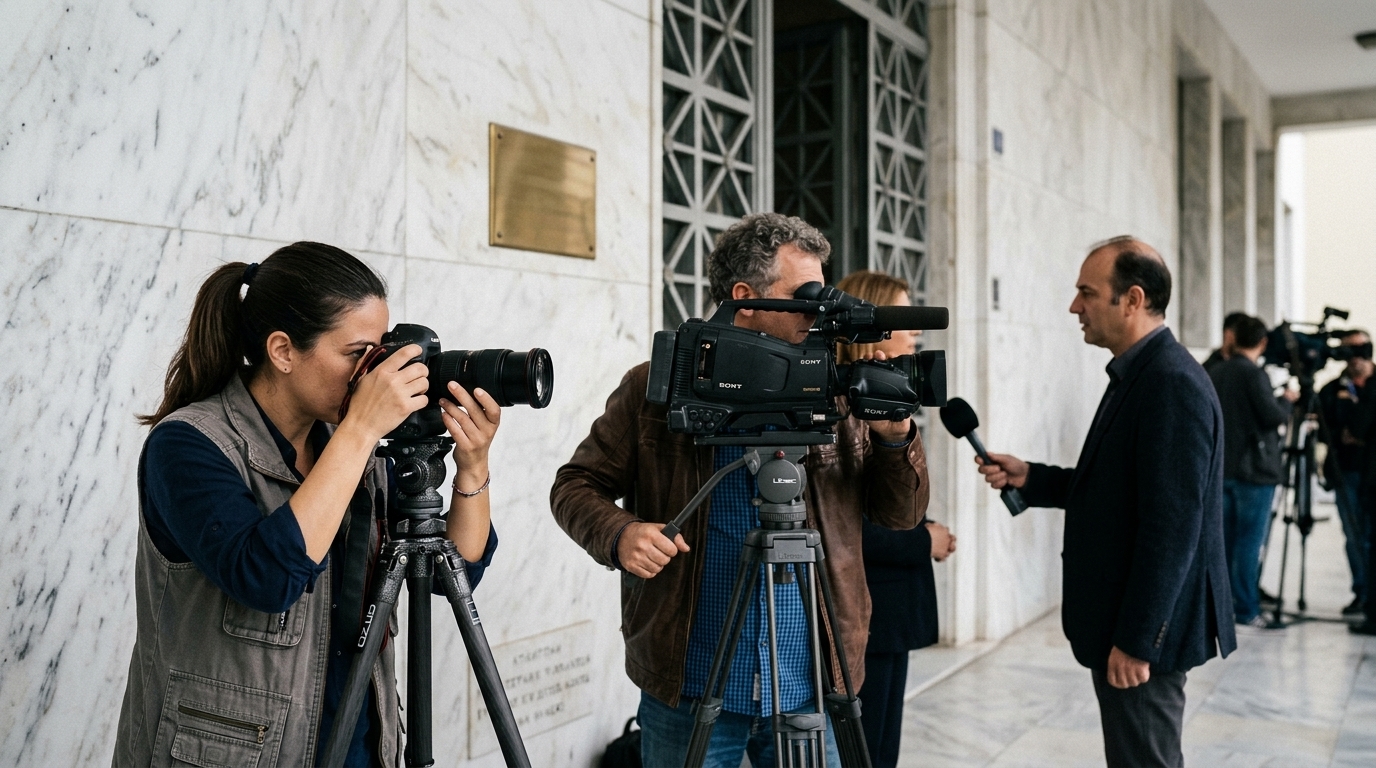
In a move that signals a change of guard at the pinnacle of the Greek judicial pyramid, the Cabinet has approved Justice Minister Giorgos Floridis' recommendation for the positions of President and Prosecutor of the Supreme Court (Areios Pagos). Panagiotis Lymperopoulos and Evangelos Bakelas are now called to lead the country's highest court during a critical period when the judiciary is at the center of intense debate regarding both its speed and its independence from political power.
The Profile of the New Leadership
The new President of the Supreme Court, Panagiotis Lymperopoulos, is regarded by his peers as a judicial officer with profound knowledge of civil and criminal law, having carved out a long and distinguished career. His tenure as Vice President of the Supreme Court in the preceding period provided him with the necessary internal insight into the court's administrative needs. On the other hand, Evangelos Bakelas, taking the reins of the Supreme Court Prosecutor's Office, shoulders the weight of supervising prosecutorial authorities nationwide—a position of immense institutional power and responsibility.
The selection of these two individuals was not accidental. According to government sources, the choice was based on criteria of seniority, integrity, and scholarly expertise. However, this process, as defined by Article 90 of the Constitution—where the judicial leadership is chosen by the executive branch—remains a point of contention in Greek politics. The opposition and legal circles frequently call for a change in the selection method to bolster the self-governance of the courts and minimize political interference.
Major Challenges: Efficiency and Public Trust
The new leadership faces a series of burning issues. Foremost among them is the acceleration of the administration of justice. Greece remains in the lower rankings of the European Union regarding the time required to issue final court decisions, a fact that undermines both the citizens' sense of justice and the country's attractiveness to investors. The new "Judicial Map" promoted by the Ministry of Justice will serve as the first major test for the collaboration between the new leadership and the government.
Furthermore, there are open cases with significant social and political impact, such as the investigation into the Tempi train tragedy and allegations regarding wiretapping (the Predator scandal). The Supreme Court's stance on these cases will largely determine public trust in institutions. Mr. Bakelas, from his position as Prosecutor, will play a central role in coordinating investigations, while Mr. Lymperopoulos must ensure that judicial proceedings move forward without undue delays or procedural bottlenecks.
The Institutional Dimension and International Image
Greece is under close monitoring by the European Commission through the annual Rule of Law Report. Observations regarding judicial independence and system efficiency are often stringent. The new leadership of the Supreme Court is called upon to send a message of institutional gravity to Brussels, proving that the Greek judiciary possesses the reflexes to self-regulate and function as a true check and balance to the other branches of government.
"Justice is not merely a mechanism for resolving disputes; it is the citizen's refuge against arbitrariness," legal analysts note, emphasizing that the tenure of Lymperopoulos and Bakelas will be judged by whether they manage to inspire this sense of security in society.
In conclusion, the appointment of the new leadership to the Supreme Court is not a mere administrative act. It is a political and institutional choice that will leave its mark on the country's trajectory in the coming years. Their success will depend on the balance they maintain between legal rigor and the need to modernize a system that often appears trapped in the bureaucratic rigidities of the past.




