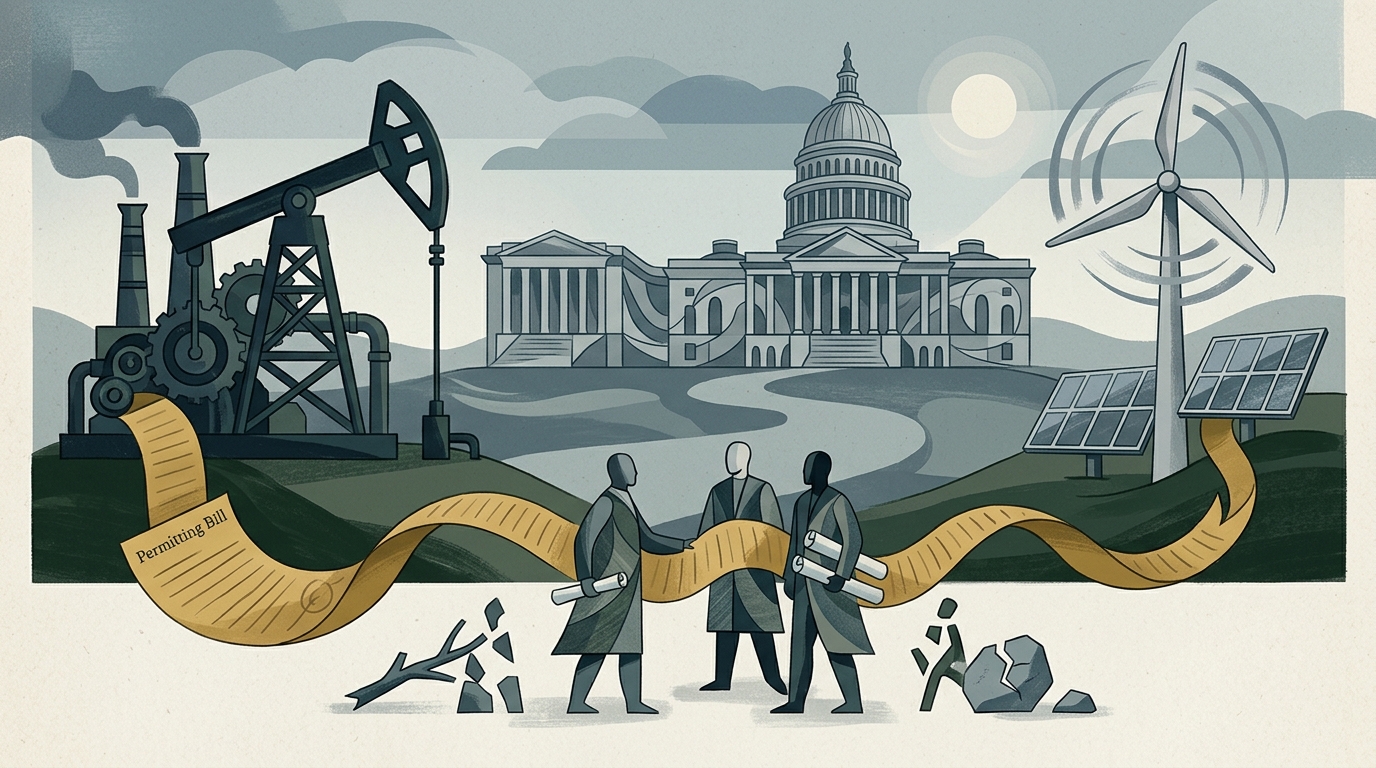
New, bipartisan legislation designed to expedite energy project construction—and fuel the AI boom—is creating unusual alliances. The Bipartisan American Affordability and Jobs Act (BAAJA) has united the fossil fuel industry with renewable energy sectors, while simultaneously pitting some environmental groups against the green power industry.
Powering the AI Boom
Electricity demand is surging at a nearly unprecedented scale, driven significantly by the data center construction spree required for AI. With utility prices spiking due to antiquated infrastructure and rising demand, permitting reform has become a critical priority for Congress before January.
The legislation, coauthored by a group of senators known as the "Four Corners"—Mike Lee (R-Utah), Sheldon Whitehouse (D-R.I.), Martin Heinrich (D-N.M.), and Shelley Moore Capito (R-W.V.)—accelerates timelines for everything from solar farms and power lines to oil and gas pipelines. It also makes it harder for administrations to revoke permits and narrows environmental reviews.
Conflicting Perspectives
For the clean energy sector, the bill represents a potential breakthrough. Ben Norris of the Solar Energy Industries Association noted that the transmission capacity unlocked by the language is "well worth the tradeoffs," arguing it will put downward pressure on prices.
However, environmental groups like Earthjustice Action and the Sierra Club remain opposed. Abigail Dillen, president of Earthjustice Action, argued the bill "eviscerates bedrock protections for water, wetlands, and endangered species," warning it could lead to more pollution and fossil fuel expansion.
Conversely, the fossil fuel industry views the bill as a way to prevent the "weaponization" of courts to stall projects. Toby Rice, CEO of natural gas producer EQT, praised the "tech-neutral approach," stating that the government should let market forces determine the best energy sources while ensuring infrastructure can actually be built.