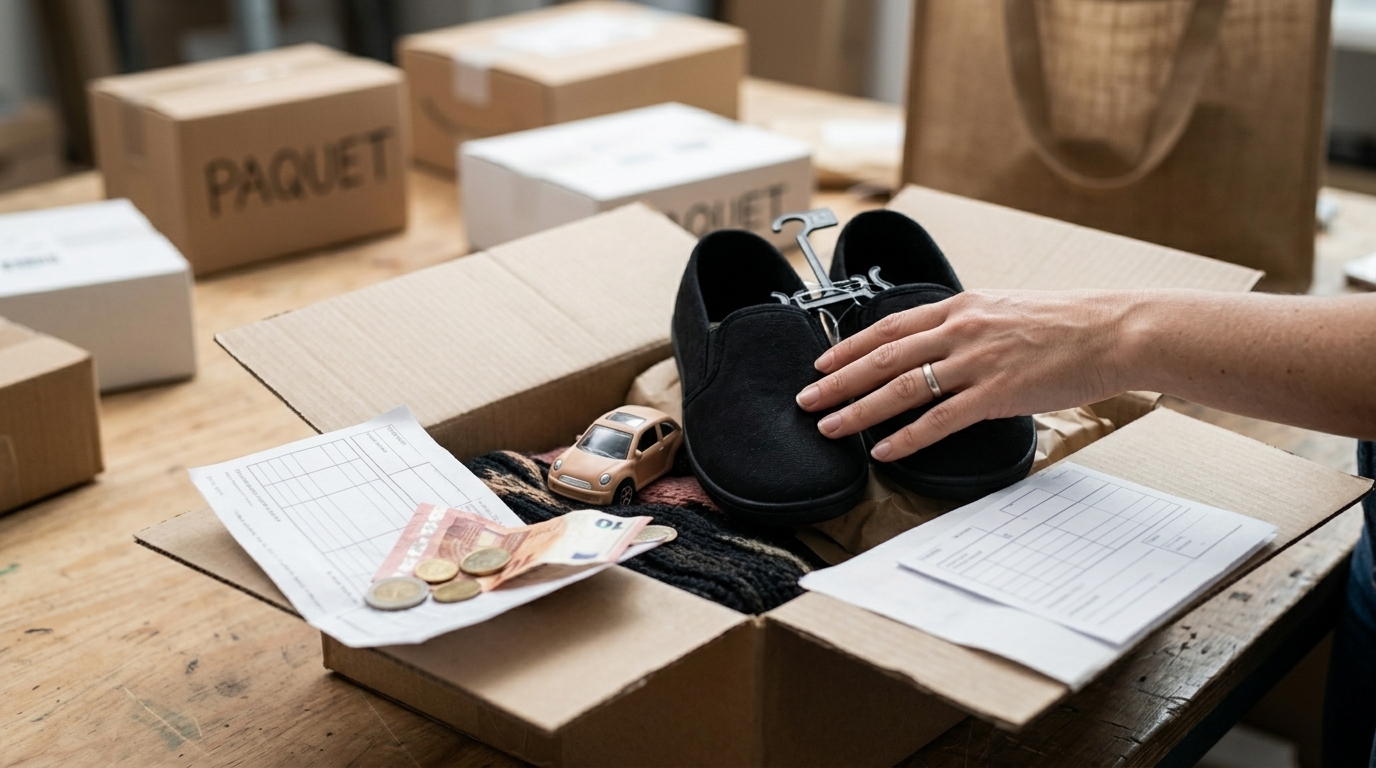
The era of unchecked and extremely cheap shopping from China and other non-EU countries is coming to an end. As the countdown to July 1, 2026, begins, the Independent Authority for Public Revenue (AADE) has issued detailed guidelines for the implementation of a new, flat import duty of €3 per different type of good for orders valued up to €150. This measure, part of a broader European strategy to protect the internal market, is expected to fully reshape the consumption habits of Greeks and pose new hurdles for ultra-fast fashion giants and cheap electronics retailers.
The Philosophy Behind the "€3 Duty"
Until now, goods imported from third countries with a value below €150 were exempt from customs duties, although they have been subject to VAT since 2021. This "loophole" was exploited by dozens of e-commerce platforms, which flooded the European market with millions of small parcels daily. The European Commission found that the absence of duties created unfair competition for European businesses, which are burdened with higher production costs, environmental fees, and stricter safety rules.
The new €3 duty is not proportional but fixed. This means that an item worth €5 will be charged the same duty as an item worth €140. The goal is to make it economically unfeasible to ship individual, very cheap items that often have a massive environmental footprint due to transport. AADE clarifies that the duty is imposed per "different type of good" (HS code), meaning that if an order includes three different items (e.g., a t-shirt, a charging cable, and a toy), the total duty could reach €9, even if the total value is low.
Technical Details and the Role of AADE
According to the AADE circular, the collection of the duty will primarily take place through the IOSS (Import One Stop Shop) system. Large platforms will be required to integrate the duty into the final price the consumer sees in their "cart." This way, customs delays and unpleasant surprises upon delivery by the courier are avoided. However, for platforms not registered in the IOSS system, the duty will be collected by courier companies or ELTA (Hellenic Post), which will also charge their own customs clearance fees.
AADE emphasizes that the new process requires stricter control of declared data. Customs authorities will use advanced risk analysis systems to identify cases of undervaluation or artificial splitting of orders. This is a practice where a large order is broken into many small parcels to avoid the €150 limit, a tactic that will now become loss-making due to the fixed duty per parcel.
Impact on the Market and the Consumer
The implementation of the measure is expected to cause a "shock" in the ultra-fast fashion market. Platforms like Shein and Temu, which base their strategy on extremely low prices (often below €10), will see their competitiveness significantly reduced. For a Greek consumer used to buying small items for €2-5, the addition of the €3 duty plus 24% VAT makes the final cost nearly double.
"This is not just a tax, but an attempt to bring logic back to consumption," says a retail market executive. "Europe cannot continue to accept millions of parcels that meet no sustainability standards, effectively subsidizing third-country production at the expense of its own stores."
On the other hand, domestic merchants see the measure as a vindication of their long-standing demands. The Hellenic Confederation of Commerce and Entrepreneurship (ESEE) has repeatedly pointed out that e-commerce from third countries operated in a "grey zone," depriving the state of revenue and physical stores of customers. With the new duty, the price gap closes, encouraging consumers to seek products within the EU, where delivery times are shorter and quality guarantees are stronger.
Conclusion: Towards a More "Expensive" but Fair Internet?
July 1, 2026, will be a milestone for global trade. While consumers may initially react to the increased costs, the long-term goal is to create a more sustainable model. The imposition of the €3 duty is a clear message to Asian platforms that access to the European market of 450 million consumers now comes with a specific price. Shoppers will now have to be more careful, group their orders, and evaluate whether the "bargain" from abroad remains a real bargain after the addition of the new charges.