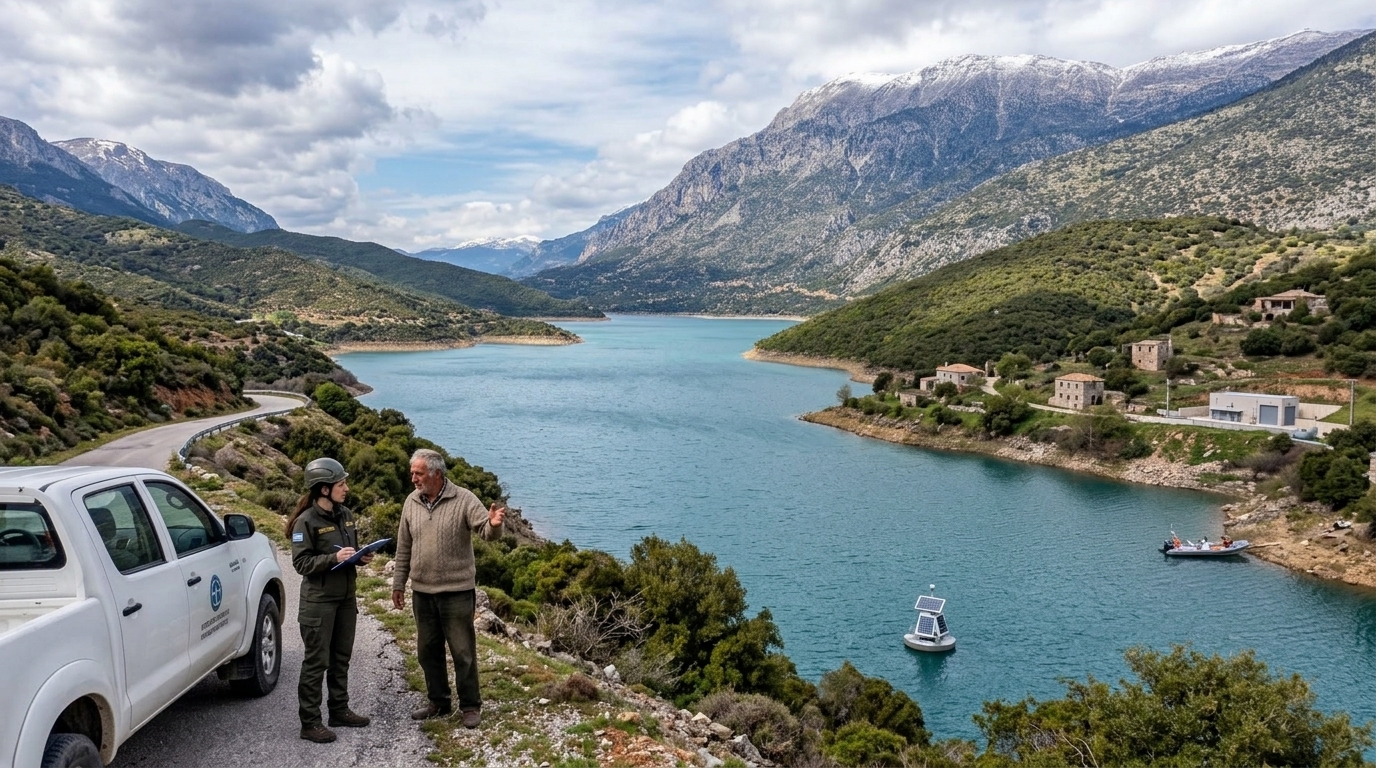
Greece, a nation historically synonymous with its crystalline springs and the azure Aegean, is now confronting a harsh reality: advancing water scarcity and the depletion of its vital aquifers. The Ministry of Environment and Energy (YPEN), recognizing the gravity of this challenge, has launched a public consultation for the "National Water Strategy," an ambitious 20-year roadmap. This is not merely a technical document; it is a blueprint for survival in an era of climate collapse, where water is shifting from a taken-for-granted utility to the nation's most precious strategic asset.
The Pillars of a New Hydrological Policy
The strategy is built upon four central pillars aimed at the holistic management of the water cycle. First, the reinforcement of storage and transport infrastructure. Following the catastrophic floods in Thessaly, it became painfully clear that old management models have failed. The new plan envisions "smart" dams and reservoirs designed to function dually for flood protection and irrigation. Second, the promotion of a circular economy through the reuse of treated urban wastewater. The goal is to ensure that water exiting treatment plants does not simply flow into the sea but instead supplies agricultural needs, thereby reducing the pressure on groundwater resources.
Third, the strategy places a heavy emphasis on digitalization. The installation of smart water meters and telemetry systems across the national grid will enable real-time leak detection—a problem that currently costs Greece up to 40% of its potable water in certain regions. Fourth, the institutional reorganization of management bodies. The fragmentation of the DEYAs (Municipal Water and Sewerage Companies) is now viewed as a major bottleneck. The plan proposes the creation of larger, regional entities equipped with the technical expertise and financial resources required for large-scale infrastructure projects.
Desalination and the Energy Nexus
For the Aegean islands, where water transport by tankers remains an obsolete and prohibitively expensive solution, the strategy identifies desalination as the only viable path forward. However, desalination is energy-intensive. YPEN plans to link desalination units with local Renewable Energy Source (RES) systems. By doing so, water production will achieve a near-zero carbon footprint and lower operational costs, making the islands autonomous even during the peak summer tourist season. Utilizing "green" energy for water production is the key to the long-term resilience of Greece's tourism sector.
The Agricultural Challenge
Agriculture accounts for approximately 80% of water consumption in Greece. The National Strategy does not shy away from this thorny issue. It mandates the replacement of open irrigation canals with closed pressurized networks and the universal adoption of drip irrigation systems. Furthermore, the concept of "precision agriculture" is introduced, utilizing soil sensors to inform farmers of the exact water requirements of their crops. This reform is as much economic as it is environmental; water waste inflates production costs and undermines the global competitiveness of Greek agricultural products.
"Water is not a commercial product like any other but, rather, a heritage which must be protected, defended and treated as such," the consultation document states, echoing the principles of the EU Water Framework Directive.
In conclusion, the National Water Strategy represents a necessary admission: the era of abundance is over. The success of this plan will be judged not by its declarations, but by the speed of its implementation and the state's ability to instill a new "water consciousness" in its citizens and farmers. The consultation currently underway is the final opportunity for an honest dialogue before the threat of scarcity becomes an irreversible crisis.