

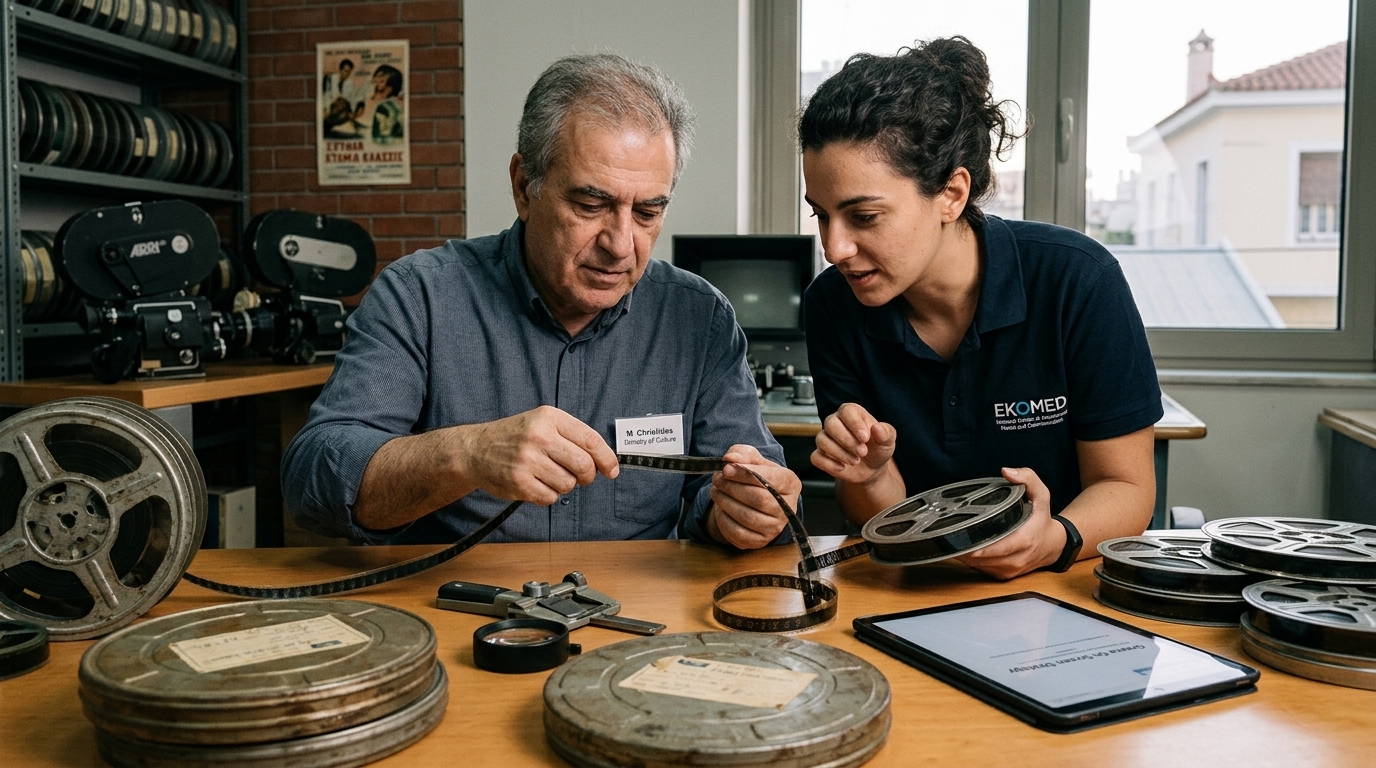
The recent approval of the five-year Action Plan "Greece On Screen" by the Cabinet is not merely an administrative act, but a strategic pivot in Greece's cultural diplomacy and economic policy. With the full activation of the Hellenic Film and Audiovisual Center (EKOMED), the country attempts to definitively close the chapter of institutional fragmentation that has plagued the sector for decades.
Unified Governance as a Growth Engine
For years, Greek audiovisual production was trapped between two poles: the Greek Film Centre (EKK), focused on artistic creation, and EKOME, focused on financial incentives and attracting foreign investment. The creation of EKOMED aims to bridge this gap. The unification of the two entities under a single umbrella is not just about saving resources, but about creating a "one-stop shop" for creators and producers alike.
The "Greece On Screen" plan recognizes that the audiovisual industry is one of the fastest-growing sectors globally. Greece, having already established itself as an attractive destination thanks to the 40% cash rebate, is now called upon to upgrade its infrastructure. The natural beauty and the Aegean light are no longer enough; modern studios, specialized technical staff, and a stable legal framework that doesn't change with political cycles are required.
The Pillars of "Greece On Screen"
The five-year plan is structured around four central axes aimed at modernizing the entire ecosystem:
- Digital Transformation: Digitizing licensing processes and creating a national database for film locations and industry professionals.
- Education and Training: The lack of specialized technicians (gaffers, set designers, post-production specialists) is the biggest hurdle for major Hollywood productions in Greece. The program provides for the creation of academies and workshops in collaboration with international bodies.
- Outreach and Branding: Promoting Greece not just as a "backdrop" but as a content creation center, with an active presence at all major international festivals and markets (Cannes, Berlin, AFM).
- Support for Domestic Creation: Ensuring that the emphasis on international productions does not overshadow national cinema, which is the core of our cultural identity.
This strategy comes at a time when the global streaming market (Netflix, Amazon, Disney+) is constantly seeking new content and locations. Greece, by strengthening EKOMED, aspires to transform into a regional hub for the Eastern Mediterranean and the Balkans.
Challenges and Prospects
Despite the positive outlook, the road is not without obstacles. International competition is relentless. Countries like Malta, Bulgaria, and Jordan offer equally attractive incentives, often with less bureaucracy. The success of EKOMED will be judged by the speed with which it can process applications and disburse funds.
"The audiovisual industry is not just culture; it is a heavy industry with multiplier benefits for the economy, tourism, and employment," sources from the Ministry of Culture state.
Furthermore, the integration of artificial intelligence into the production process represents a new challenge. "Greece On Screen" must anticipate the changes AI brings to post-production and visual effects, offering incentives for investment in cutting-edge technologies. The transition to the new era requires boldness and a break from the pathologies of the past, ensuring that Greece will not just be a beautiful destination for filming, but a protagonist in the international audiovisual scene.





