

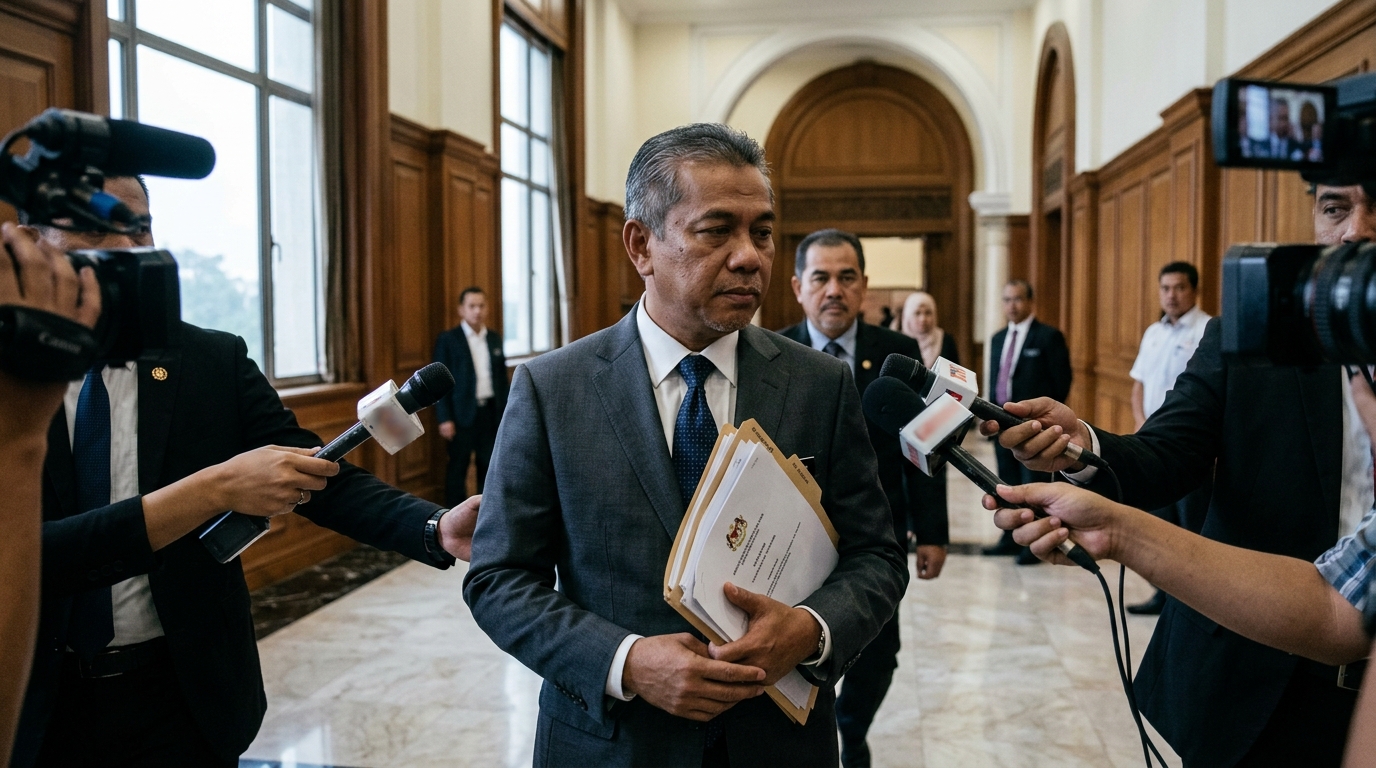
The Malaysian political landscape is reeling following the announcement by the Malaysian Anti-Corruption Commission (MACC) that it has summoned former Economy Minister Rafizi Ramli for questioning. The probe centers on a high-stakes deal involving Arm Holdings Plc, the global leader in semiconductor architecture, which was once hailed as a cornerstone of the nation’s digital transformation strategy.
The Genesis of a High-Tech Ambition
The investigation targets a series of contracts and investment vehicles established during Ramli’s tenure, aimed at positioning Malaysia as a premier regional hub for chip design. The partnership with Arm—headquartered in the UK but owned by Japan’s SoftBank—was intended to facilitate technology transfer and provide intellectual property (IP) licenses to state-linked entities. MACC investigators are reportedly scrutinizing whether procurement protocols were bypassed or if illicit payments were funneled to intermediaries with political connections.
Rafizi Ramli, a figure who built his political identity as a fierce anti-corruption advocate and a whistleblower in the infamous 1MDB scandal, now finds himself under the microscope. This reversal of roles is not lost on political observers in Kuala Lumpur, who view the investigation as a litmus test for the independence and integrity of Malaysia’s institutional oversight.
The Strategic Weight of Semiconductors
Why does a deal with Arm carry such explosive potential? In the current geopolitical climate, semiconductor technology is often described as the 'new oil.' Malaysia already commands a significant 13% share of the global market in chip packaging and testing. However, the administration under Anwar Ibrahim sought to move the country up the value chain into design and architecture. Arm holds the blueprints for the architecture used in nearly every smartphone globally; a strategic alliance with them was seen as a major leap for Malaysian industry.
- The probe focuses on transactions exceeding $200 million.
- Investigators are tracking potential links to offshore entities in the British Virgin Islands.
- Allegations include the overvaluation of software licenses and consulting fees.
The MACC has already seized documents from the Ministry of Economy and the offices of Khazanah Nasional, the sovereign wealth fund. Officials have been quick to clarify that summoning the former minister does not imply a formal charge of guilt but is a necessary step to clarify 'grey areas' within the complex contractual framework.
Market Sentiment and Global Reputation
This development comes at a sensitive time for Malaysia, as it competes to attract foreign direct investment (FDI) amidst the ongoing US-China trade tensions. Political instability and corruption allegations are the primary deterrents for global capital. If it is proven that even reformist ministers are embroiled in opaque dealings, the damage to Malaysia’s international standing could be profound.
"Transparency is not an option; it is a prerequisite for technological sovereignty," an anonymous senior MACC official stated.
Ultimately, this case underscores the necessity for more rigorous auditing in high-tech procurement. The inherent complexity of tech products—such as Arm’s IP cores—can sometimes serve as a smokescreen for financial irregularities. Malaysia now faces the daunting task of proving it can maintain a clean house, even when the investigation leads to the very architects of its economic policy.





