

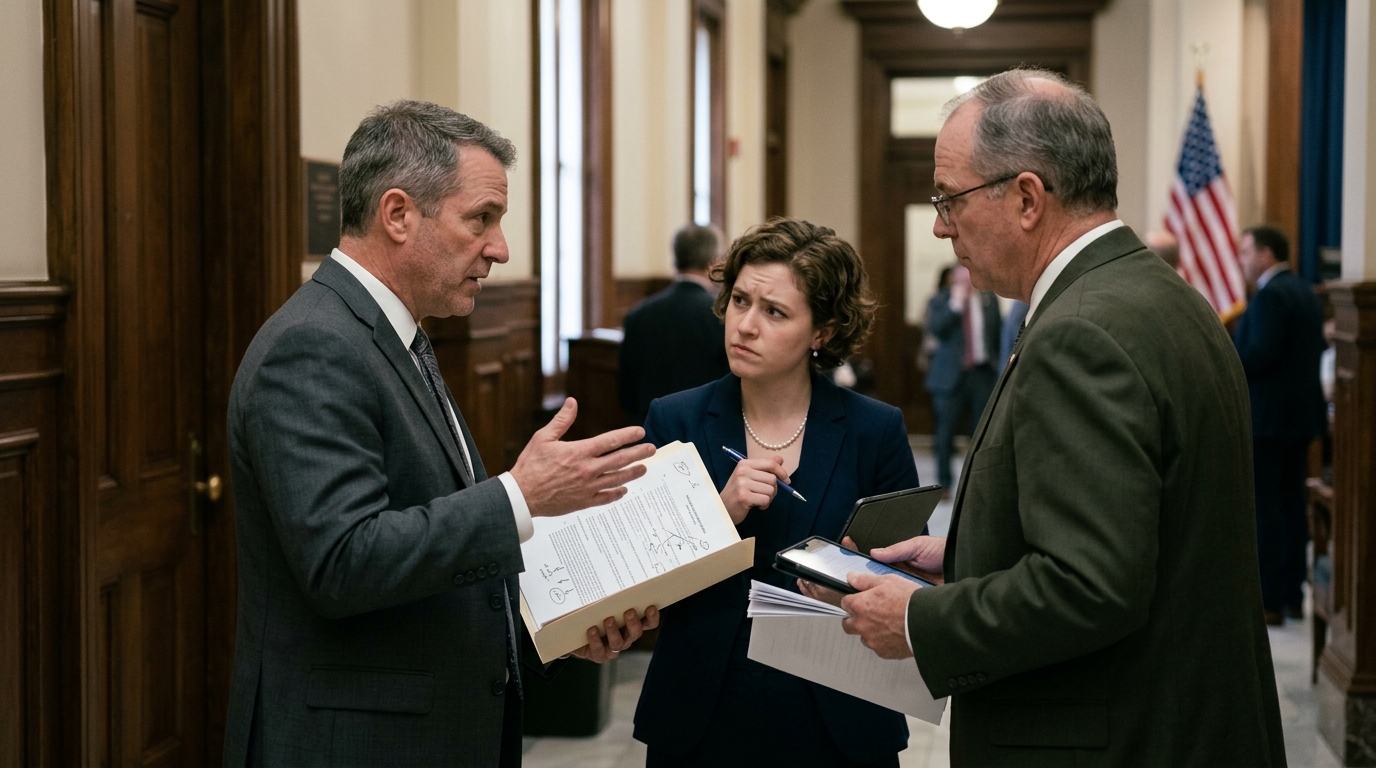
In the high-stakes corridors of Capitol Hill, the political momentum to regulate Artificial Intelligence (AI) has hit a significant and complex roadblock: the safety of children. As of June 2026, the House Energy and Commerce Committee finds itself at the center of a legislative storm that highlights the growing tension between protecting minors and establishing a comprehensive framework for AI governance.
A recent bipartisan deal to advance the Kids Online Safety Act (KOSA) and COPPA 2.0, while celebrated by advocacy groups, has sent shockwaves through the broader negotiations for the American Privacy Rights Act (APRA). The strategic decision to fast-track kids' safety is threatening to isolate broader AI regulations, leaving critical gaps in areas like algorithmic bias, model transparency, and general data privacy for the adult population.
The Legislative Logjam: Safety vs. Comprehensive Privacy
The core of the conflict lies in legislative architecture. Lawmakers are debating whether child protections should be a standalone victory or a cornerstone of a unified federal privacy law. House Energy and Commerce Chair Cathy McMorris Rodgers (R-Wash.) and Ranking Member Frank Pallone (D-N.J.) are navigating a political minefield. While there is a consensus that AI-driven algorithms are harming children, the path to a solution is fragmented.
Critics argue that this piecemeal approach plays right into the hands of Big Tech. By allowing a separate path for kids' safety, the pressure to pass the APRA—which would strictly limit how companies collect and monetize data from all users—diminishes. This data is the lifeblood of Large Language Models (LLMs), and without a comprehensive federal law, the AI industry remains in a regulatory 'Wild West' in the United States, even as the EU's AI Act begins to take full effect globally.
How AI Intensifies the Need for Child Protection
The rapid evolution of Generative AI has moved the goalposts for digital safety. It is no longer just about preventing exposure to inappropriate content; it is about the weaponization of technology against the young. From AI-generated non-consensual imagery (deepfakes) to manipulative chatbots that can encourage self-harm or eating disorders, the risks have become existential.
- Generative Deepfakes: The urgent need for criminalizing and preventing the AI-assisted creation of harmful imagery involving minors.
- Algorithmic Radicalization: How recommendation engines, now supercharged by AI, can lead children down dangerous rabbit holes of misinformation or extremist content.
- The 'Duty of Care' Standard: A proposed legal obligation for tech companies to proactively mitigate risks in their product design.
However, focusing solely on children creates a 'privacy silo.' If the law only protects those under 17, it leaves the data of millions of adults vulnerable to the same algorithmic manipulations. Democrats have been pushing for civil rights protections within AI frameworks to prevent biased outcomes in housing, employment, and credit, but these provisions are often the first to be sacrificed in 'kids-first' compromises.
Political Stakes and the Global Innovation Race
The delay in reaching a comprehensive AI deal has geopolitical consequences. As Washington remains bogged down in jurisdictional disputes, China and the European Union are setting the global standards for AI ethics and safety. American tech companies are also expressing frustration; while they lobby against strict regulations, they also fear a 'patchwork' of 50 different state laws that would make compliance a logistical nightmare.
"We cannot protect children if we don't regulate the very technology that builds their digital environment," a senior committee staffer noted. "But using 'the children' as a political wedge to stall broader privacy rights is a cynical move that benefits only the largest platforms."
In conclusion, the House deal on kids' safety is a double-edged sword. While it addresses an immediate and visceral public concern, it risks derailing the more difficult, yet equally necessary, task of regulating AI at large. The coming weeks will determine if Congress can find a way to integrate these priorities or if the U.S. will continue to govern the most transformative technology of the century through a series of narrow, reactive laws.





