

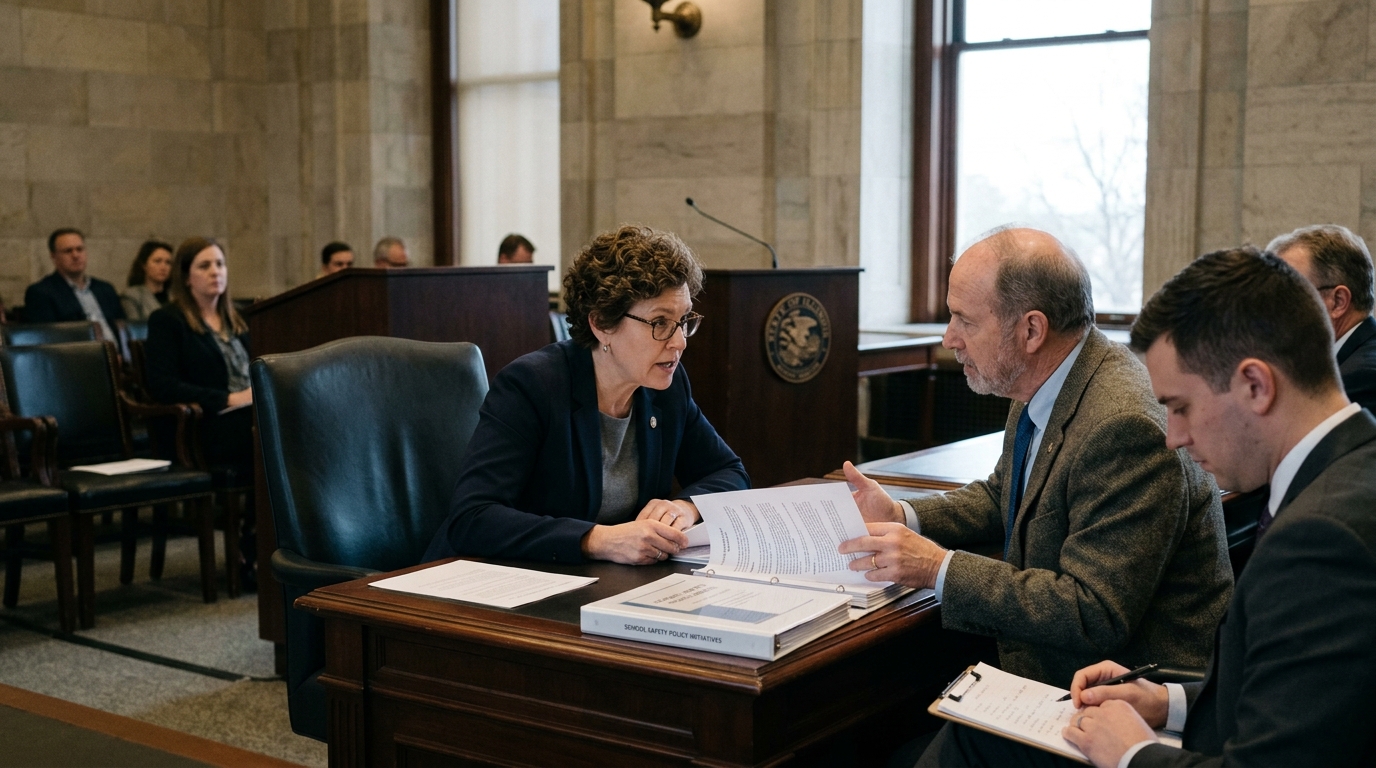
The summer of 2026 finds the Illinois educational community at a critical crossroads. The rapid evolution of generative artificial intelligence tools has transformed the schoolyard into a battlefield of digital conflict, where reality and fabrication blur in dangerous ways. The implementation of new legislation in Illinois, aimed at combating AI-powered cyberbullying and deepfakes, represents a necessary response to a crisis threatening the mental health and dignity of thousands of students.
The Legislative Response to Digital Abuse
The new law, a product of extensive deliberation and pressure from parental advocacy groups, makes it explicitly clear: creating and distributing non-consensual, sexually explicit AI-generated content is a serious offense. For schools, this necessitates a radical overhaul of their conduct codes. We are no longer dealing with simple playground taunts or verbal social media attacks. The ability of a teenager to generate a convincing, nude image of a classmate in seconds—using nothing more than a profile picture from Instagram—has fundamentally changed the stakes.
Legislation such as HB 4623 and related statutes now grant victims the right to seek civil damages against creators, even if they are minors, while mandating that schools integrate AI ethics into their core curricula. However, the challenge remains enforcement: how can a school district police content generated on private devices outside school hours that nonetheless poisons the classroom environment?
The Psychological Toll and Social Stigma
Mental health experts warn that AI deepfake bullying is uniquely traumatic. Unlike traditional bullying, the existence of "visual evidence"—however fake—creates a sense of permanent violation. Victims often feel their reputations are irreparably damaged, as images can be replicated and shared infinitely across the web. In Illinois schools, reports have surfaced of students refusing to return to class, paralyzed by the fear of classmates who have viewed the fabricated content.
"It's not just a photo. It is the theft of a child's identity and bodily autonomy," says a Chicago-based school psychologist. "Technology is moving at a speed that human resilience is struggling to match."
Educators are now being asked to serve as digital forensic investigators. Many school districts are investing in AI detection software, which frequently lags behind the new image generation models released weekly. It is an asymmetrical battle, and the costs—both fiscal and emotional—are staggering.
Education: The Only Permanent Solution?
While laws are essential for accountability, the educational community agrees that prevention is the ultimate key. The new Illinois framework emphasizes "digital literacy" not as an elective, but as a survival skill. Students must understand that AI is not a consequence-free toy, but a tool with immense ethical weight. The 2026 curricula now include modules on digital consent, deepfake identification techniques, and the legal ramifications of digital forgery.
- Parental briefings on the AI tools children are accessing daily.
- Strict reporting protocols for incidents within school districts.
- Partnerships with local law enforcement to trace the origins of malicious content.
- Long-term psychological support frameworks for targeted students.
The Illinois case serves as a pilot for the rest of the United States. If the state succeeds in curbing the phenomenon through a blend of litigation and education, it will provide a vital blueprint for protecting the next generation from the darker facets of technological progress. Yet, the constant evolution of algorithms means that the law must remain a "living document," adaptable to new forms of synthesis, or risk becoming obsolete before the ink on the governor's signature even dries.




