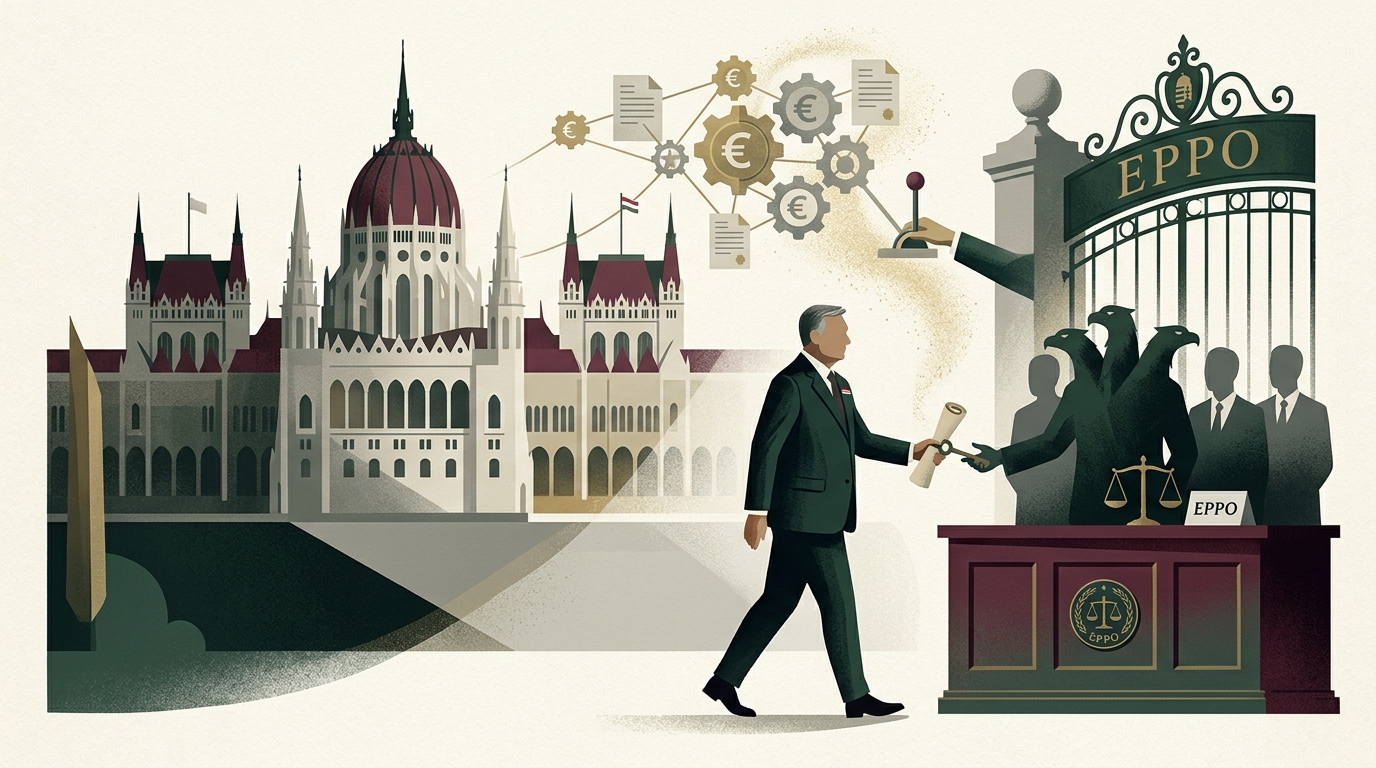
In a move that many analysts would have deemed unthinkable just a few years ago, Hungary has finally decided to join the European Public Prosecutor's Office (EPPO). The European Commission's announcement on Friday, July 10, 2026, is not merely a bureaucratic update; it is a profound political act reflecting the suffocating pressure exerted on Budapest to release frozen EU funds. This decision follows years of intense friction between Viktor Orbán’s government and EU institutions over the rule of law, corruption, and judicial independence.
The End of a Long-Standing Resistance
Hungary was, alongside Poland (until its recent change of government), one of the most vocal opponents of the EPPO. Budapest long argued that participating in such a supranational body would undermine national sovereignty and allow Brussels to interfere in its internal affairs. However, the reality of fiscal necessity proved stronger than ideological rhetoric. With billions of euros from the Recovery and Resilience Facility and Cohesion Funds remaining "locked" due to the rule of law conditionality mechanism, Orbán found himself in a strategic cul-de-sac.
Joining the EPPO is the clearest sign of "good behavior" Hungary could offer. It means that prosecutors under the leadership of Laura Codruța Kövesi will now have the jurisdiction to directly investigate cases of fraud, corruption, and the misuse of EU funds within Hungarian territory, without being solely dependent on the cooperation of domestic authorities—who have often been accused of stalling cases involving the government's inner circle.
Survival Strategy and Commission Pressure
The European Commission, under strict oversight from the European Parliament, had made it clear that "partial compliance" would no longer suffice. Hungary had to demonstrate concretely that it possesses the mechanisms to protect the EU budget. Accession to the EPPO is seen as the "golden key" that could unlock the flow of funding. However, the process will not be automatic. The Commission will closely monitor the level of cooperation between Hungarian authorities and European prosecutors.
- Full access for European prosecutors to bank data and state documents.
- Institutional protection for local EPPO offices in Budapest.
- Commitment to executing warrants and judicial decisions originating from Luxembourg.
These points represent the new testing ground. Analysts suggest that Orbán might attempt a strategy of "creative obstruction," participating in the institution while undermining its effectiveness through bureaucratic hurdles. Nevertheless, the mere presence of the EPPO on Hungarian soil shifts the balance of power significantly.
Laura Kövesi’s Reaction and the Path Ahead
EU Chief Prosecutor Laura Codruța Kövesi, who has built a reputation as an incorruptible and dynamic figure, greeted the news with cautious optimism. In previous statements, she emphasized that "there are no blank spots on the map of European justice." The EPPO's entry into Hungary is expected to bring to light cases that have remained in drawers for years, particularly those involving large public works and procurements funded by the EU.
"Justice is not a negotiable commodity, but the foundation upon which citizens' trust in the Union rests," Brussels circles noted.
For Hungary, the road ahead is fraught with challenges. The country's economy, hit by high inflation and a lack of investment, desperately needs EU capital. Orbán's political retreat shows that in times of economic crisis, pragmatism trumps ideology. The remaining question is whether this move will lead to a genuine cleanup or if it is simply a maneuver for the survival of a regime that feels the ground slipping beneath its feet.