

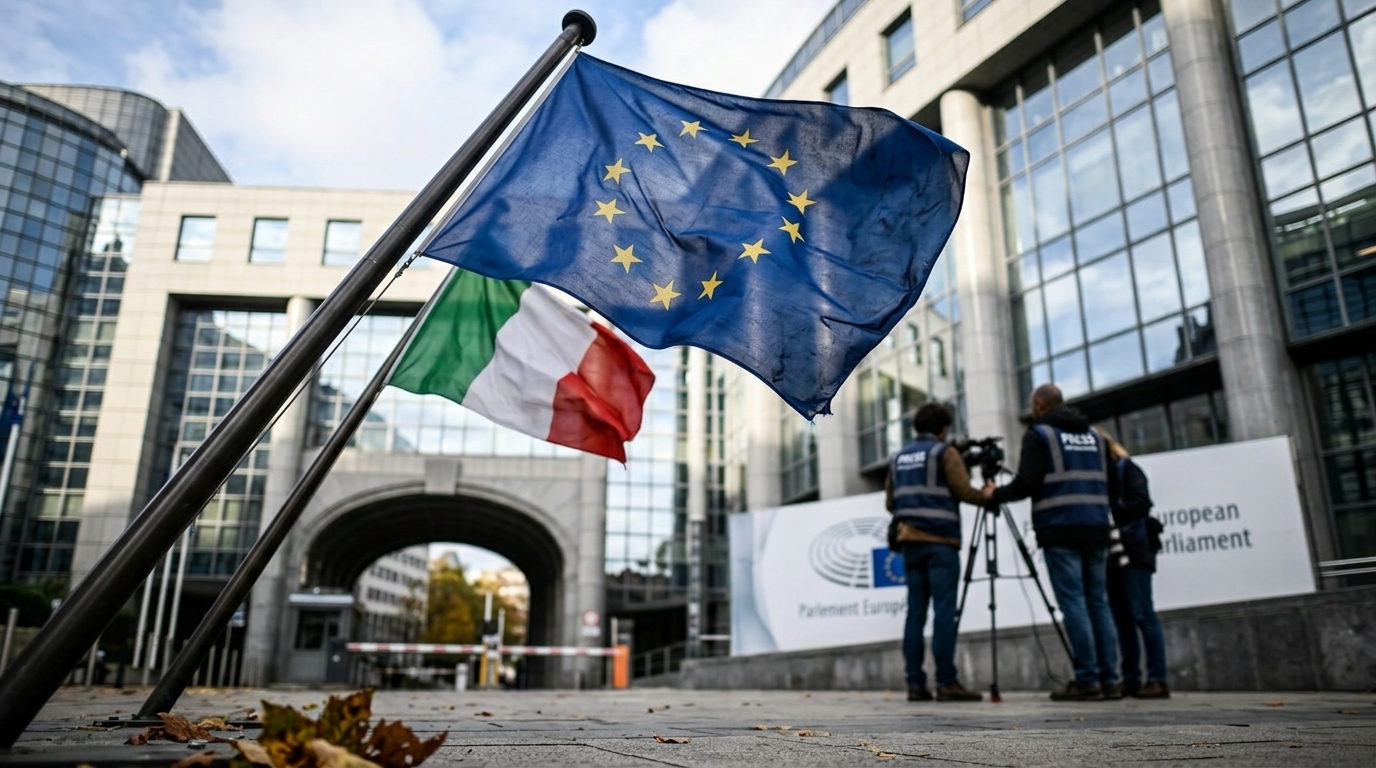
In an era where global balances are tested by ongoing conflicts and economic shifts, the latest Eurobarometer report confirms what many felt intuitively: the European citizen is in a state of constant anxiety. On one hand, the European Union is increasingly seen as a necessary "beacon" of stability in a chaotic world. On the other, daily survival is becoming a race, with inflation and the cost of living emerging as the number one threats to social cohesion.
Inflation as an Existential Threat
According to the survey data, combating price increases and protecting purchasing power remain the top priorities for 70% of respondents. This is no longer a transient concern but a structural crisis affecting how citizens perceive their future. In Greece, this percentage reaches even higher levels, reflecting the pressure households face after a decade of crises and the new reality of food and energy inflation.
Citizens are not just asking for subsidies. They are demanding policies that ensure the long-term sustainability of their incomes. The feeling that the "middle class" is shrinking is pervasive, creating fertile ground for political forces promising easy fixes. The EU is called upon to prove that "Social Europe" is not just a slogan, but a reality capable of intervening in markets when they fail to protect the consumer.
The EU as a Geopolitical Shield
Despite economic hardship, the survey records an impressive shift: Europeans trust the EU more for their security. In a world where Russia remains aggressive, China asserts economic hegemony, and the US enters periods of introversion, the European Union is seen as the only path to maintaining peace and democracy. Support for a common defense and security policy has skyrocketed, with citizens recognizing that no member state can face modern threats alone.
"Europe is no longer just an internal market; it is a community of destiny in a hostile world," the report states, highlighting that the geopolitical maturation of citizens often precedes official decisions from Brussels.
However, this trust is conditional. Citizens want an EU that is a "player" rather than a "playground" for great powers. Europe's strategic autonomy is no longer a theoretical academic concept but a demand from voters who see supply chains breaking and energy dependence being used as a weapon.
The Greek Paradox
For Greece, the findings are particularly revealing. Greek citizens appear as the most concerned about their economic situation, yet they remain among the most ardent supporters of European integration on security issues. Our geographical location and challenges in the Eastern Mediterranean make European solidarity a matter of national survival. Nevertheless, dissatisfaction with the effectiveness of measures against high prices creates a "cold" relationship with Brussels institutions.
- 85% of Greeks consider inflation the biggest problem (compared to 70% in the EU).
- Trust in the European Parliament remains stable, but with high expectations for legislative intervention on prices.
- Climate change, while important, takes a back seat to the need for economic stability.
In conclusion, the 2026 Eurobarometer sends a clear message to EU leadership: Europe's geopolitical power cannot be built on a society that feels economically insecure. The next two years will be decisive in determining whether the EU can successfully combine the fortification of its borders with the fortification of its households.





