

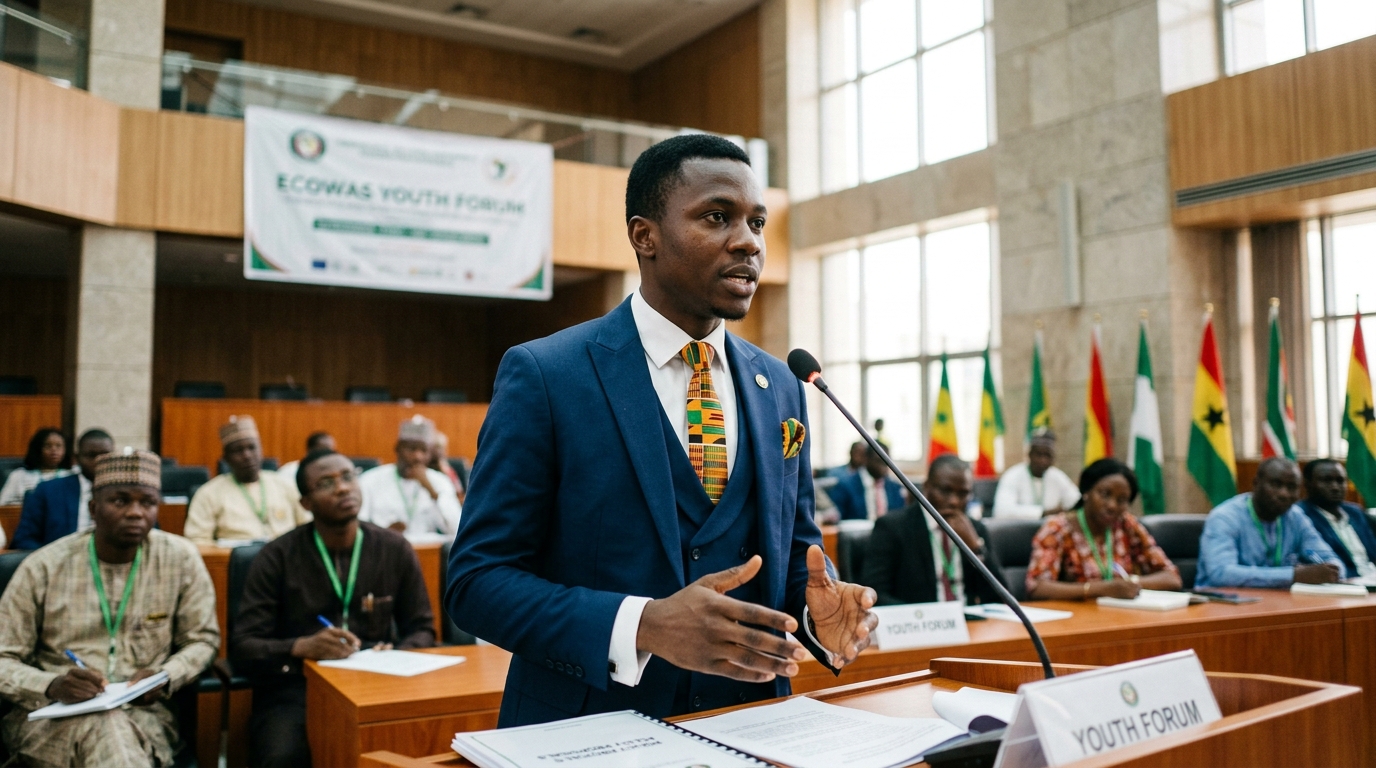
In an era where the global geopolitical chessboard is being rearranged through algorithms, West Africa is striving not to be a mere passive observer, but a protagonist. The recent Economic Community of West African States (ECOWAS) Youth Forum on Artificial Intelligence (AI) serves as a milestone in the region's quest to leverage its demographic advantage. With a population characterized by its youthfulness, ECOWAS recognizes that digital education is no longer a luxury, but a prerequisite for survival in the 21st-century global economy.
From Consumption to Creation: The ECOWAS Strategy
The central message of the forum was clear: Africa must stop simply consuming technology designed in Silicon Valley or Beijing and start creating its own solutions. Artificial Intelligence offers a unique opportunity for "leapfrogging" over traditional stages of industrial development. However, this requires a radical overhaul of educational systems. Forum participants emphasized the need to integrate coding, data analysis, and AI ethics into curricula starting from primary education.
The ECOWAS strategy is not limited to technical training. It involves creating an ecosystem where young entrepreneurs have access to computing power and data that reflect local realities. The lack of data for African languages and local social structures is a significant barrier, as existing algorithms often carry biases that do not account for the African context. The forum called for the creation of "Open Datasets" that will enable the development of AI in Yoruba, Wolof, Hausa, and other indigenous languages.
Infrastructure and the Digital Divide
Despite the enthusiasm, the reality of infrastructure remains a harsh challenge. Access to stable electricity and high-speed internet is still limited in many rural areas of West Africa. Without these basic amenities, AI risks widening the gap between urban centers and the countryside rather than bridging it. ECOWAS leaders discussed the need for regional investments in subsea fiber optic cables and satellite communications, as well as the establishment of local data centers to reduce costs and enhance data sovereignty.
- Investment in 5G networks and satellite internet for remote areas.
- Establishment of regional "Centers of Excellence" for AI in cities like Lagos, Accra, and Dakar.
- Promotion of public-private partnerships to fund startups.
Ethics, Governance, and the Future of Work
Another critical dimension discussed was AI governance. ECOWAS is working on a unified regulatory framework that protects citizens' rights without stifling innovation. Concerns about automation and job loss are intense, especially in sectors like agriculture and services. However, the prevailing view at the forum was that AI can act as an "augmenter" of human labor. For instance, in agriculture, AI tools can predict weather patterns and crop diseases, increasing the productivity of smallholder farmers.
"Artificial Intelligence is not just a software tool; it is the new language of global power. Our youth must speak it fluently to claim their rightful place in the world," stated one of the forum's keynote speakers.
In conclusion, the ECOWAS Youth Forum on AI is a statement of intent. West Africa is preparing for a future where technology will be the vehicle for economic empowerment. The success of this effort will depend on consistency in policy implementation and the ability of member states to cooperate by setting aside their internal differences.





