

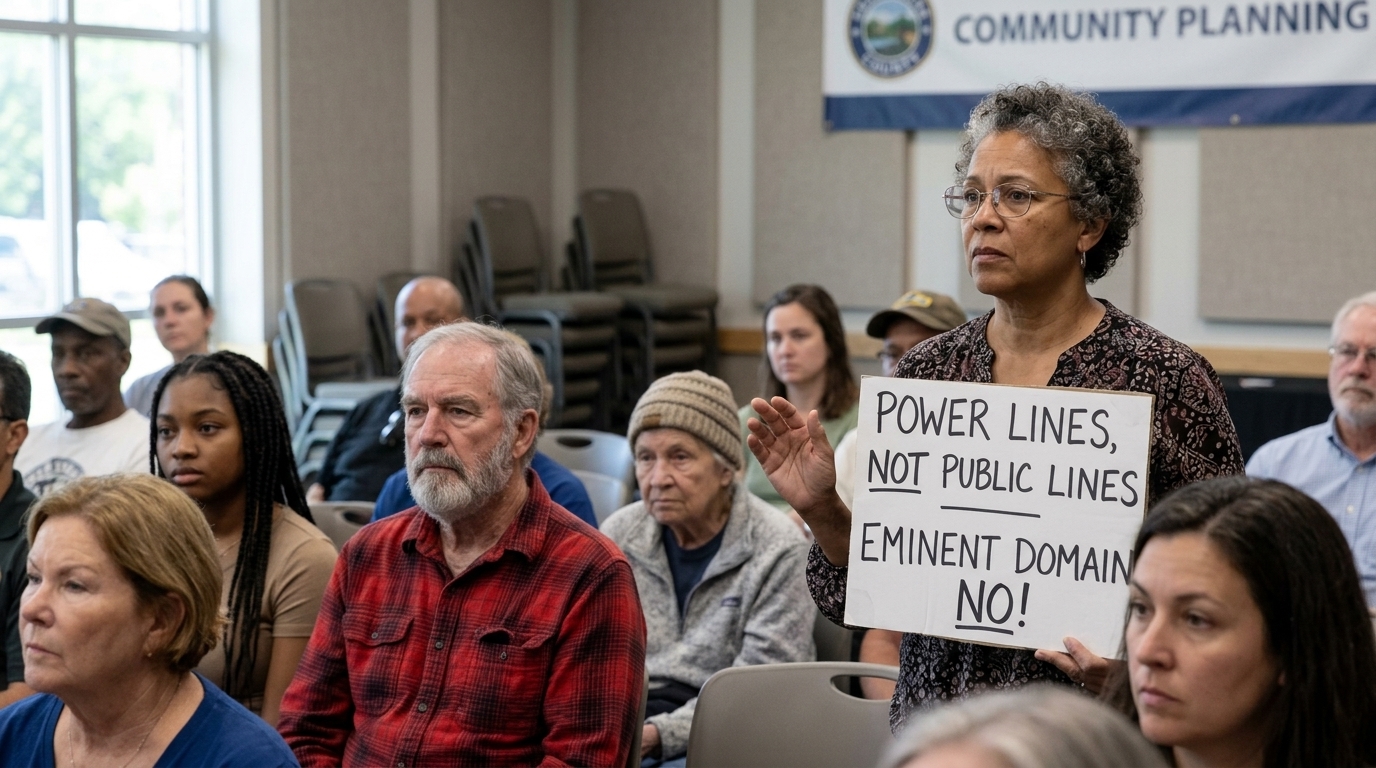
The artificial intelligence boom in the United States is driving a massive surge in data center construction. With over 3,000 existing facilities and another 1,500 in development according to Pew Research Center, the infrastructure required to power large language models like ChatGPT is reaching a breaking point. However, this expansion faces a significant hurdle: 7 in 10 Americans oppose AI data centers in their backyards, citing noise, pollution, and rising utility costs.
The Battle Over Eminent Domain
As private citizens refuse to sell land for the transmission lines needed to feed these energy-hungry centers, power companies are increasingly turning to eminent domain. This inherent government power allows for the seizure of private property without consent, provided it is for "public use" and includes just compensation. The core legal debate now centers on whether infrastructure built primarily for private data centers truly serves the public interest.
State Reforms and Legal Precedents
The legal landscape is shaped by the 2005 Supreme Court decision in Kelo v. City of New London, which permitted property seizure for private economic development. This ruling sparked a backlash, leading 45 states to enact eminent domain reform laws. Today, the success of land seizures often depends on state-specific interpretations:
- In Texas, projects must serve the public and cannot be for the builder's exclusive use.
- Courts in South Dakota and Vermont have upheld seizures, ruling that grid reliability for in-state customers constitutes a valid public use.
- The Mississippi Supreme Court previously rejected a seizure where the transmission line offered no benefit to local residents.
In 2024, data centers accounted for more than 4% of total U.S. electricity use. As demand grows, power companies argue that grid stability justifies the use of eminent domain, while landowners continue to challenge these actions in state courts, where protections are often more stringent than at the federal level.





