

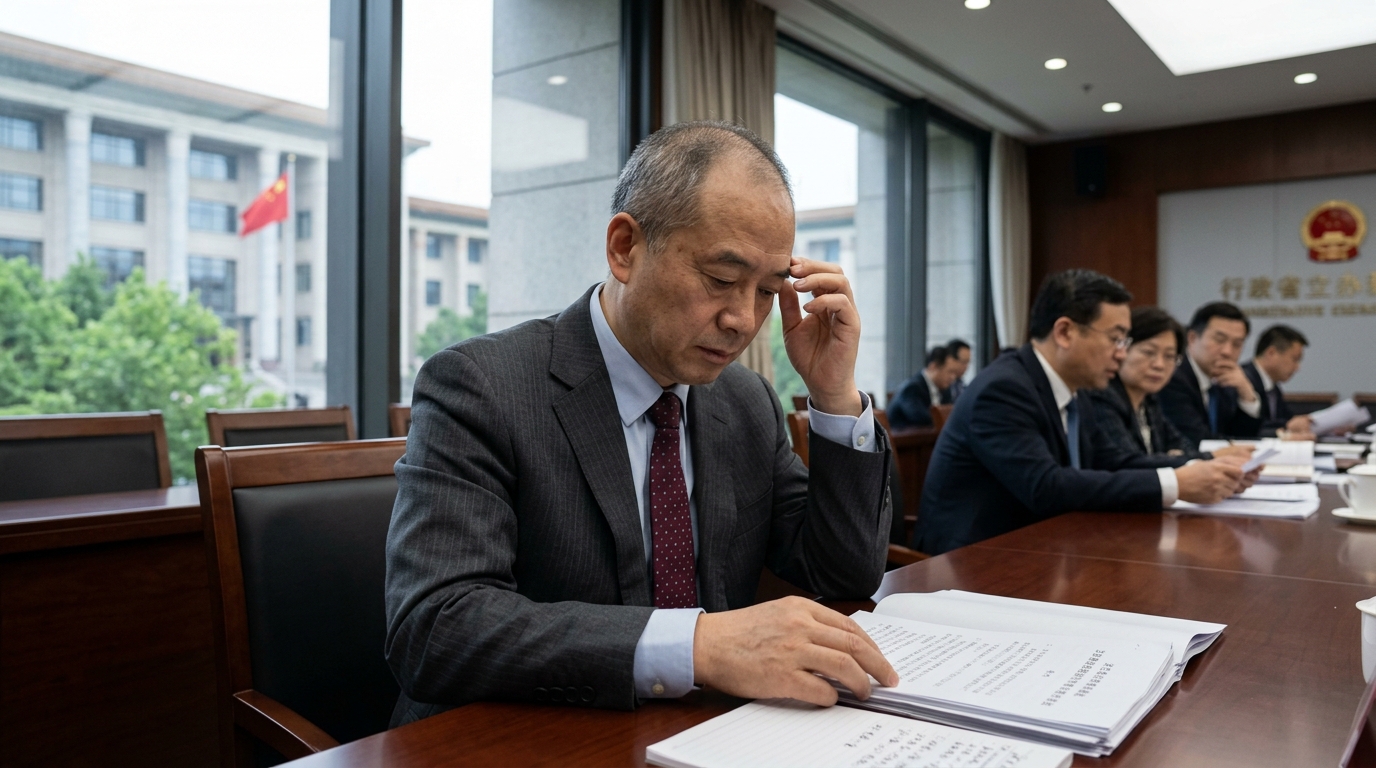
In an era where Artificial Intelligence (AI) promises—or threatens—to completely reshape the global labor market, a judicial decision from China has established the first significant legal bulwark. The People's Court of Haidian District in Beijing has issued a ruling expected to serve as a major precedent for millions of workers: the adoption of AI and the subsequent reduction in costs do not, by themselves, constitute a sufficient legal basis for terminating employment contracts.
The Case History and Legal Reasoning
The case involved a tech company employee whose contract was terminated on the grounds that his duties could now be performed faster and more cheaply by a generative AI system. The company argued that technological upgrading constitutes a "major change in objective circumstances," a term in Chinese labor law that allows for dismissal when continuing the contract becomes impossible.
However, the court rejected this argument with rare sternness. According to the ruling, the introduction of AI is a business choice to improve efficiency, not an objective impossibility of maintaining the job position. The court emphasized that companies have an obligation to exhaust every possibility of reassignment or reskilling before proceeding with layoffs. The decision highlights that technological progress should complement humans rather than serve as a means of violent displacement from the production process.
Social Stability vs. Corporate Profitability
This move by the Chinese judiciary is not devoid of political and social context. At a time when China faces challenges in youth employment and a slowdown in economic growth, maintaining social cohesion is a top priority for Beijing. The unchecked replacement of workers by algorithms could trigger social unrest that the Chinese leadership wishes to avoid at all costs.
- Protection of Human Capital: The court recognized that human experience and judgment remain irreplaceable at a qualitative level.
- Corporate Social Responsibility: Businesses are called upon to bear the cost of the transition to AI, rather than passing it on to employees.
- Legal Precedent: The ruling sends a loud message to China's entire tech sector, from Alibaba to Tencent.
Analysts point out that this decision acts as a "brake" on aggressive automation. While China seeks to lead the global AI race, it appears to be choosing a model that does not entirely sacrifice job security on the altar of speed. This creates an interesting contrast with Silicon Valley, where layoffs due to "AI-centered restructuring" have become almost a daily occurrence.
Global Implications and Comparison with the West
The Beijing ruling comes at a time when the European Union and the US are also trying to regulate the landscape. However, the Chinese approach is more direct and interventionist. In the EU, the AI Act focuses primarily on safety and fundamental rights, but protection against dismissal due to automation remains largely a matter of national labor laws.
"Technology must be a tool in human hands, not the cause of their exclusion from society," reads a key sentiment from the judicial reasoning.
For multinational corporations operating in China, the rules of the game are changing. It is no longer enough to present software that does the work of ten people to justify staff reductions. They will have to prove that human labor has become objectively impossible or redundant due to structural changes that go beyond simple cost-saving. This "human-centric" shift in Chinese jurisprudence may serve as a springboard for similar claims elsewhere in the world, as the labor movement seeks new ways to defend against the digital threat.





