

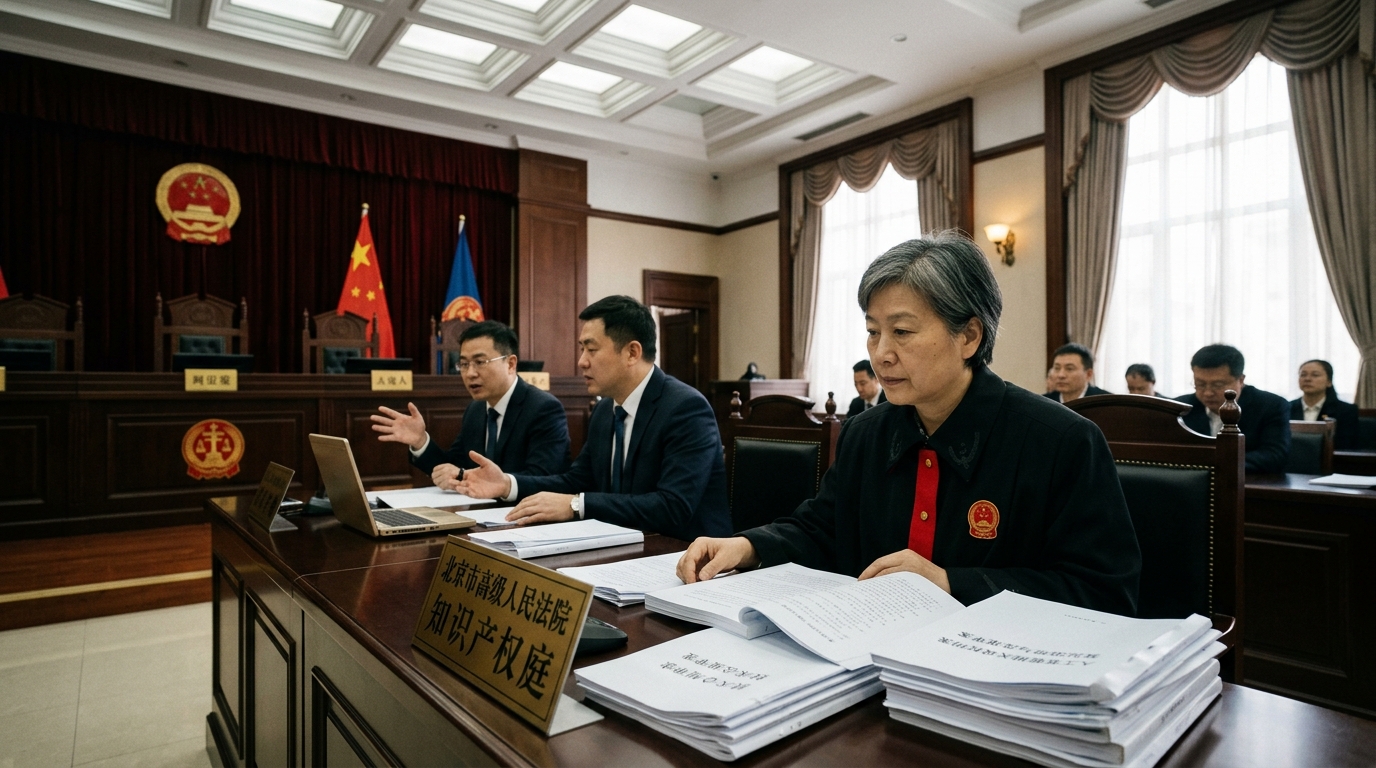
China is at a critical juncture in the governance of Artificial Intelligence (AI). As the nation strives to lead the global tech innovation race, its judicial system is facing an unprecedented challenge: a surge in AI-related court cases that expose significant gaps in the existing legal framework. From deepfake voice theft to intellectual property rights in algorithmically generated imagery, Chinese courts are being forced to legislate from the bench, creating a patchwork of rulings that often leaves companies and creators in a state of confusion.
The Clash of Personality Rights and Intellectual Property
One of the most high-profile cases recently involved the unauthorized use of a voice actress's vocals to train an AI model. The Beijing Internet Court ruled in favor of the plaintiff, stating that a person's voice is an integral part of their "personality rights" and cannot be utilized without explicit consent, even if the final output is synthetically generated. While this ruling set a vital precedent, it left open broader questions about how creators should be compensated at scale when their data is used for training.
Simultaneously, the debate over Intellectual Property (IP) has intensified. Unlike the United States, where the Copyright Office has generally denied protection for works created solely by AI, some Chinese courts have taken a more "innovation-friendly" stance. In a landmark decision, the Beijing Internet Court recognized copyright for an image generated using Stable Diffusion, arguing that the user exercised "intellectual effort" through the specific arrangement of prompts. This divergence from Western legal thought highlights China's intent to encourage AI adoption, yet it simultaneously creates legal uncertainty for international firms operating within its borders.
The Gap Between "Interim Measures" and National Law
To date, Beijing's approach has been piecemeal. The Cyberspace Administration of China (CAC) has issued "Interim Measures for the Management of Generative AI Services," which focus primarily on content control and data security. However, these measures fall short of addressing the complex civil disputes emerging in daily practice. Legal scholars in China are now pushing for the enactment of a comprehensive "AI Law," akin to the European Union's AI Act, but tailored to China's unique political and economic landscape.
- The need for a clear definition of liability in cases of AI "hallucinations" or misinformation.
- Protection of training data and the prevention of trade secret infringement.
- The establishment of a licensing mechanism for using protected content in Large Language Models (LLMs).
The absence of such a unified law forces judges to rely on the 2020 Civil Code, which was drafted before the generative AI boom. This leads to inconsistent rulings across different provinces, increasing compliance costs for tech giants like Baidu, Alibaba, and Tencent, who must navigate a shifting legal landscape.
Social Implications and the Strategy of "Technological Sovereignty"
Beneath the legal battles lies a deeper social concern. China possesses a massive population of knowledge workers and content creators who see their livelihoods threatened by automation. The government must balance the protection of these citizens with the pursuit of technological supremacy against the West. Legal clarity is not just a matter of justice; it is a matter of social stability and maintaining the "social contract" in a rapidly digitizing economy.
"Technology moves at the speed of light, while the law often moves at a snail's pace. In China, this gap must be bridged immediately to avoid digital chaos," says a senior legal advisor in Beijing.
In conclusion, the surge in litigation is acting as a catalyst for legislative acceleration. China does not merely want to regulate AI; it aims to set the standards that the rest of the world—particularly emerging economies—will follow. How it resolves the puzzle of intellectual property and personal identity in the digital age will define the future of the global technological landscape for decades to come.





