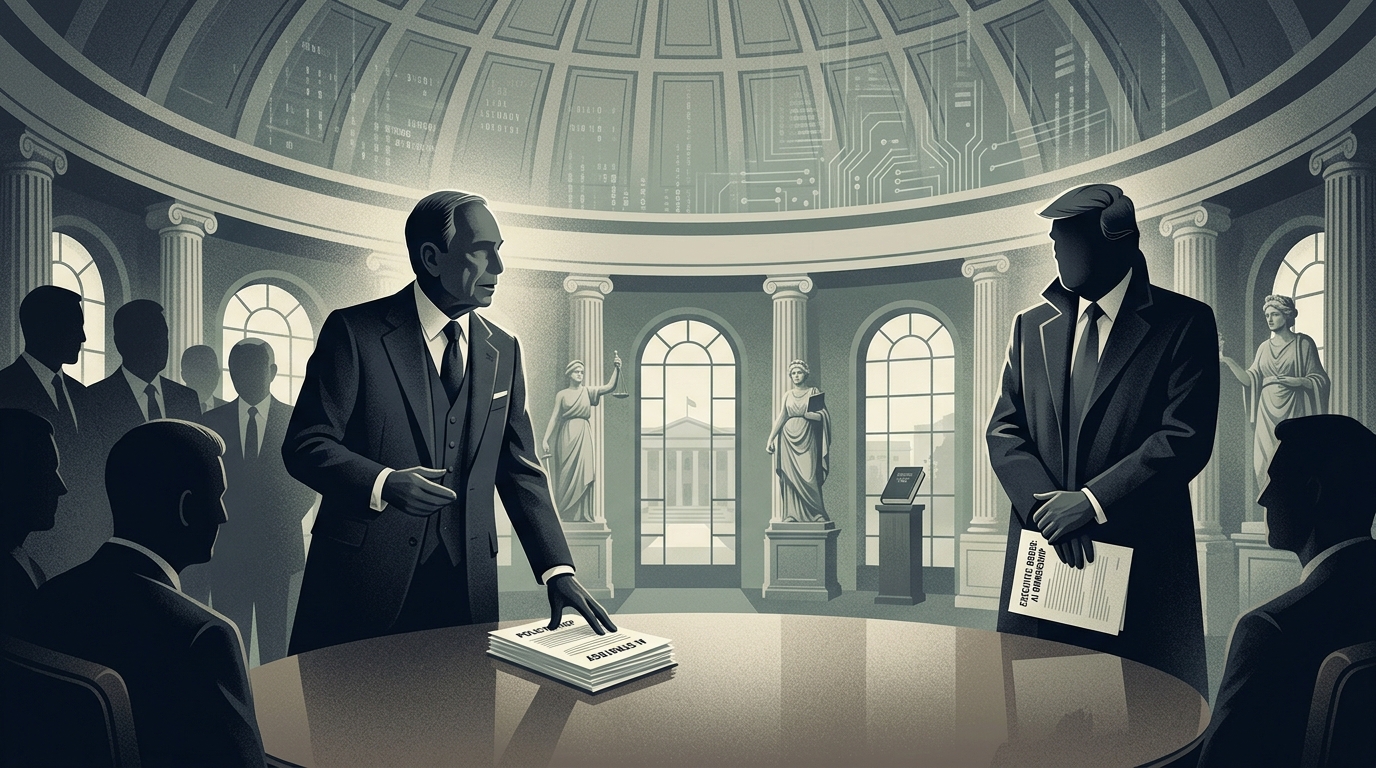
The foundational deal behind the American AI boom—where private investors bear the risk and the government regulates from the sidelines—is showing signs of collapse. As development costs skyrocket and Washington increasingly views AI as a critical national security asset, President Donald Trump is considering taking a governmental stake in AI companies.
Bloomberg’s Warning on State Control
While the proposal has found favor among populists on both the left and right, as well as within the AI industry itself, billionaire Michael Bloomberg has emerged as a vocal critic. In a Monday op-ed, the media mogul argued that the plan would transform the U.S. government from a neutral regulator into a profit-seeking investor.
“Somewhere, Karl Marx is smiling,” Bloomberg wrote regarding the shift toward a centrally planned economy, adding that the potential for propaganda would “make George Orwell blush.”
The Case for Market-Driven Gains
The former New York City mayor argued that public ownership is unnecessary for citizens to share in AI’s benefits. He noted that once these companies go public, Americans can purchase shares directly. Furthermore, he emphasized that the public already benefits from AI through advancements in medical research, bookkeeping, and fraud detection. These developments, he argues, generate economic growth and subsequent tax revenue for public services.
Bloomberg suggested that if AI companies are not contributing sufficiently to the public good, Washington should address the issue by fixing the tax code rather than purchasing equity. He warned that federal shareholding would likely lead to corruption, transforming the industry into a “smoke-filled backroom.”