

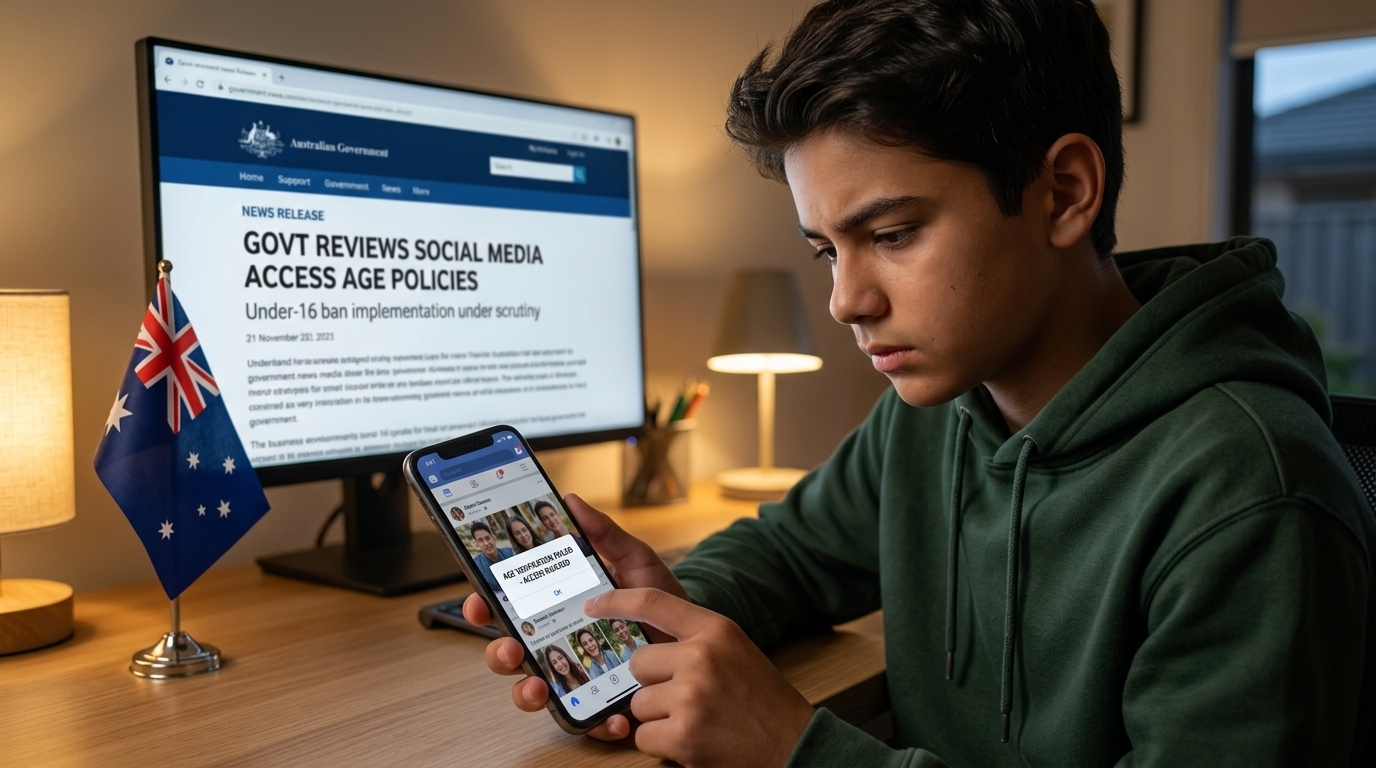
When the Australian government announced a historic ban on social media for children under 16 in late 2024, the world watched it as the ultimate social experiment of the digital age. Today, in May 2026, the reality on the ground is far more complex and frustrating for lawmakers in Canberra. The "digital iron curtain" of the law appears to have holes, as minors return en masse to their favorite platforms, utilizing a toolkit ranging from simple VPNs to sophisticated digital identity spoofing methods.
The Chronicle of a Foretold Conflict
The law, which stipulated fines of up to A$50 million for tech companies failing to take "reasonable steps" to exclude minors, aimed to protect the mental health of the younger generation. However, its implementation hit two major hurdles: the technical inability of platforms to verify age without compromising privacy, and the inherent ability of digital natives to bypass restrictions. According to recent data, over 60% of affected teens reported continuing to use TikTok, Instagram, and Snapchat within weeks of the measures taking effect.
The Technology of Disobedience
The methods used by Australian minors are indicative of the generational gap. The use of Virtual Private Networks (VPNs) to mask a user's location to another country—where no such ban exists—has become commonplace in schools from Sydney to Melbourne. Furthermore, the creation of accounts with the help of older friends or even parents, who disagree with state intervention in child-rearing, has undermined the law's foundation. Platforms, for their part, argue that requiring biometric identification or scanning government documents poses massive data security risks, creating a deadlock between regulators and Big Tech.
Social and Political Dimensions
The failure to fully enforce the measure has sparked an intense debate over whether prohibition was ever the right path. Many child psychology experts argue that turning social media into "forbidden fruit" made it even more attractive, while simultaneously depriving young people of the opportunity to develop digital literacy under supervision. Government critics speak of "legislative theater," claiming that politicians opted for a digestible but unenforceable solution instead of investing in education and corporate accountability for algorithmic content. Australia's case now serves as a cautionary tale for the European Union and the US, which are considering similar measures.
Conclusions for the Future
As we head into the second half of 2026, Australia finds itself at a crossroads. It must either move toward even more drastic measures—such as universal identification for all internet users, reminiscent of authoritarian regimes—or admit that technological prohibition is a blunt instrument for a nuanced problem. The return of minors to these platforms is not just an act of teenage rebellion; it is a reminder that in the 21st century, access to information and communication is viewed by younger generations as a fundamental right, regardless of the well-meaning intentions of legislators.





