

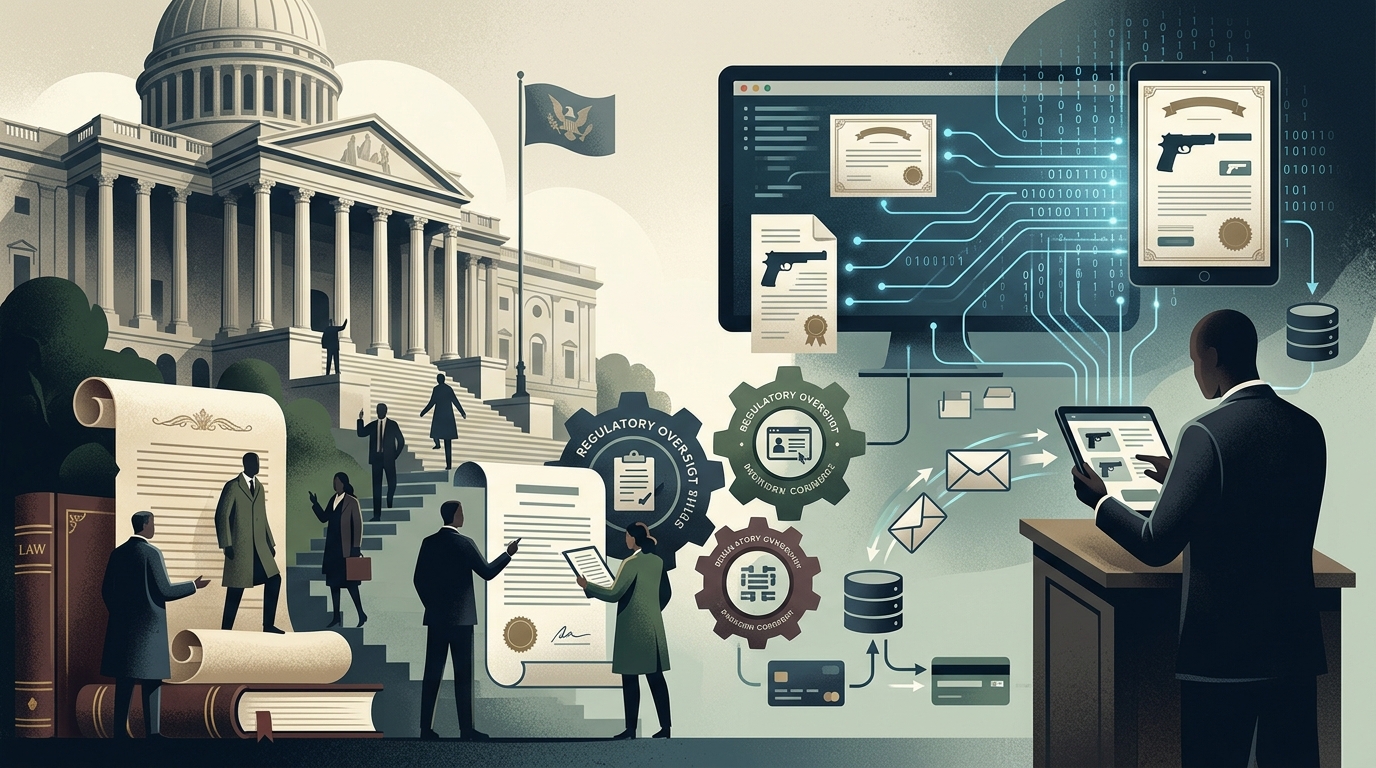
In the ever-evolving landscape of American gun politics, a new proposal from the Bureau of Alcohol, Tobacco, Firearms and Explosives (ATF) threatens to upend decades of established norms. The proposed change concerns the possibility of direct firearm shipments to consumers, bypassing the traditional requirement for a physical presence at a Federal Firearms Licensee (FFL) location for pickup. This development is not merely a bureaucratic adjustment but a structural shift that could transform gun purchasing into an experience akin to Amazon’s e-commerce model.
The Rise of GrabAGun and the Trump Jr. Connection
At the center of this storm lies GrabAGun, one of the largest online firearm retailers in the United States. The company has garnered headlines not only for its sales volume but also for its close ties to the Trump family. Donald Trump Jr., a well-known Second Amendment advocate and avid hunter, is a shareholder and board member of the company. His involvement raises serious questions about conflicts of interest, especially at a time when political rhetoric surrounding the deregulation of the gun market is intensifying.
GrabAGun has invested heavily in logistics infrastructure and digital platforms, clearly preparing for a future where barriers between the retailer and the consumer are minimal. Should the ATF proposal be adopted, the company is expected to see its revenues skyrocket, as ease of access is the primary driver of demand in the digital age. However, critics point out that the profitability of a company with such political connections cannot be separated from the broader debate on public safety.
From 1968 to 2026: The Challenge of Modernization
The current legal framework, largely based on the Gun Control Act of 1968, requires buyers to pick up their firearms from a federally licensed dealer, who is responsible for conducting a background check at the point of transfer. The proposal for direct shipping argues that these checks can now be performed digitally and with greater precision through advanced algorithms and biometric data.
- Digital Verification: Utilizing AI technologies for buyer identification and real-time criminal record checks.
- Transport Security: Proposals for smart packaging that unlocks only with the recipient's fingerprint.
- Cost Reduction: Eliminating the fees charged by local dealers for transfer mediation.
Despite these technological promises, gun violence prevention organizations warn of the risks. The potential for firearm theft during transit or delivery to individuals who are not the legal buyers (straw purchases) remains a nightmare for law enforcement. Furthermore, weakening the role of the local dealer, who often acts as a "filter" by identifying suspicious behavior, could have unforeseen consequences.
The Political Dimension and the Future of the Second Amendment
This move by the ATF does not occur in a political vacuum. With the US in a state of perpetual polarization, gun regulation is the ultimate battlefield. For supporters of the proposal, it is about removing an anachronistic restriction that prevents law-abiding citizens from exercising their constitutional rights. For opponents, it is a dangerous retreat in the face of the interests of the gun industry and its political allies.
"Technology allows us to be safe and efficient simultaneously. There is no reason to persist with last-century models when security can be ensured digitally," say sources close to GrabAGun.
In conclusion, the proposed ATF change is a test of the American legal system's ability to adapt to digital reality without sacrificing public safety. Donald Trump Jr.'s involvement adds a layer of complexity, turning a technical discussion about logistics into a major political confrontation over the country's future. Whether the postal service will become the new neighborhood gunsmith remains to be seen, but the foundations for such a change have already been laid.





