

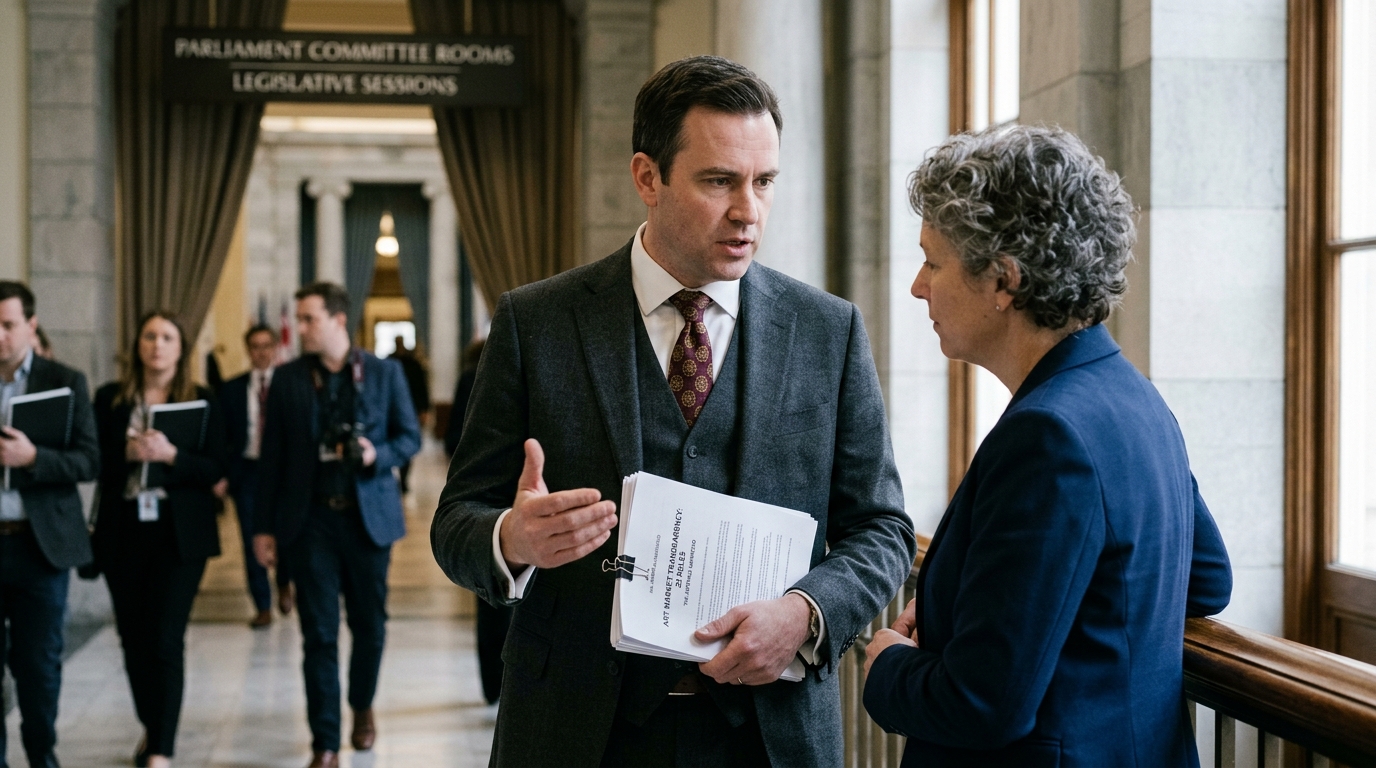
In an era where the lines between human creativity and algorithmic generation are becoming increasingly blurred, Artmarket.com, through its Artprice department, has submitted a proposal that aims to be the "Magna Carta" of the modern art market. The "Artprice Manifesto" comprises 22 fundamental rules designed to regulate Generative Artificial Intelligence (AI) and restore transparency to a market traditionally characterized by opacity and a lack of clear governance.
The Existential Challenge of AI
The emergence of tools like Midjourney, DALL-E, and Stable Diffusion has done more than just change the way images are produced; it has challenged the very concept of intellectual property. Thierry Ehrmann, founder of Artprice and Organe Design, argues that we are at a critical crossroads. AI is fueled by billions of copyrighted artworks, often without the permission or compensation of their creators. The Manifesto responds to this "digital looting" by proposing strict rules for the training of AI models.
According to the Manifesto, any use of an artwork to train algorithms must be governed by the principle of consent (opt-in) rather than a simple possibility of exclusion (opt-out). This means that tech companies must proactively seek permission from artists, recognizing the value of the data they use for profit. Artprice emphasizes that without such a mechanism, the market risks being flooded with "derivative" works that undermine the economic survival of human creators.
The 22 Rules: Transparency and Traceability
The proposed rules are divided into three main pillars: ethical model training, mandatory labeling of works, and fair economic distribution. One of the most significant rules concerns "Provenance Traceability." Artprice suggests using blockchain technology to record every stage of a work's creation, making it clear if and to what extent AI was used. This "digital passport" would accompany the work in every resale, ensuring that the buyer knows exactly what they are purchasing.
- Mandatory Labeling: Any work produced or significantly modified by AI must carry a clear "AI-generated" or "AI-assisted" label.
- Fair Compensation: Establishment of a micropayment system for artists whose style or works are used as "prompts" in image generation platforms.
- Right to be Forgotten: Artists must have the right to request the removal of their works from training datasets at any time.
Protecting Human Genius
The Manifesto is not a polemic against technology, but an attempt to protect the "human element." Artprice argues that AI can be a powerful tool in the hands of artists, provided it does not act as their replacement. The distinction between "art as expression" and "art as an algorithmic product" is fundamental to maintaining market values. Collectors, according to Artprice analyses, still seek the authenticity and emotion that only a human can breathe into their work.
"Unregulated AI is a machine for producing uniformity. Art, on the contrary, is the celebration of uniqueness," says Thierry Ehrmann.
Furthermore, the Manifesto calls on governments and the European Union to incorporate these rules into the AI Act. The need for a unified international framework is imperative, as the art market is global and digital violations know no borders. Artprice, possessing the world's largest database of art prices and auctions, offers its expertise to create an "Ethical AI" index that will evaluate platforms based on their compliance with the 22 rules.
Conclusion: Towards a New Digital Renaissance
Artmarket.com's initiative comes at a time when the art market is undergoing a period of readjustment. NFT sales may have retreated from their historical highs, but the underlying technology and the challenge of AI remain. The 22 Rules Manifesto is a bold attempt to impose order on chaos. If these rules are adopted, the art market could enter a new era of transparency, where technology serves creativity rather than the other way around. The success of this venture will be judged by the cooperation between auction houses, artists, and legislators, in a common effort to preserve the value of human creation in the 21st century.





