

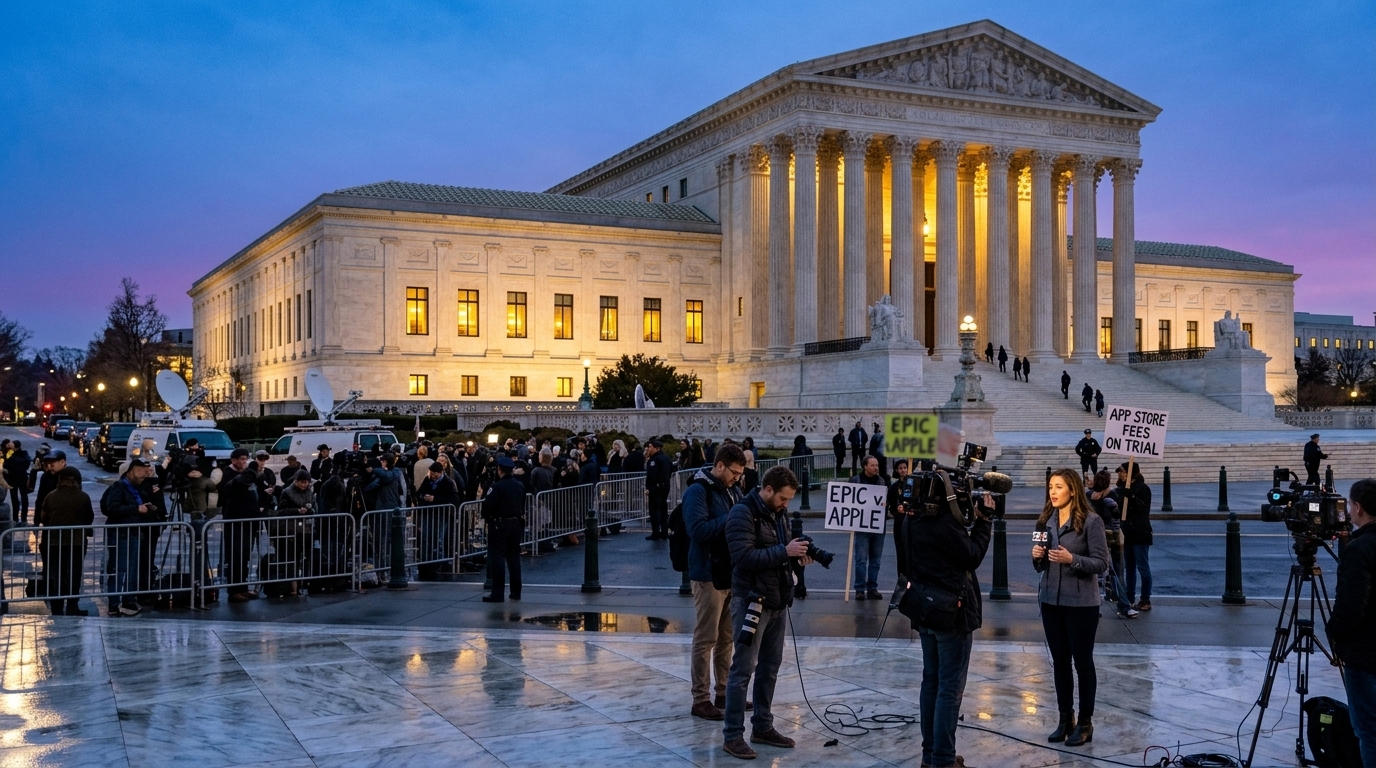
July 1, 2026, marks a pivotal new chapter in the multi-year legal saga that has fundamentally reshaped the digital economy. Apple, the Cupertino-based tech titan, has officially filed a petition with the Supreme Court of the United States, seeking to overturn a lower court's finding that it is in "contempt of court." This move is not merely about a legal technicality; it strikes at the very heart of the App Store’s business model and the control the company wields over the iPhone ecosystem.
The conflict traces back to the summer of 2020, when Epic Games, the creator of the global phenomenon Fortnite, attempted to bypass Apple’s payment system—which takes a commission of up to 30% on transactions. Apple responded by immediately banishing Fortnite from the App Store, triggering a wave of litigation examining whether Apple operates as a monopoly. While lower courts eventually ruled that Apple is not a monopoly in the strictest legal sense, they did issue an injunction against Apple’s "anti-steering" rules, which prohibited developers from informing users about alternative, cheaper payment methods outside the app.
The Strategy of "Malicious Compliance"
At the center of the current Supreme Court appeal is how Apple chose to comply with those judicial mandates. Instead of allowing developers to freely direct users to external websites, Apple introduced a new set of hurdles: developers can include links, but Apple still demands a 27% commission on sales made through those links. Furthermore, the company imposed strict user interface (UI) requirements, making the process cumbersome and discouraging for the average consumer.
Epic Games has characterized this compliance as a "sham" and a mockery of the court's intent. A federal judge agreed, finding that Apple had failed to adhere to the spirit of the original injunction, leading to the contempt finding. Apple, for its part, argues that this finding is "erroneous" and that it has every right to protect its intellectual property and user security by collecting a fee for the use of its platform, regardless of where the transaction is finalized.
Legal Arguments and High Stakes
In its petition, Apple contends that the lower court exceeded its jurisdiction. It argues that forcing specific business practices violates the company's freedom to manage its private network. Apple’s legal team is expected to emphasize that the App Store is not a public square but a private marketplace created and maintained through massive internal investment. Apple asserts that if the court forces it to provide its infrastructure for free to competitors, it would constitute a form of property "taking" without just compensation.
Conversely, Epic Games and its allies—including heavyweights like Spotify and Match Group—argue that Apple uses its hardware dominance to lock users into a closed software loop. They point out that in other jurisdictions, such as the European Union under the Digital Markets Act (DMA), Apple has already been forced to make much more radical concessions, including opening up to alternative app stores and side-loading.
- Economic Impact: App Store commissions generate billions of dollars annually for Apple with exceptionally high margins.
- Security and Privacy: Apple maintains that its closed ecosystem is the primary defense against malware and consumer fraud.
- Innovation: Critics argue the "Apple Tax" stifles small startups that cannot afford the 30% overhead.
- Global Precedent: The Supreme Court’s decision will determine if the US follows Europe's regulatory path or remains a bastion for big tech's platform autonomy.
The Future of Digital Sovereignty
Should the Supreme Court agree to hear the case, the resulting ruling will be a landmark for 21st-century antitrust law. This is no longer just about whether Fortnite returns to the iPhone without a fee. It is about the definition of a "platform" in the digital age. Can a hardware manufacturer maintain absolute control over the software that runs on its devices? Or does the device belong to the user, who should have the freedom to choose where they purchase services?
The industry is watching with bated breath. An Apple victory would solidify the "Walled Garden" model for the next decade, ensuring that platform owners maintain strict gatekeeping powers. However, a defeat could open the floodgates for a radical restructuring of how we interact with our mobile devices, transforming them from curated environments into open computing systems, much like the personal computers of previous decades. The history of technology is now being written in courtrooms, and the Supreme Court’s verdict will be the final period at the end of this long-contested sentence.





