

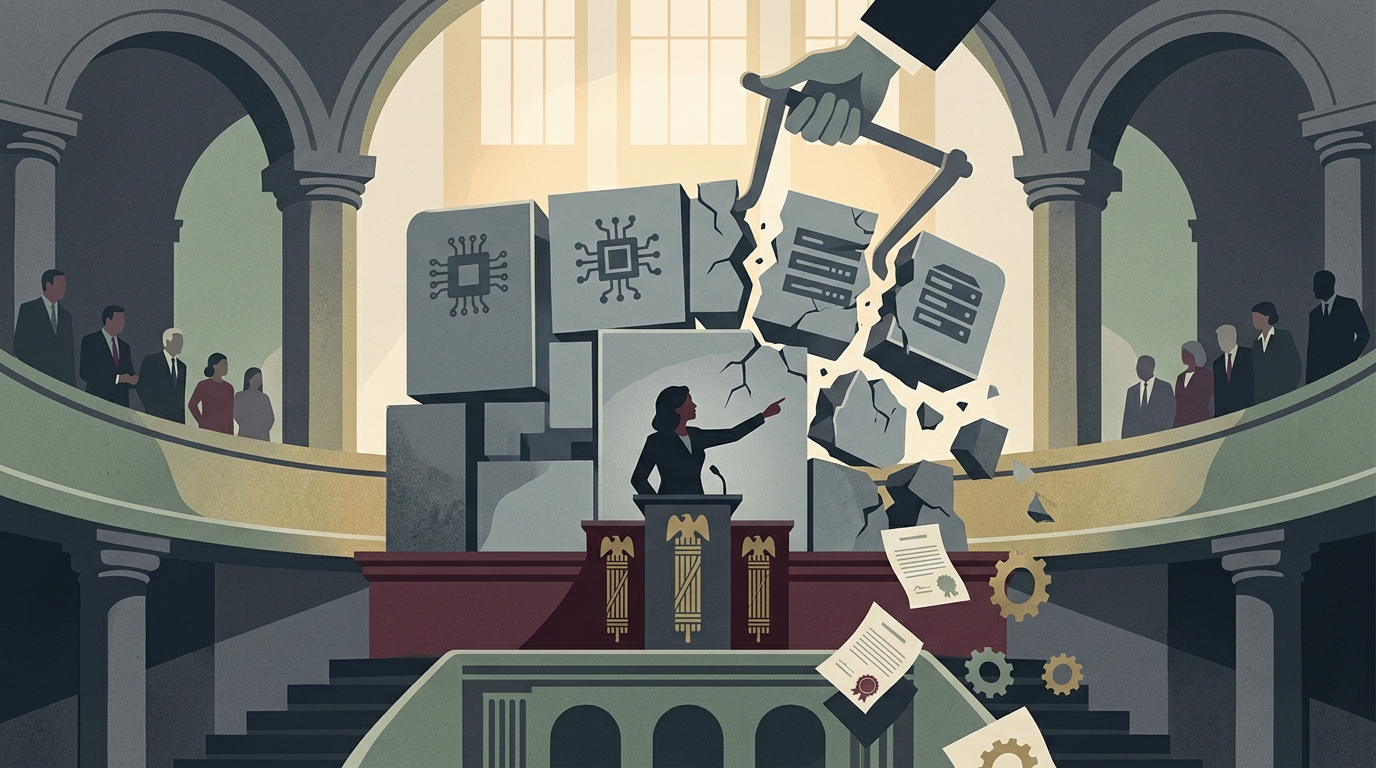
In an era where the cost of living remains the central axis of political discourse in the United States, Representative Alexandria Ocasio-Cortez (AOC) has forcefully reintroduced one of the most contentious issues of the modern economy: the breaking up of Big Tech. Her intervention, which focuses on the continuous price hikes in digital services and products, marks a new phase in the regulatory war against Silicon Valley’s monopolies.
The Connection Between Monopoly and Inflation
AOC’s argument is no longer confined to privacy concerns or freedom of speech. Instead, it has shifted to the average citizen's wallet. According to the congresswoman, giants like Amazon, Apple, Google, and Meta have acquired such dominance that they can impose price increases without fear of losing customers, as there is no meaningful alternative for consumers to turn to.
"When a handful of companies control the gateways to the digital economy, the free market ceases to exist," she stated. AOC points out that hikes in streaming subscriptions, the rising cost of cloud computing, and the commissions charged in app stores constitute an indirect "private tax" imposed by corporate interests, exacerbating the inflationary pressures already squeezing households.
The Break-Up Strategy and Historical Precedents
The proposal to break up these companies is not new, but it is gaining fresh momentum under the leadership of Lina Khan at the Federal Trade Commission (FTC). The idea is to decouple different business activities: for instance, Amazon should not be allowed to both own the marketplace and sell its own products in competition with third-party vendors on that same platform.
U.S. history has shown that such radical moves can unleash innovation. The dissolution of Standard Oil in the early 20th century and the breakup of AT&T in the 1980s are now viewed as milestones that allowed new players to enter the market. AOC argues that we are at a similar tipping point, where the "suffocation" caused by Big Tech is preventing the birth of the next generation of technological breakthroughs.
Reactions and Economic Implications
Predictably, the tech industry is pushing back hard. Proponents of these companies argue that their massive scale allows for economies of scale that ultimately benefit consumers through free services and high-quality infrastructure. Furthermore, they warn that weakening American giants could provide an opening for Chinese competitors, potentially compromising U.S. national security and technological leadership.
However, public opinion appears to be shifting. "Subscription fatigue" and the growing perception that platforms are becoming more expensive while their quality declines—a phenomenon some analysts call "enshittification"—are bolstering AOC’s political narrative. The debate is no longer just about whether to intervene, but about how deep the regulatory scalpel should cut.
The Political Stakes of 2026
As we approach the next election cycles, the issue of Big Tech’s power is expected to be a central pillar of the campaign agenda. For AOC and the progressive wing of the Democratic Party, this battle is simultaneously economic and democratic. The concentration of wealth and information in so few hands is seen as a direct threat to the functioning of the democratic process.
In conclusion, the call to break up Big Tech is a plea for restoring the balance between corporate power and the public interest. Whether Washington will possess the political fortitude to execute such a move remains the defining question of the decade.





