

At the heart of the digital revolution we are experiencing in 2026 lies a truth that tech giants rarely admit: Artificial Intelligence doesn't just run on electricity and data; it runs primarily on credit. Since early 2024, the race for dominance in Large Language Models (LLMs) has led to an unprecedented accumulation of debt, with companies borrowing billions to secure essential Nvidia processors and construct colossal data centers. However, the era of the "blank check" appears to be coming to an end, as global regulators sound the alarm over a potential systemic crisis.
The Architecture of Debt in the AI Era
The growth model of Artificial Intelligence differs radically from previous technological booms. While the rise of the internet was built on relatively low infrastructure costs, AI requires capital expenditures (CAPEX) that verge on the absurd. Major tech firms and ambitious startups alike have resorted to complex financial instruments to fund their expansion. One of the most controversial phenomena is the use of "compute-as-collateral," where companies use their future GPU reservations as a guarantee for loans.
This practice has created a cycle of dependency that worries the Federal Reserve and the European Central Bank. If the demand for AI services fails to yield expected profits within 2026, many of these companies will find themselves unable to service their debts, triggering a domino effect on the banks that funded them. Regulators fear we are facing a bubble similar to the dot-com era, but with much deeper interconnections with the traditional banking system.
Regulatory Intervention: From Laissez-faire to Oversight
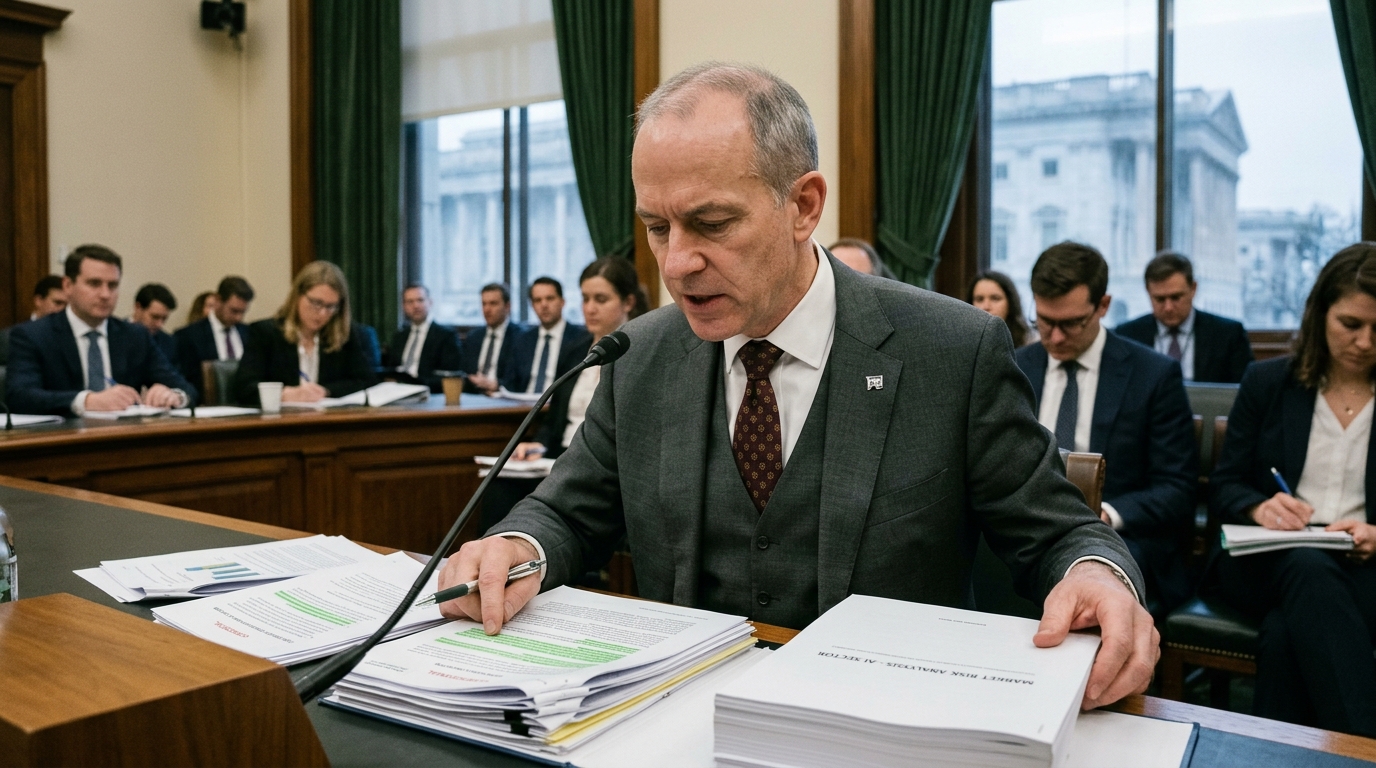
The shift in regulatory stance is not accidental. In Washington and Brussels, the conversation has moved from AI ethics to its financial stability. The US Securities and Exchange Commission (SEC) and the UK’s Financial Conduct Authority (FCA) are already considering new rules that would require tech companies to more clearly disclose their exposure to debt related to AI infrastructure. Furthermore, stricter capital requirements are being considered for banks providing high-risk loans to the tech sector.
"We cannot allow excitement over a new technology to blind the risk management mechanisms that shield the global economy," a senior official from the International Monetary Fund recently stated.
The concern is intensified by the fact that the AI market is extremely concentrated. If one of the three major cloud providers faces financial distress due to excessive leverage, the repercussions will be global. Regulators are seeking to "shut off the tap" before the debt becomes unmanageable, forcing companies to turn to more sustainable forms of financing, such as equity issuance or organic growth through profitability.
Geopolitics and Economic Sovereignty
Behind the numbers lies a ruthless geopolitical competition. The United States fears that if it overly restricts financing to its own AI companies, it will give an advantage to China, which continues to funnel state money into the sector without the same market constraints. However, the experience of 2008 taught that financial instability is a greater threat to national security than a delay in a technological race.
In Europe, the approach is even stricter. The EU is considering linking AI financing to environmental, social, and governance (ESG) criteria, as the energy consumption of data centers built with borrowed capital poses an additional burden on national economies. The message is clear: the era of unlimited credit for AI is ending. Companies must now prove that their technology is not only smart but also economically viable.
Conclusions for the Future
The transition from a debt-based economy to a value-based economy will be painful for many players in the AI industry. We expect to see a series of acquisitions and mergers, as smaller companies unable to service their loans are absorbed by stronger players. For the end-user, this may mean increased prices for AI services as the cost of capital is integrated into subscription fees. But in the long run, regulatory intervention may be the industry's salvation, preventing a collapse that would set technological progress back decades.





