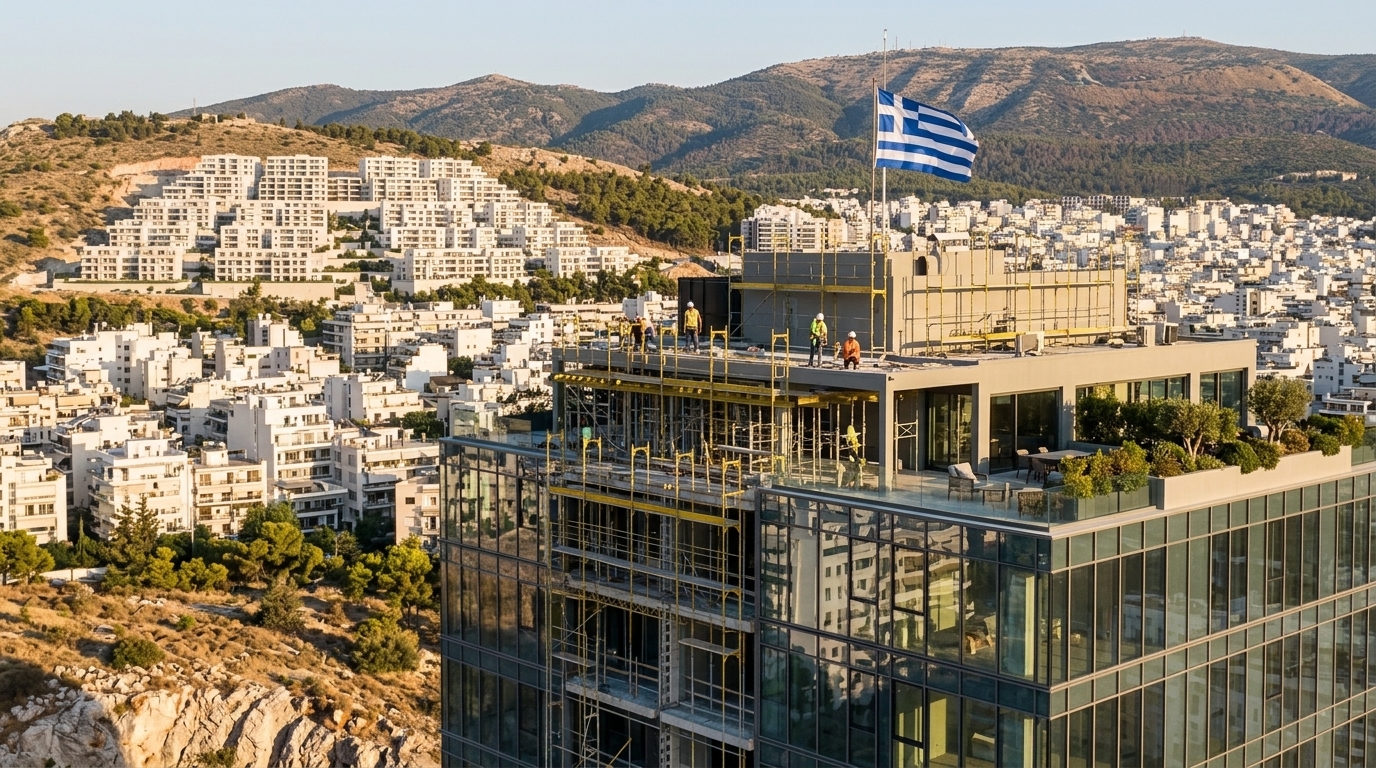
The sight of cranes rising again over the Athenian skyline and major regional cities is no longer a distant memory of the pre-crisis era, but the new reality of the Greek economy. In June 2026, the construction sector finds itself in a phase of mature recovery, characterized by intense geographical concentration and a clear shift towards high quality and energy efficiency. According to the latest ELSTAT data and market analysis, new construction activity is not spreading uniformly across the country but is creating "pockets" of growth that are transforming the urban landscape.
The Geography of Reconstruction: Attica and Central Macedonia at the Top
Attica remains the undisputed champion of construction activity, accounting for over 50% of new permits and total floor space under construction. Demand in the capital is fueled by a combination of factors: the need for modern, energy-efficient homes, Athens' continued attractiveness as an investment destination, and the significant shortage of housing stock that meets modern standards. Central Macedonia follows, with Thessaloniki seeing a significant revival, particularly in the western suburbs where land is still available, and in the east, where prices traditionally move at higher levels.
Interestingly, the shift towards the periphery is notable, with regions like Crete and the Cyclades recording impressive growth rates in private construction. There, the driving force is tourism and the demand for high-end holiday homes, which often double as investment properties for short-term rentals. However, this "construction boom" brings with it the challenge of preserving the character of these areas, as the pressure for new building is often suffocating.
The Southern Suburbs and the "Athens Riviera"
If we look for ground zero of high prices and luxury, it is firmly located in the Southern Suburbs of Athens. Glyfada, Voula, Vouliagmeni, and, of course, the area around Ellinikon, are the focus of international interest. Prices for newly built apartments there have broken all previous records, with the cost per square meter starting at 7,000 euros and skyrocketing into five-digit figures for properties with sea views or those within the Ellinikon project.
- Glyfada & Voula: Dominated by buildings of high architectural aesthetics with pools and "smart" management systems.
- Ellinikon: The largest urban regeneration project in Europe acts as a magnet, driving up values throughout the adjacent zone.
- Northern Suburbs: Marousi and Kifisia are making a strong comeback, offering an alternative for those seeking quality of life away from the coastal front.
The rise in prices in the south is not just a result of domestic demand. Greece, despite changes in the Golden Visa regime, remains attractive to foreign investors from Europe, the Middle East, and Asia, who see the "Athens Riviera" as an area with guaranteed future capital gains.
Construction Costs and the "Green" Premium
One of the main reasons new homes are so expensive today is the cost of materials and energy. Following the global inflationary pressures of previous years, construction costs have stabilized at much higher levels compared to 2019. Furthermore, the new building code imposes strict energy class standards (A+), which increases initial costs but drastically reduces operating expenses for the owner.
"We are no longer just building houses, but energy machines that must be environmentally friendly and economical to use," says an executive from a major construction firm.
This "green premium" creates a gap in the market. On one hand, we have new, modern apartments catering to high incomes and investors, and on the other, the old building stock of the 70s and 80s, which is becoming energy-obsolete and requires significant renovation to remain viable.
The Social Dimension: The Housing Crisis Deepens
While construction activity is a sign of economic health, the lack of affordable housing is evolving into a major social issue. For the average Greek household, buying a newly built apartment in Attica feels like an unattainable dream today. The rise in mortgage rates, combined with the stagnation of real wages relative to the explosion in property prices, has led to a new form of exclusion.
Programs like "Spiti Mou" provided some relief, but the market needs a more structural intervention. The trend of "antiparochi" (land-for-apartment exchange), which built Greece in previous decades, has almost disappeared, giving way to large developments by institutional investors and real estate companies. The challenge for the next two years will be the balance between developing luxury residences and building homes that can house the new generation of Greeks.