

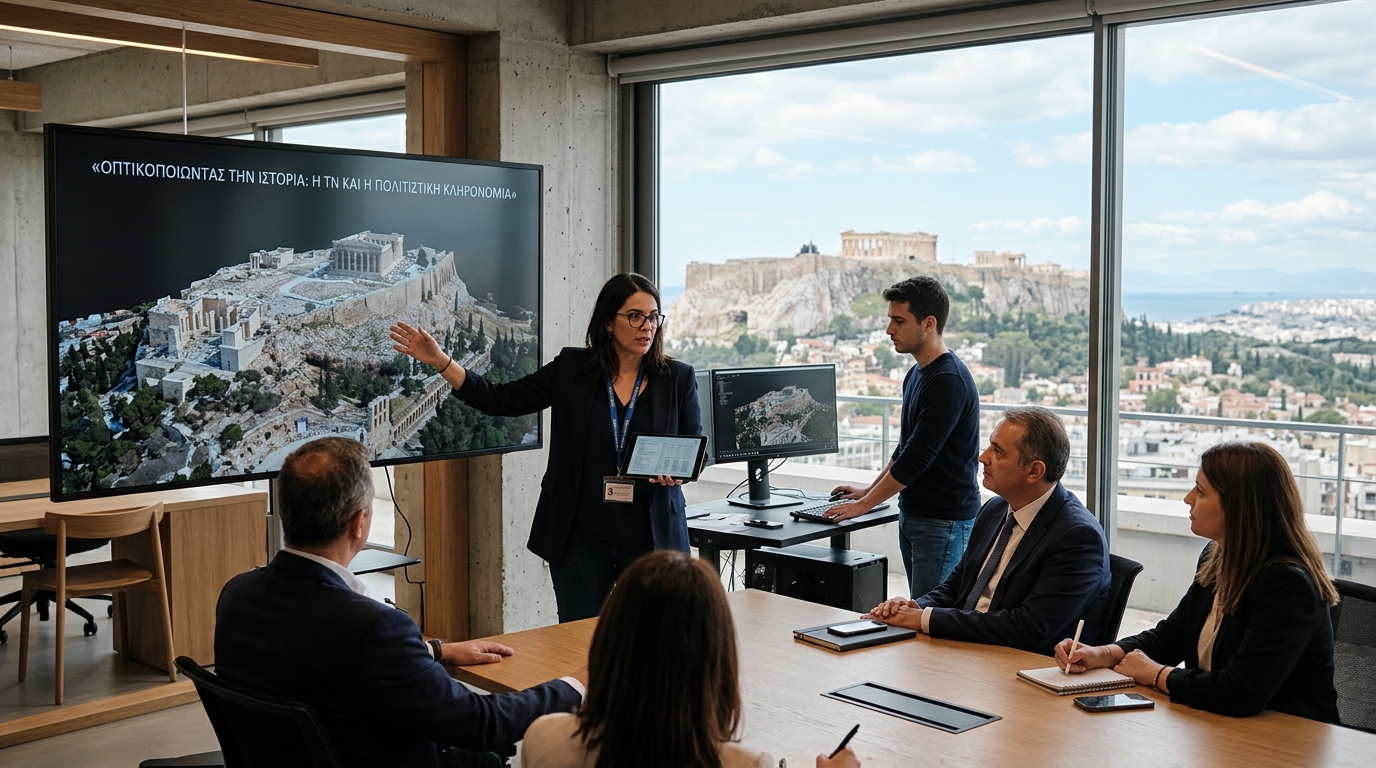
At the dawn of the third decade of the 21st century, our relationship with the past is undergoing a radical transformation. The image of the archaeologist working exclusively with a trowel and brush is gradually giving way to a new reality, where machine learning algorithms and neural networks take on the task of "filling in" the gaps of historical memory. The "Visualizing History" initiative is not merely a technological application but a profound philosophical and scientific shift toward preserving cultural heritage through means that, until a few years ago, belonged to the realm of science fiction.
From Fragments to Full Reconstruction
Artificial Intelligence (AI) now offers the ability to process vast amounts of data that the human mind would take decades to categorize. In the field of archaeology, this translates into the ability of AI systems to recognize patterns in thousands of pottery shards or sculpture fragments, suggesting potential connections and reconstructions with millimeter precision. A prime example is the use of algorithms to decipher damaged papyri or illegible inscriptions, where AI can predict missing text based on millions of other samples from the same period.
Furthermore, 3D scanning combined with AI allows for the creation of "digital twins" of monuments. These digital replicas are not simple photographs but dynamic models that include information on structural integrity, chemical composition of materials, and the effects of climate change over time. In this way, history ceases to be something static and becomes a living laboratory for research.
The Visitor Experience: From Observation to Participation
The application of digital technologies is also fundamentally changing the public experience. Museums are no longer simple repositories of objects but hubs of interaction. Through Augmented Reality (AR), a visitor at Ancient Olympia or Knossos can, by pointing their smartphone at the ruins, see buildings rise before them in their original form, full of color and life. AI takes over here to create realistic lighting and textures that adapt to the natural light of the moment, making the experience shockingly lifelike.
- Interactive Digital Guides: Systems based on Large Language Models (LLMs) allow visitors to ask questions to "digital personas" of historical figures.
- Personalized Routes: AI analyzes the user's interests and suggests a customized tour of the archaeological site.
- Accessibility: Converting visual data into tactile or auditory stimuli allows people with disabilities to "feel" history in ways that were previously impossible.
Ethical Challenges and the Question of Authenticity
Despite the excitement, the use of AI in history raises serious questions. Where does documented representation end and fiction begin? The ability of AI to "fill the gaps" carries the risk of distorting historical truth for the sake of spectacle. If an algorithm is trained on biased data, it may reproduce stereotypes about the past that do not correspond to reality.
"Technology must act as a magnifying glass of truth, not as a filter that beautifies it. The challenge is to maintain the sanctity of the primary find, using digital imaging as a bridge of understanding and not as a substitute," industry experts state.
The "Disneyfication" of history is a real fear. The need for tourism appeal can lead to digital reconstructions that are more "cinematic" than historically accurate. Therefore, close cooperation between technologists and humanities scholars (historians, archaeologists, philologists) is more necessary than ever to establish ethical rules.
Greece as a Digital Culture Laboratory
For Greece, integrating AI into culture is not a luxury but a national strategy. With thousands of monuments scattered throughout the country, digitization is the only means for their comprehensive recording and protection. Initiatives such as collaborations with global tech giants for the 3D mapping of iconic sites point the way. Our country has the opportunity to evolve into a global "Cultural Tech" center, exporting expertise and attracting quality tourism interested in deep knowledge rather than just sun and sea.
In conclusion, visualizing history through Artificial Intelligence is a journey that has just begun. It promises to make the past accessible to all, to preserve knowledge from the ravages of time, and to help us better understand the course of human civilization. As long as we remember that technology is the means, and humans remain the ultimate interpreters of meaning.





