

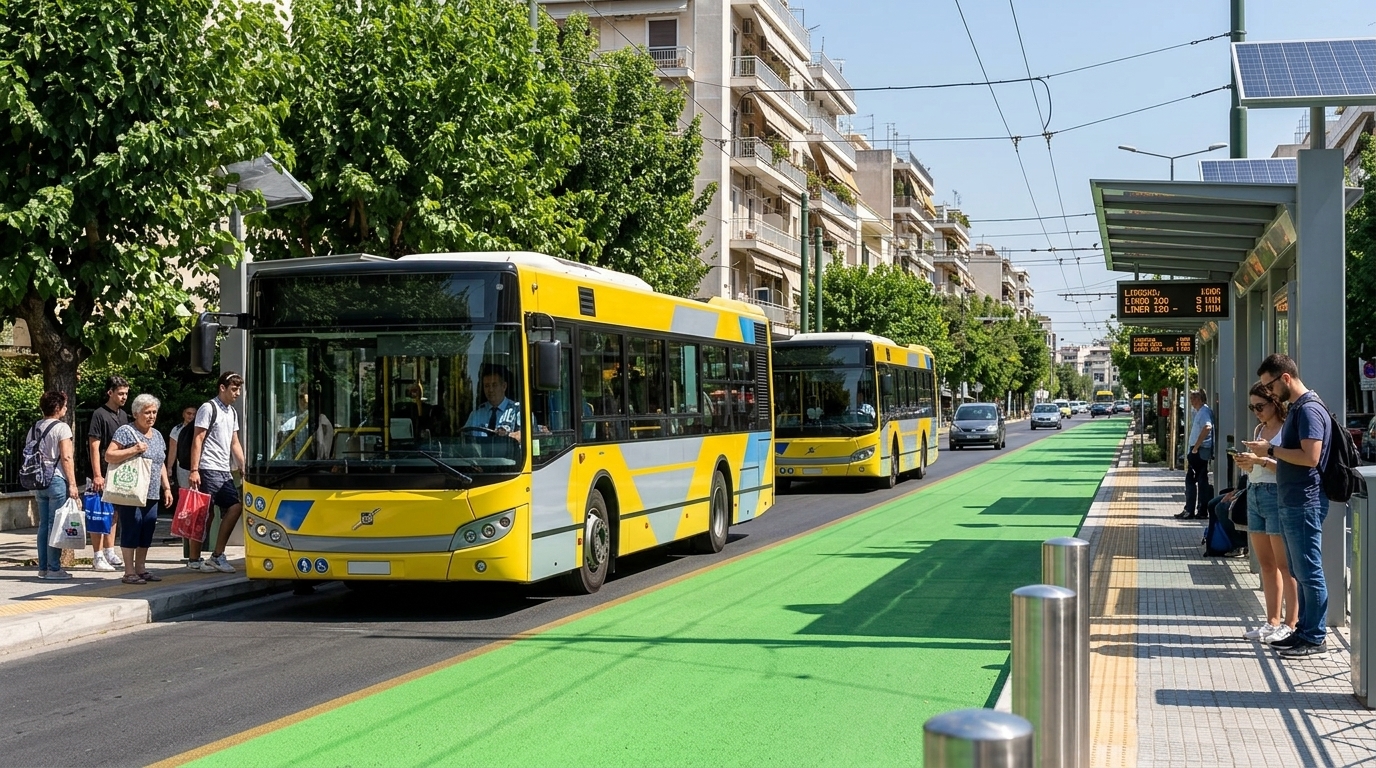
The landscape of urban transport in Greece, particularly in Athens and Thessaloniki, is on the verge of a historic transformation. Following decades of underinvestment and a fleet that frequently exceeded 20 years of age, the Ministry of Infrastructure and Transport is implementing an ambitious total renewal plan. The goal is clear: 1,700 new buses on the streets by 2028, with a heavy emphasis on electromobility, compressed natural gas (CNG), and zero-emission technologies.
The Renewal Roadmap
The Ministry's strategy is not merely a promise but a structured plan that has already begun to yield results. The first phase involved the integration of the first 250 electric buses, which are already circulating in the streets of Athens and Thessaloniki, providing a first taste of the new era. According to the timeline, by the end of 2025, the number of new vehicles is expected to reach 950 through a combination of purchases and long-term leasing agreements.
The next major milestone is 2027, when major tenders for hydrogen buses and additional next-generation electric vehicles are expected to be finalized. The completion of the program in 2028 will signify the total retirement of old, polluting Euro II and Euro III vehicles, which for years were the 'wound' of the transport system, causing frequent breakdowns and environmental degradation.
Green Mobility and Accessibility
Fleet renewal is not just about aesthetics or the age of the vehicles; it represents a structural change in the philosophy of urban mobility. The new buses are equipped with cutting-edge technologies that drastically reduce the environmental footprint. Electric buses offer silent operation, improving the quality of life in densely populated areas, while new CNG (Compressed Natural Gas) buses serve as a reliable, low-emission transitional solution.
- Full accessibility for people with disabilities with modern ramps and dedicated spaces.
- State-of-the-art air conditioning systems tailored for Greek climate conditions.
- Digital services for passengers, such as USB charging ports and improved telematics.
- Integrated safety systems and cameras for the protection of drivers and passengers.
Furthermore, the emphasis on accessibility is universal. Every new vehicle added to the fleet is mandatorily accessible to people with mobility issues, correcting a long-standing injustice against citizens with disabilities.
Economic Dimensions and Infrastructure Challenges
The funding for this gargantuan project comes from a combination of national resources, the Recovery and Resilience Facility (RRF), and the NSRF (ESPA). However, the challenge does not end with the purchase of the vehicles. The success of the venture depends directly on the creation of the necessary support infrastructure. This includes the construction of modern charging stations at depots, the training of technical personnel in new technologies, and the upgrading of the electrical grid to withstand the load of mass charging.
"We are not just renewing buses; we are changing the daily lives of citizens," the Ministry's leadership recently stated, emphasizing that public transport must be the first choice rather than a last resort.
In conclusion, the path to 2028 is a race against time and bureaucratic hurdles. If the plan is fully implemented, Athens and Thessaloniki will possess one of the most modern and environmentally friendly fleets in Europe, radically changing the face of Greek cities.





