

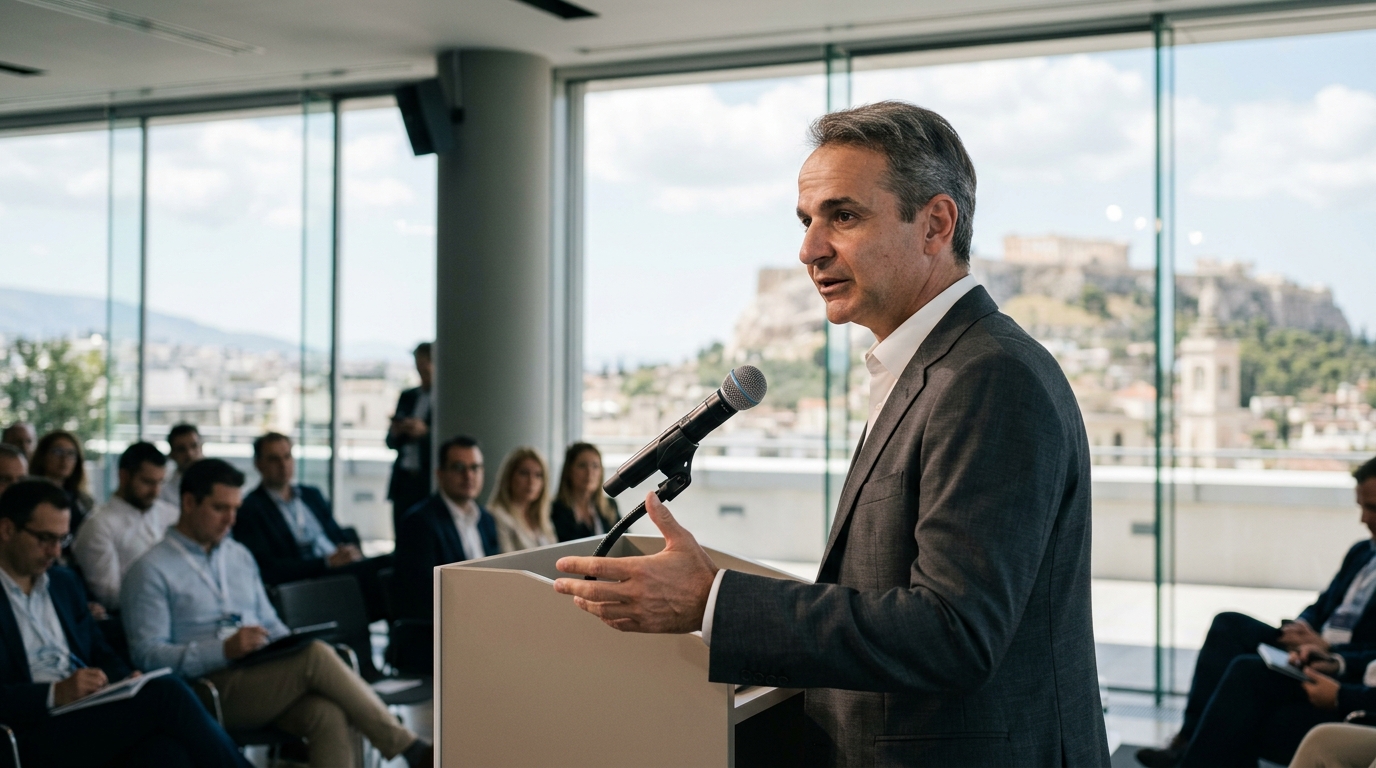
At a critical juncture for Europe's digital sovereignty, the intervention of New Democracy MEP Dimitris Tsiodras in the European Parliament highlights a fundamental contradiction: the Old Continent's attempt to lead ethically in Artificial Intelligence (AI) while simultaneously risking being stifled by its own bureaucratic machinery. Tsiodras's position was not merely a political observation but a plea for realism in an era where the speed of algorithmic evolution far outpaces the rate of drafting European directives.
Regulatory Suffocation and the Innovation Paradox
The European Union, with the passing and implementation of the AI Act, attempted to establish the world's first comprehensive framework for AI. However, as Tsiodras emphasized, bureaucracy and innovation are inherently conflicting concepts. While the US and China invest billions in developing infrastructure and models, Europe often seems consumed by labyrinthine compliance procedures that discourage small and medium-sized enterprises (SMEs) and startups.
The Greek MEP stressed that AI can and should be the "antidote" to bureaucracy, rather than an additional field for its application. Automating administrative processes, improving citizen service, and reducing decision-making time are just some of the benefits at risk if the EU's regulatory approach remains overly protective and cumbersome. "We cannot regulate the future with tools from the past," seems to be the central message of his intervention.
The Greek Dimension and Digital Transition
For Greece, a country that has traditionally suffered from bureaucracy, AI represents a historic opportunity for "leapfrogging"—bypassing stages of development through technology. Tsiodras, with deep knowledge of the Greek political reality, connected European challenges with the national effort for digital transformation. Applying AI in public administration can eliminate queues, reduce corruption, and make the state more transparent and efficient.
However, the success of this endeavor depends on whether European rules allow for flexibility. If a Greek developer or a Greek tech company has to face a mountain of paperwork and certifications that take longer than the code development itself, then competitiveness is lost before the race even begins. Tsiodras's intervention serves as a warning: ethical AI is necessary, but a non-existent European AI (due to over-regulation) will be ethically irrelevant, as citizens will be forced to use exclusively foreign products.
Towards Strategic Autonomy with a Human Face
The stake set by the MEP concerns Europe's strategic autonomy. In the current geopolitical environment, technological power translates into political influence. If Europe limits itself to the role of the global "referee" or "regulator" without being a "player" at the same time, it risks being sidelined. Tsiodras called for a shift towards supporting research and entrepreneurship by reducing market entry barriers.
In conclusion, Dimitris Tsiodras's voice in Strasbourg echoes a growing concern within European institutions: the risk of Europe becoming a "digital museum"—a place with wonderful rules for technologies developed elsewhere. The challenge is to create an ecosystem where AI deconstructs bureaucracy instead of being fueled by it. The success of this effort will determine whether the Europe of 2030 will be a continent of innovation or a continent of stagnation.





