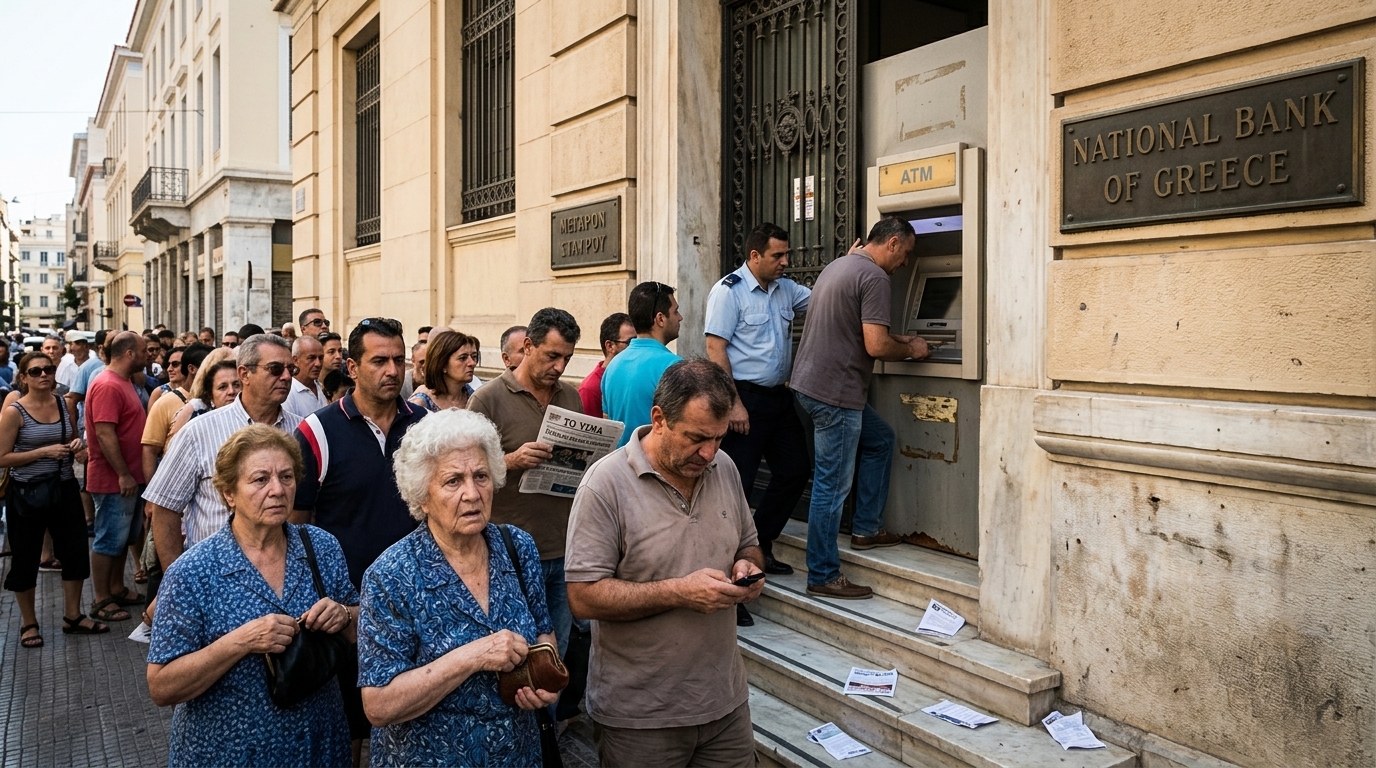
It was the early hours of June 27-28, 2015, when Greece entered one of the darkest and most uncertain periods of its modern history. The announcement by then-Prime Minister Alexis Tsipras to hold a referendum on the terms of the bailout program triggered a shockwave that immediately translated into queues hundreds of meters long in front of every ATM in the country. Today, in 2026, looking back, this anniversary is not just a reminder of economic hardship, but a milestone of our collective resilience and the structural changes that followed.
Chronicle of a Crisis Foretold
Negotiations with creditors had reached a complete deadlock. The SYRIZA-ANEL government, under pressure from the suffocating deadlines of the European Central Bank and the IMF, decided to give the word to the people. However, the market reacted with a survival instinct. Within hours, the liquidity of the banking system began to evaporate. Images of pensioners waiting under the scorching sun for 60 euros became the hallmark of a Greece flirting with an exit from the euro (Grexit).
That Sunday was not a typical summer day. Mobile phones rang incessantly, televisions remained on in every home, and the rumor about the banks closing the next day (the Black Monday of June 29) became a certainty. Citizens, regardless of political affiliation, felt the same frozen sensation: the loss of control over a lifetime's efforts.
The Psychology of the Queue and the Social Dimension
The "ATM queue" became the new social network of the era. People from all social strata met there, sharing the anxiety for tomorrow. Banks remained closed for three weeks, and capital controls became part of our daily lives for the next four years. The psychological impact was profound: trust in the banking system was shaken to its foundations, leading to a massive withdrawal of cash hidden in "mattresses" and safes.
"It wasn't just the money; it was the feeling that the country was in a void without a safety net," recalls a systemic bank executive who lived through the events from the inside.
From Capital Controls to Digital Acceleration
Paradoxically, the ATM crisis acted as the catalyst for Greece's digital transformation. Before 2015, the use of plastic money and e-banking was in its infancy compared to the rest of Europe. The need for cashless transactions, due to restrictions, forced millions of citizens and businesses to adopt POS and digital payments. What started as a means of necessity evolved into today's reality in 2026, where Greece has one of the most advanced digital transaction systems in the EU.
Lessons for the Future
Today, with the Greek economy having regained investment grade and banks showing high profitability, the Sunday of the ATMs seems like a distant nightmare. However, data analysis of that period through Artificial Intelligence shows how close we came to a total collapse of the supply chain. History teaches us that stability is fragile and that political decisions have a direct impact on the daily survival of the citizen. The memory of that Sunday now functions as a safety valve against populism and economic irresponsibility.