

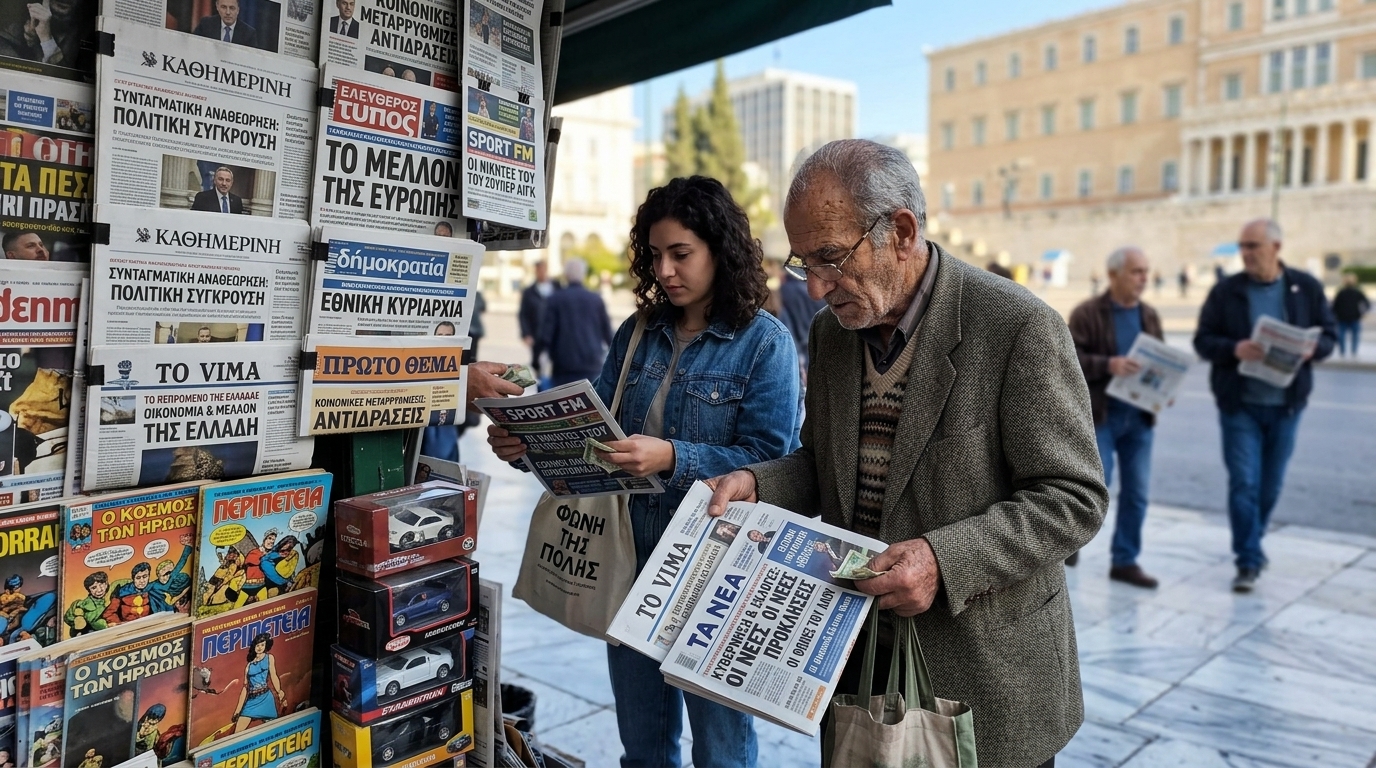
In the heat of the Greek summer, Sunday, July 5, 2026, proves to be no exception to the rule that the Sunday press serves as the barometer of political and social developments. Despite the dominance of digital media, the Sunday front page remains a powerful symbol of authority and influence, shaping the agenda for the coming days across television panels and social networks.
Economics and Social Security: The Lump-sum Enigma
"Kyriakatiki Apogevmatini" focuses on an issue affecting hundreds of thousands of workers and retirees: changes and increases in the lump-sum payment (efapax). At a time when the Greek economy is attempting to balance fiscal discipline with the need for social support, regulations regarding these benefits are a "hot potato" for the Ministry of Labor. Reports suggest a new calculation method aimed at correcting past injustices while ensuring the sustainability of the funds.
Analysis from economic correspondents indicates that these increases are not flat but directly linked to years of insurance and the level of contributions. For many, the lump-sum is not just a bonus but the capital needed to pay off debts or support their children during a difficult economic period. The government appears to be seeking a "social dividend" through these changes, hoping to regain ground in the polls.
Political Polarization: The Rhetoric of the "Backdoor"
On the political front, "Kyriakatiki Dimokratia" uses heavy language, speaking of a "Kerkoporta (Backdoor/Betrayal) signed by Mitsotakis." The use of historically charged terms is common in the Greek press, especially regarding national issues or critical agreements. The newspaper harshly criticizes government policy, implying concessions on sovereignty or strategic interests.
"Political discourse in Greece often slides into language reminiscent of past eras, searching for internal enemies and national betrayals instead of realistic solutions to contemporary problems."
This polarization reflects the deep divide in the political landscape. On one side, the government emphasizes modernization and the country's international credibility; on the other, a section of the opposition and the press accuses it of alienating traditional values and national rights. This clash is expected to intensify as we approach critical milestones in foreign policy.
Security and Terrorism: Ghosts of the Past
"Eleftheros Typos tis Kyriakis" brings to light revelations about a "terrorist cell," bringing the issue of internal security back to the forefront. Dismantling groups planning attacks is always a success for law enforcement, but it simultaneously causes public concern regarding the resurgence of domestic terrorism.
Leaked details involve the connection between old members of urban guerrilla groups and a new generation of radicalized individuals. Authorities' analysis focuses on recruitment methods via the internet and the use of advanced technology to plan actions. The question remains whether these are isolated incidents or an organized effort to destabilize social peace.
Conclusion: The Survival of the Printed Word
The front pages of July 5, 2026, prove that the newspaper remains the "heavy artillery" of information. Despite the circulation crisis, the impact of a headline on the front page is undeniable. Whether it concerns economic promises, political accusations, or security issues, the Sunday press continues to be the mirror of a society seeking answers in a rapidly changing world. The challenge for the future is maintaining quality and credibility in an environment filled with "noise" and misinformation.





