

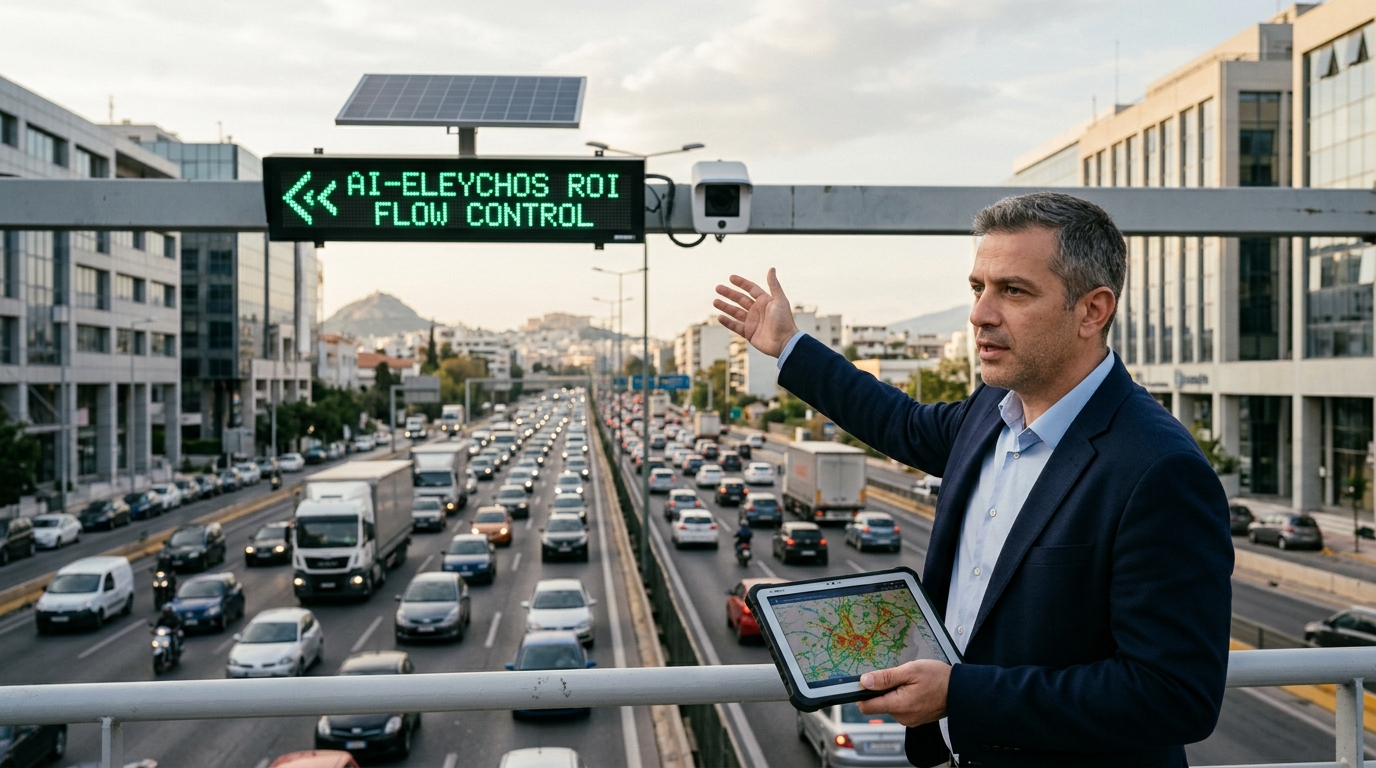
For the average resident of Attica, the word "Kifisos" is not just the name of a river or a highway, but a collective nightmare. The daily ordeal of thousands of drivers, trapped in endless lines of steel, has evolved into one of the capital's greatest social and economic challenges. However, the dawn of the Artificial Intelligence era promises a radical paradigm shift. The plan to install "smart" traffic lights powered by AI is no longer a science fiction scenario, but a strategic choice aimed at decongesting main arteries and improving quality of life.
The Anatomy of the Problem and the Digital Response
Traditional traffic management systems are based on static models. Traffic signals operate on pre-set timing cycles, which often fail to respond to real-world, dynamic road conditions. An accident, a sudden downpour, or a demonstration in the city center can trigger chain reactions that paralyze the entire basin. The introduction of AI changes this logic, transforming the traffic light network into a "living organism" that perceives and reacts in real-time.
The system under consideration for Kifisos and other major avenues is based on processing data from high-definition cameras and ground sensors. Machine learning algorithms analyze vehicle volume, flow speed, and traffic density. The AI then adjusts the duration of the green light in fractions of a second, creating a so-called "green wave," allowing vehicles to move without interruption for longer periods.
Beyond Speed: Environment and Economy
The significance of this project is not limited to reducing travel time. Environmental impacts are equally critical. Constant stop-and-go traffic is the primary cause of increased fuel consumption and carbon dioxide emissions in urban areas. By optimizing flow, AI can contribute to a reduction in emissions of up to 30%, making Athens a more sustainable city. Furthermore, reducing hours lost in traffic translates into direct economic benefits, as productivity increases and logistics costs for businesses decrease.
- Real-time data analysis from thousands of entry points.
- Predictive models that "forecast" congestion before it occurs.
- Automatic priority for ambulances, fire engines, and buses.
- Reduction of the energy footprint through smoother driving patterns.
Implementation Challenges
Despite the promises, implementing such systems in Attica faces significant hurdles. The first is the aging infrastructure. Many existing traffic lights and fiber optic networks require complete upgrades to support the computational power demanded by AI. Additionally, there is the issue of "induced demand": history has shown that when flow on a road improves, more drivers choose to use it, eventually leading to new saturation.
"Artificial Intelligence is not a magic wand. It is a precision tool that requires proper infrastructure and, above all, integration into a broader sustainable mobility plan that includes Public Transport," transport experts note.
Finally, data privacy remains at the forefront. Using cameras for traffic analysis must be done in strict compliance with GDPR, ensuring that technology does not turn into a citizen surveillance tool but remains focused exclusively on traffic management.
Conclusion
The plan for smart traffic lights on Kifisos represents a bold step toward the digital transformation of the Greek capital. While technology alone cannot eliminate the problem of excessive car ownership, its ability to rationalize the use of the existing road network is invaluable. The success of the project will be judged by the speed of implementation and the consistency of the authorities in supporting innovation.





