In a profound demonstration of international solidarity and operational readiness, the Elite Special Missions Team of Thessaloniki (EPOMEA) is preparing for one of the most challenging deployments on the planet. On Saturday, June 27, 2026, a group of highly trained volunteers will depart for Venezuela, responding to an urgent call for assistance following recent natural disasters that have devastated the country. This mission is not merely a humanitarian gesture; it is a sophisticated search and rescue (SAR) operation that blends traditional field expertise with cutting-edge technology.
The Technological Edge: Drones and Artificial Intelligence
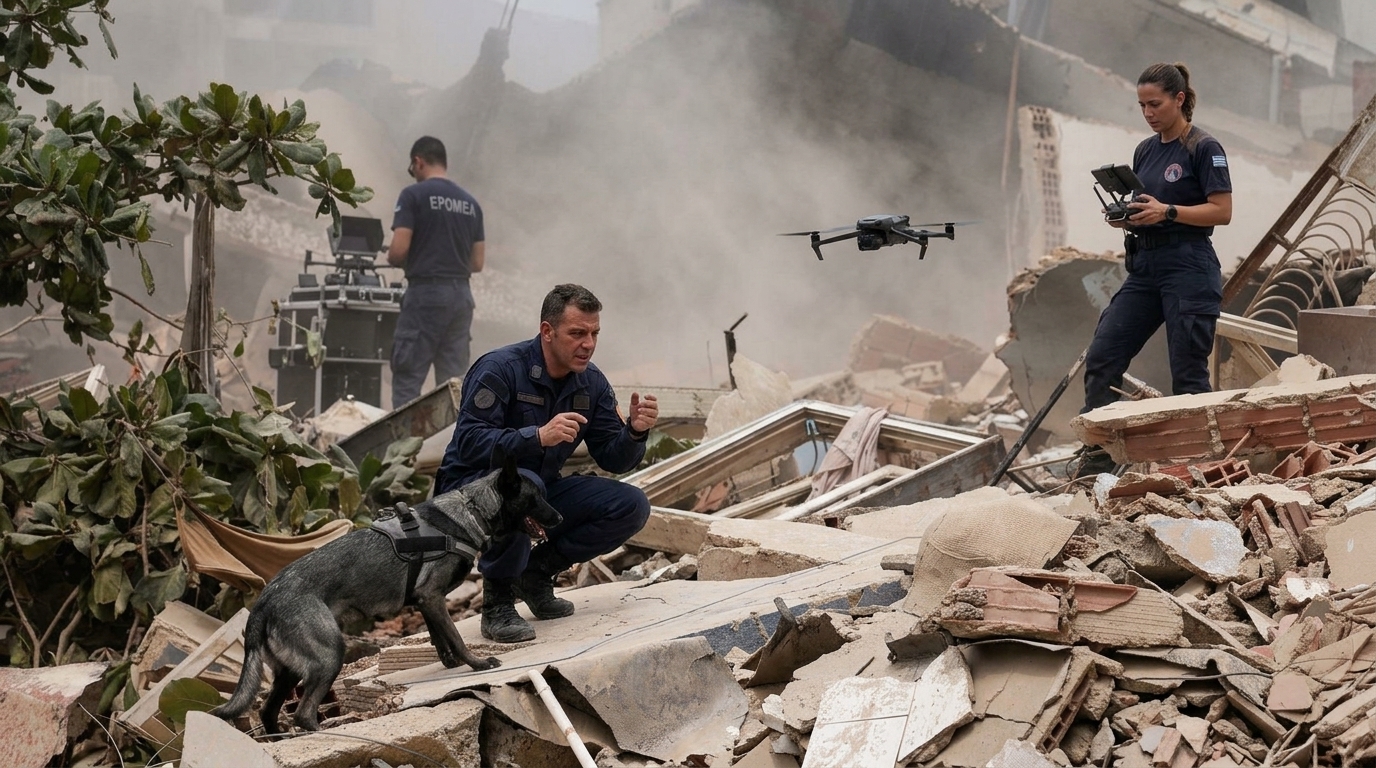
At the core of this mission lies the strategic deployment of unmanned aerial vehicles (drones) equipped with thermal imaging cameras and LiDAR sensors. In regions where access is rendered impossible due to landslides or floods, these drones serve as the eyes of the rescuers from above. The integration of Artificial Intelligence (AI) algorithms allows for real-time image analysis, identifying thermal signatures that could indicate the presence of survivors trapped beneath debris or dense tropical vegetation.
EPOMEA Thessaloniki has invested heavily in the training of its pilots, who are capable of operating in extreme weather conditions. The ability to perform 3D mapping of the terrain enables the coordination center to design safe routes for ground units, drastically reducing response times. In the world of search and rescue, the "Golden Hour" is paramount, and drone technology has become the ultimate force multiplier for volunteer teams. By filtering out noise and focusing on heat signatures, AI reduces the search area from square kilometers to specific meters in minutes.
The Synergy of Human and K9: Unbeatable Instincts
Despite rapid technological advancements, nature remains an unsurpassed ally. The mission includes specially trained K9 search units, which are an integral part of the team’s tactical structure. These dogs possess the extraordinary ability to detect human scent several meters deep under mud or collapsed structures—areas where electronic sensors might fail due to signal interference or physical density.
The collaboration between drone operators and K9 handlers is a masterclass in modern SAR tactics. Drones first identify high-probability zones, and subsequently, the K9 units move in for precise location pinning. This hybrid approach—harmony between technology and biology—renders EPOMEA one of the most effective volunteer organizations in Europe. The Thessaloniki volunteers, drawing from their experiences in the earthquakes of Turkey and the floods of Libya, bring a level of expertise that is invaluable to the local Venezuelan authorities.
Geopolitical Challenges and the Spirit of Volunteerism
A mission to Venezuela is fraught with logistical and geopolitical hurdles. The country faces significant infrastructure deficits and a complex political environment. However, EPOMEA operates under the principles of neutrality and impartiality, focusing solely on the preservation of human life. The logistics of such an operation require months of meticulous planning, from transporting specialized gear to ensuring the health and safety of the rescuers themselves.
"Volunteerism knows no borders. When technology meets human will, the result is hope," says a team member shortly before departure.
This deployment enhances Greece's international profile in the field of civil protection. While state agencies are often hamstrung by bureaucratic delays, volunteer groups like EPOMEA demonstrate the agility necessary in crisis situations. Their presence in Latin America highlights Thessaloniki as a hub of humanitarian action and technological innovation, capable of providing global solutions to local tragedies. As they head into the Venezuelan terrain, they carry not just equipment, but the collective empathy of a nation.