

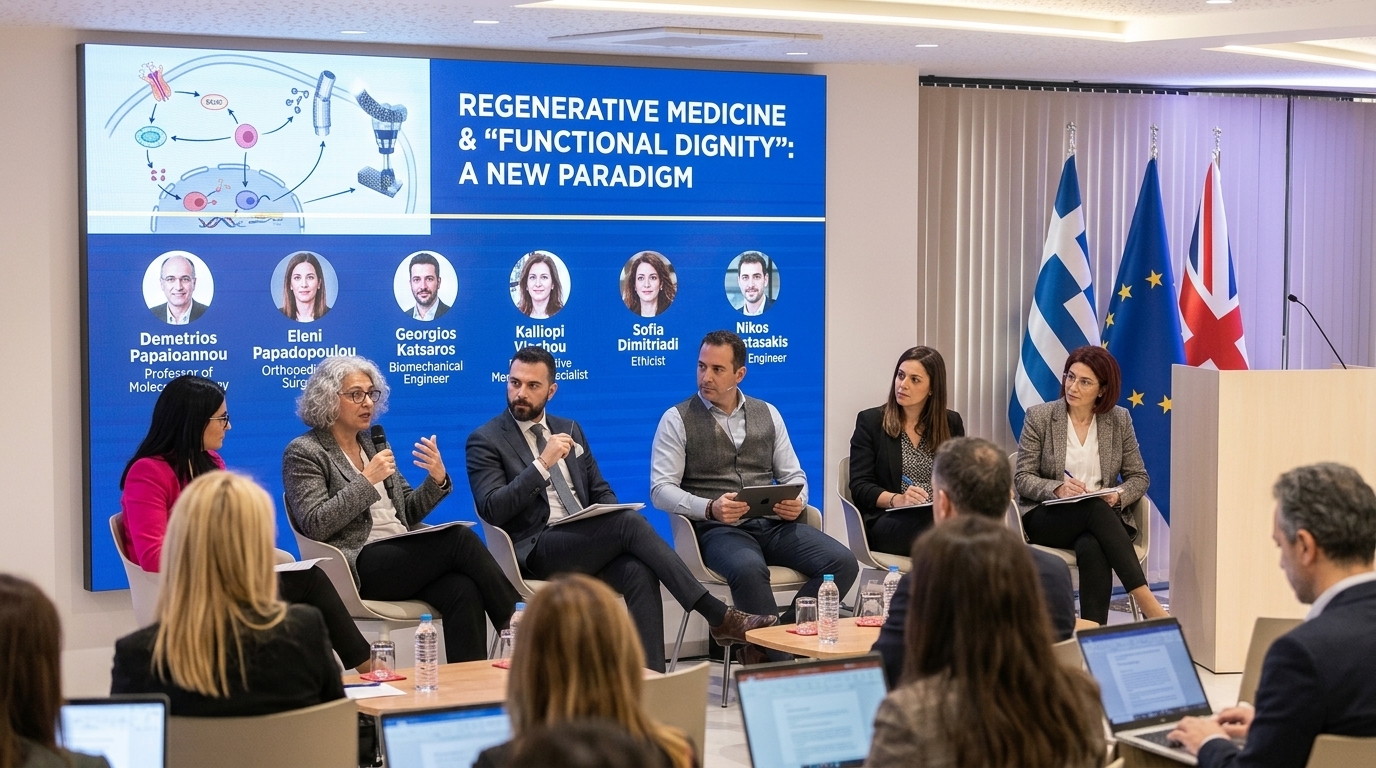
In an era where the boundaries between biology and technology are becoming increasingly blurred, Greece is emerging as an unexpected but critical hub for the future of medicine. The presence of Keele University in Greece is not merely an educational addition, but a strategic positioning at the heart of the biomechanical revolution. With the digital health market surpassing the $200 billion milestone in 2023, the conversation is shifting from mere survival to the concept of 'functional dignity.'
The Convergence of Biomechanics and Regenerative Medicine
Regenerative medicine is no longer a science fiction scenario. Through the use of stem cells, tissue engineering, and 3D bioprinting, scientists are now able to repair or replace damaged organs and tissues. Keele University, with its expertise in biomechanics, brings to the Greek market the know-how required to create 'smart' prosthetics and biocompatible materials that integrate seamlessly into the human body.
This technological progress allows patients not only to regain lost functionality but to do so in a way that respects their autonomy. 'Functional dignity' refers to an individual's ability to participate fully in social and economic life, free from the constraints imposed by a chronic condition or injury. In Greece, the integration of such curricula and research offers a unique opportunity to reverse the brain drain, attracting high-level scientists who wish to work at the cutting edge of innovation.
The Economic Stakes and Healthcare System Sustainability
The explosive growth of the digital health market brings with it massive challenges for public health systems, including Greece's NHS (ESY). While innovation promises better outcomes, the cost of new treatments remains high. The biomechanical revolution requires a radical rethink of how healthcare is funded. Investing in prevention and tissue regeneration may reduce the cost of chronic care in the long run, yet the initial capital expenditure is significant.
- Development of biocompatible materials for orthopedic surgeries.
- Use of Artificial Intelligence to personalize regenerative therapy.
- Creation of digital twins to simulate surgical procedures.
- Strengthening cooperation between academic institutions and the MedTech industry.
Greece, through initiatives like Keele's, can act as a laboratory for developing bioethical frameworks that ensure technology does not become a privilege of the few. The concept of patient autonomy is central: the patient is no longer a passive recipient of care but an active participant who, with the help of technology, maintains control over their body.
Bioethics and the Future of Human Nature
As we move deeper into the biomechanical era, fundamental questions arise. Where does therapy end and 'enhancement' begin? The use of AI in health accelerates diagnoses but simultaneously raises issues of data protection and algorithmic bias. Keele University places a strong emphasis on bioethical education, preparing future scientists to face these dilemmas.
"Technology without an ethical compass is just a tool without a destination. In regenerative medicine, our destination is the human being and their dignity," academic circles note.
In conclusion, the biomechanical revolution in Greece, backed by the academic seal of international institutions, is not just about medicine. It is about how we define our humanity in a digital world. The success of this venture will be judged by our ability to combine technological excellence with social justice, ensuring that 'functional dignity' is accessible to every citizen, regardless of their economic status.





