

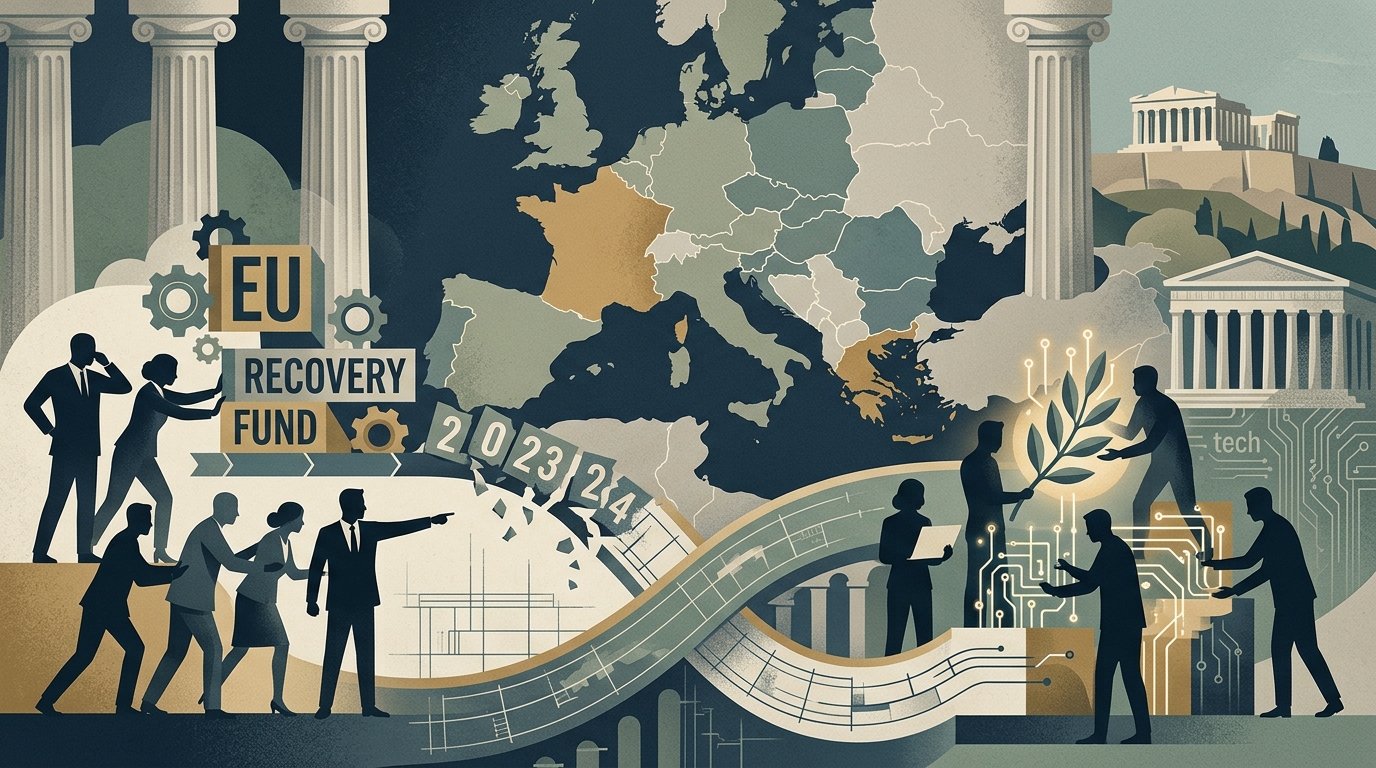
In the heart of Athens, against the backdrop of the Acropolis, a significant new geopolitical and economic alliance is taking shape, directly challenging the foundations of the European Union's current fiscal architecture. French President Emmanuel Macron, in a move interpreted by many as the opening salvo in a new "debt war," characterized the existing repayment schedule for the Recovery and Resilience Facility (RRF) as "nonsense." This statement, made during his official visit to the Greek capital, was not a mere rhetorical flourish but a strategic positioning that finds strong resonance within the Greek government led by Kyriakos Mitsotakis.
The 2026 Trap and the Need for Fiscal Space
The Recovery Fund, established in 2020 as a historic response to the economic paralysis caused by COVID-19, was built on the concept of common borrowing—a "Hamiltonian moment" for Europe. However, the rules governing it mandate a strict repayment period starting soon and concluding by 2058. Macron argues that the Europe of 2026 is vastly different from the Europe of 2020. The Russian invasion of Ukraine, the necessity for massive defense spending, and the urgent green transition have created new economic pressures that were unforeseen during the fund's inception.
For Greece, the issue is of paramount importance. Despite the Greek economy's impressive recovery and its return to investment-grade status, the public debt burden remains the highest in the Eurozone as a percentage of GDP. An extension of the "Covid debt" repayment would provide Athens with the necessary fiscal space to continue structural reforms without stifling growth through renewed austerity measures. Prime Minister Mitsotakis has repeatedly emphasized that Europe must learn from the mistakes of the past decade, where an excessive focus on nominal targets led to social fragmentation.
Resistance from the North
Unsurprisingly, the Macron-Mitsotakis proposal has not been met with universal acclaim across European capitals. The so-called "frugal" nations, led by Germany and the Netherlands, remain deeply suspicious of any move that could transform the temporary Recovery Fund into a permanent fiscal transfer mechanism or loosen the grip of fiscal discipline. Berlin, while facing its own economic stagnation and constitutional budget constraints, maintains that the Eurozone's credibility rests on the strict adherence to agreed-upon rules.
As Politico notes, the timing of Macron's intervention is critical. With European elections looming and the rise of populist movements across the continent, the French President is attempting to redefine the European agenda. The "nonsense" he refers to is the act of draining resources from future-oriented investments to pay off an emergency debt at a time when Europe must compete technologically with the United States and China. The argument is that rigid adherence to 2020 logic in a 2024 reality is counterproductive for European sovereignty.
Strategic Implications and the Road Ahead
The debate over debt extension is, at its core, a debate about the EU's identity. Is the Union merely an accounting mechanism for rule enforcement, or a political entity capable of adapting to existential challenges? The proposal for an extension will require unanimous consent, which seems unlikely in the current political climate. However, the Paris-Athens axis is setting the stage for a negotiation that will define the economic trajectory of the next decade.
- Greece seeks to ensure long-term debt sustainability while maintaining social cohesion.
- France aims to lead an "investment revolution" to secure European autonomy.
- Brussels is tasked with finding a middle ground between institutional credibility and necessary flexibility.
Ultimately, the challenge is twofold: to avoid undermining market confidence while ensuring that growth is not sacrificed on the altar of rigid bureaucracy. The path toward 2026 will be fraught with such conflicts as Europe attempts to find its footing in a rapidly changing global order. The Franco-Greek alliance may be the first step toward a broader fiscal realignment that acknowledges the permanent nature of the "perma-crisis" era.





