

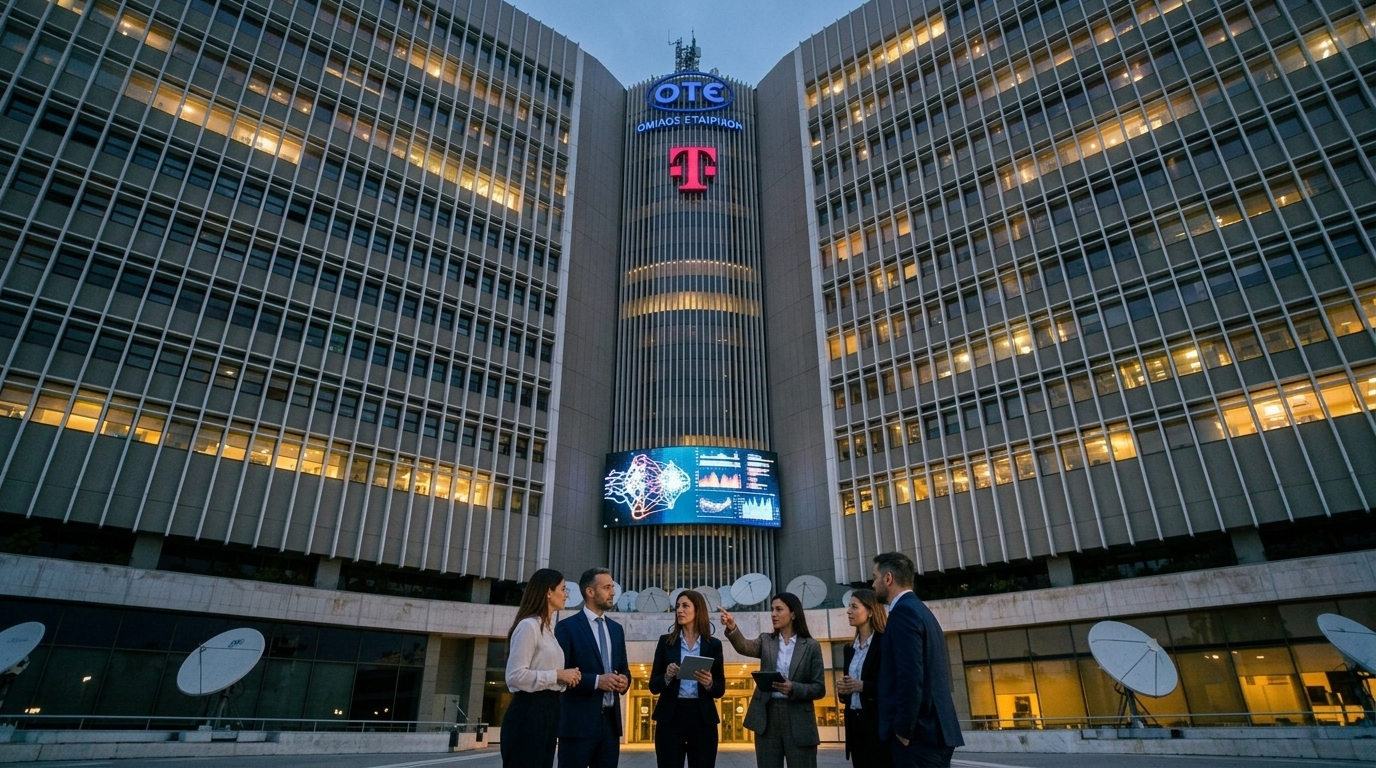
The story of OTE Group in recent years is not merely that of a telecommunications provider modernizing its systems; it is the journey of a national incumbent striving to lead in the era of Artificial Intelligence (AI). Since the landmark General Meeting of 2024, which laid the foundations for a new digital strategy under the leadership of CEO Kostas Nebis, the Group has covered impressive ground. Today, in June 2026, AI is no longer an experimental add-on but the central nervous system of the organization.
The Strategic Pivot: From Connectivity to Intelligence
OTE's transition into the AI era was a calculated move to address the challenges of a saturated market where margins on traditional voice and data services are constantly squeezed. The Group's management recognized early on that value is shifting from merely providing the "pipes" (connectivity) to delivering intelligent services and real-time data analytics.
The integration of AI within OTE moves along three main pillars: Customer Experience, Operational Excellence, and the development of new revenue streams. Through close cooperation with its parent company, Deutsche Telekom, OTE gained access to international expertise, which it tailored to the specificities of the Greek market. This ranges from advanced chatbots capable of understanding the nuances of the Greek language to predictive maintenance systems for the fiber-optic network.
Customer Experience 2.0: AI on the Front Line
Perhaps the most visible change for the average consumer is the evolution of customer service. Older, often frustrating IVR systems have been replaced by sophisticated digital assistants based on Large Language Models (LLMs). These assistants do more than just answer standard questions; they can resolve complex technical issues, suggest personalized service packages, and process plan changes without human intervention.
- Real-time automated fault diagnosis.
- Proactive customer communication before a problem is even noticed.
- Personalized offers based on consumption profiles.
According to Group executives, the use of AI has led to a 40% reduction in call center waiting times, while the Net Promoter Score (NPS) has reached historic highs. The challenge remains maintaining the human touch where it is essential, a balance OTE seeks to strike by retraining its staff for new, more complex roles.
Networks and Infrastructure: "Self-Healing" Technology
Behind the customer service facade, AI performs an even more critical task in network management. With the expansion of FTTH (Fiber to the Home) and 5G, infrastructure complexity has skyrocketed. OTE now employs machine learning algorithms to optimize the energy consumption of base stations, achieving a significant reduction in its carbon footprint.
"Artificial Intelligence is not just a productivity tool for us; it is the way we will ensure Greece remains at the digital forefront of Europe," a senior official noted at a recent technology forum.
Furthermore, predictive maintenance allows the organization to identify network segments at risk of failure due to weather conditions or aging equipment, intervening before a service interruption occurs. This "self-healing" network represents the next big bet for telecommunications reliability in the country.
Socio-Economic Implications
OTE's investment in AI has broader implications for the Greek economy. As one of the country's largest employers, its transformation affects the labor market, requiring new specialties such as data scientists and AI engineers. Simultaneously, the push it gives to the digitalization of small and medium-sized enterprises (SMEs) through its B2B services acts as a power multiplier for national competitiveness.
However, this transition is not without concerns. The ethical use of data and the protection of the privacy of millions of subscribers remain at the heart of public debate. OTE must prove that the adoption of AI is accompanied by strict transparency and protection protocols, avoiding the pitfalls of algorithmic bias.





