

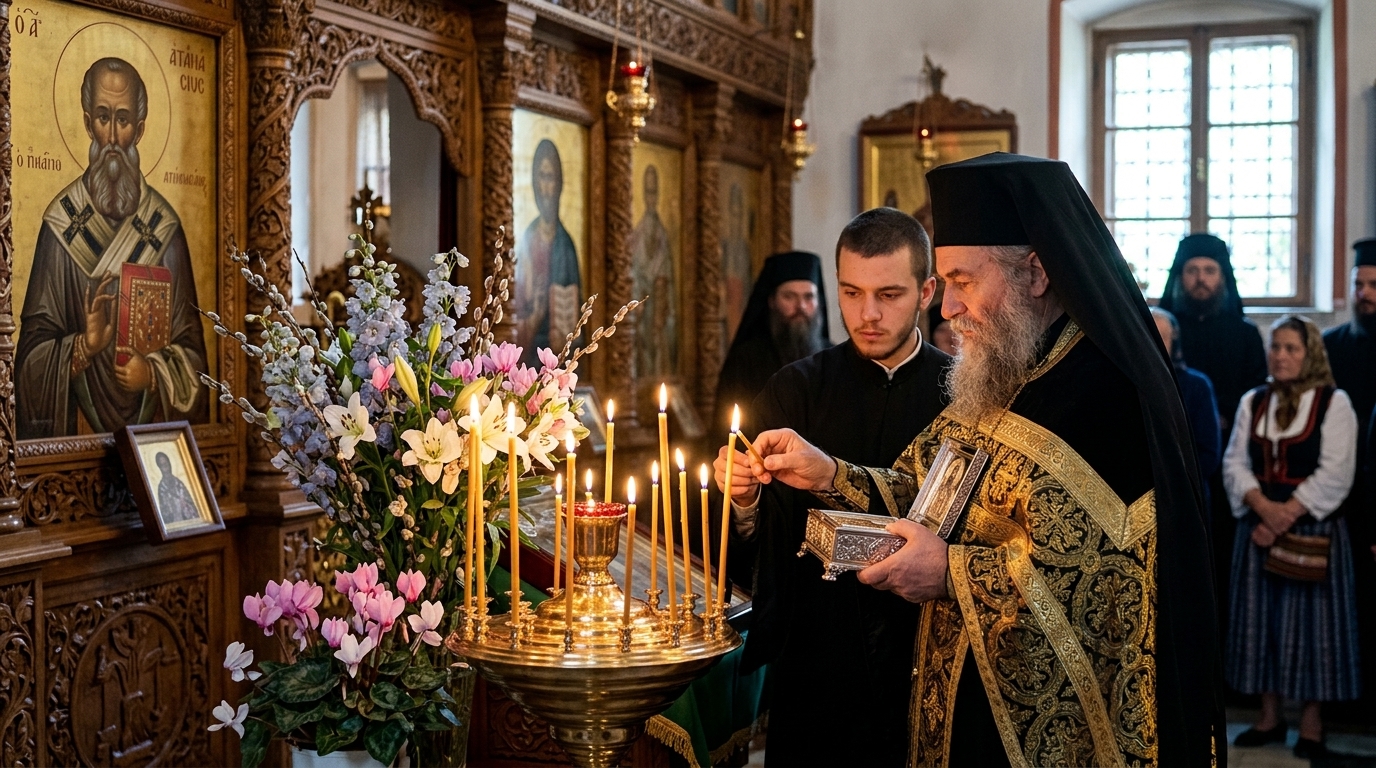
July 5, 2026, marks a significant moment in the Orthodox liturgical calendar. Today, the Church commemorates Saint Athanasius the Athonite, a towering figure whose influence shaped the monastic landscape of Eastern Christendom for over a millennium. As we navigate the complexities of the mid-2020s, the legacy of this 10th-century visionary offers a profound meditation on the intersection of tradition, institutional organization, and spiritual depth.
The Architect of the Holy Mountain
Born in Trebizond around 920 AD, Athanasius was a man of exceptional intellect and social standing. Unlike many of his contemporaries who sought isolation in the wilderness, Athanasius understood that for monasticism to survive and flourish, it required structure. His friendship with General Nikephoros Phokas—who would later become the Byzantine Emperor—provided the political and financial backing necessary to realize his vision.
In 963 AD, Athanasius founded the Monastery of Great Lavra on Mount Athos. This was a revolutionary act. Before Athanasius, the "Holy Mountain" was inhabited by scattered hermits living in precarious conditions. By introducing the cenobitic (communal) system, Athanasius created a sustainable model where monks could share resources, labor, and spiritual guidance. This shift transformed Mount Athos into a bastion of Byzantine culture, preserving thousands of manuscripts and artworks that would have otherwise been lost to time.
The Relevance of Asceticism in 2026
In our current era of hyper-connectivity and AI-driven acceleration, the figure of Athanasius the Athonite feels surprisingly contemporary. His life was a balance between high-level administration and deep contemplative silence. For the modern professional or citizen, the Athonite tradition serves as a reminder that productivity without purpose, and action without reflection, leads to spiritual exhaustion.
The names celebrated today—Athanasios and Athanasia—derive from the Greek word for "immortality." In the Greek cultural context, a name day is often more significant than a birthday, serving as a communal recognition of one's place within a historical and spiritual lineage. In 2026, while AI assistants might remind us to send greetings, the essence of the celebration remains a human connection, a bridge between the living and the saints who preceded them.
Mount Athos: A Living Museum and Spiritual Hub
Mount Athos remains a unique entity in the modern world. As a self-governed part of the Greek state and a UNESCO World Heritage site, it faces the constant challenge of maintaining its ancient traditions while interacting with a globalized society. The Great Lavra, celebrating its patron saint today, continues to be a site of pilgrimage for thousands who seek a connection to the transcendent.
The preservation of the "Avaton" (the rule prohibiting women from entering the peninsula) continues to be a point of discussion in EU human rights circles, yet the community maintains that its autonomy is essential for the preservation of its thousand-year-old lifestyle. Today’s feast is not just a religious event; it is a celebration of a cultural identity that has survived empires, wars, and technological revolutions.
Conclusion: The Endurance of the Sacred
As we honor Saint Athanasius today, we recognize that his work was not merely about building stone walls, but about fostering a community of the spirit. His death—caused by the collapse of a church dome during construction—highlights the physical risks he took to build his vision. In 2026, his legacy challenges us to consider what we are building for future generations. Are we creating structures that will stand the test of time, or are we merely adding to the noise of the present?
- Saint Athanasius founded the Great Lavra in 963 AD, the first organized monastery on Athos.
- He was a close confidant of Byzantine Emperor Nikephoros II Phokas.
- His introduction of communal living (cenobitism) revolutionized Eastern monasticism.
- The name 'Athanasios' translates to 'Immortal', reflecting a victory over death.
"Monasticism is not a flight from the world, but a constant prayer for the world." - A traditional saying reflecting the philosophy of Saint Athanasius.




